The Inner Atlas · Psychology of Travel
By why each more and most more people wants travel without planning anything
There is one part of the trip that the traveler should not have to experience: organizing everything.
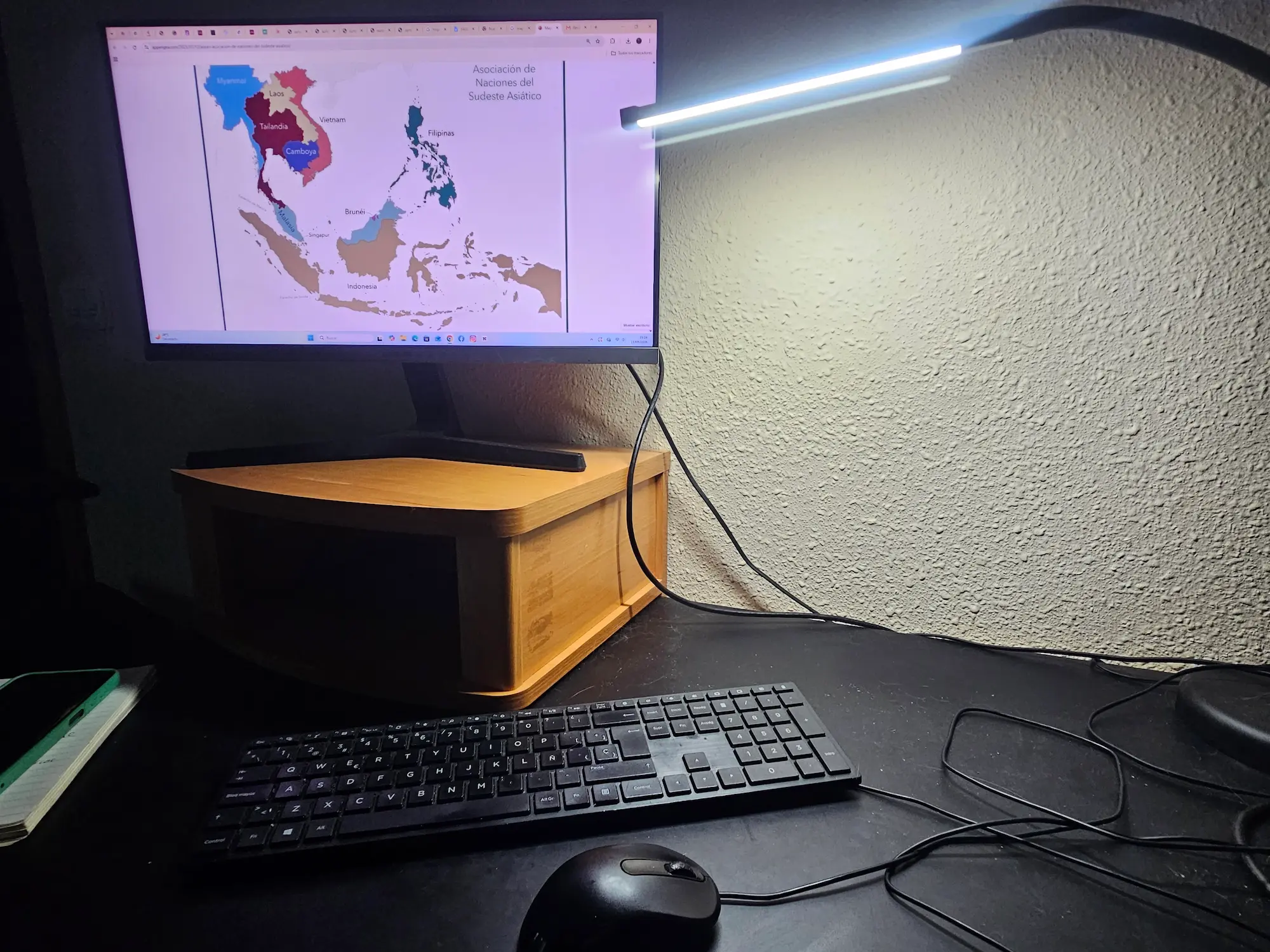
Twelve tabs · a Sunday afternoon
Traveling without organizing anything: the phrase you hear more and more
Traveling without planning anything · starting pointSeventeen tabs open on a Sunday afternoon, three comparison sites giving three different prices for the same plane, and that weird feeling of working on something you were supposed to be excited about. If it sounds familiar, it's not you.
There's a phrase I hear more and more often, and almost always with the same words:
"I want to travel. But I don't want to organize absolutely anything."
And I understand.
Because travel should begin long before boarding a plane. But not necessarily in front of a spreadsheet.
- Or comparing 38 hotels.
- Or trying to work out whether the 7:42 train makes sense with the 11:15 flight.
- Or reading 94 reviews to decide where to have dinner on Tuesday.
- Or joining a Facebook group to ask whether it is worth sleeping one night or two in that place.
Sometimes, what's needed isn't more information, or more stress than we already have in our daily lives.
Someone needs to take care of it.
And that's where we come in.
But before we go on, it's worth mentioning one thing. Because there's a phenomenon with a name and scientific literature behind it, and it explains quite well why more and more people are reaching this point.
Traveling without planning anything is not the same as traveling without making any decisions.
The distinctionThis is important.
Because when I say that at SunZen you don't have to organize anything, it doesn't mean that our trips are improvised.
Quite the opposite.
Delegate logistics
Not having to find out if the overnight train from Hanoi to Sapa—the one from our trip to Vietnam— leaves at 22:00 or 21:35.
How many days of visa you get on arrival. Whether that excursion has to be booked in advance.
This article is about that.
Delegate the decision
Let someone else choose for you which country you go to, with whom, and at what pace.
That is neither possible nor advisable.
Anyone looking for this wants an all-inclusive resort, which is a legitimate product and is not ours.
Behind a trip that seems spontaneous there are many, many hours of work.
So that you can choose not to do it.
And that, for me, is one of the most beautiful ways to travel.
And then there's that other thing: fear
Before leavingBecause traveling far away is a little scary.
Even people who have spent half their lives traveling. We've written about that separately, in the excuses that stop you from traveling and in traveling alone in Asia.
There's a moment before leaving when that little thought appears:
"What am I doing?"
And we want that moment to last only as long as it needs to.
Because then something else begins.
The first time you think:
"Thank goodness I came."
And that's where we want to take you.
Not a perfect trip. A trip you'll remember.
The problem is that, to get there, you first have to book. And it's right before booking where far more people get stuck than you'd think. Not out of fear: out of exhaustion.
The jam experiment, and what almost no one talks about
ScienceIn 2000, Sheena Iyengar and Mark Lepper set up a tasting booth in a California supermarket. Some days they offered six varieties of jam. Others, twenty-four. The big stall attracted more people. But when it came to buying, the table of six sold about ten times more than the twenty-four one.
The study was published with a title that says it all: when choosing is demotivating. Barry Schwartz popularized it four years later with The paradox of choice, and has been quoted everywhere ever since.
But in 2010, Scheibehenne, Greifeneder and Todd reviewed fifty experiments on choice overload. The average effect, adding up all the literature, is virtually zero.
That is: the idea that "more options always paralyze" is false. In most contexts, giving more options does nothing.
I could have left this out. The headline sounds better without the nuance. But then I'd be doing what half the internet does: take a famous study, ignore fifteen years of subsequent research, and sell the conclusion that suits me.
The interesting part comes now.
The three conditions. And a trip meets all three
Chernev · 2015Chernev, Böckenholt and Goodman did another analysis focused on a better question: not not whether overload exists, but under what conditions does it appear. It spikes when three things coincide. Now apply that to organizing two weeks in Asia: Vietnam, Thailand, Sri Lanka o Bali.
When the alternatives are similar and difficult to distinguish, choosing becomes exhausting.
Forty hotels in Hanoi with ratings between 8.2 and 8.9.If you make a mistake and nothing happens, you choose quickly. If something is at stake, you freeze up.
If it goes wrong, there's no repeat for twelve months.It takes a whole trip to understand how a country works. Sometimes more.
How many days do you need in Hue? And how many are too many?
It's not that you choose badly. It's that you don't choose
The numbersThis year, a team of researchers—An, Ozturk, Hancer, Hua, and Berezina—published a study that gets straight to the point: how the abundance of information in online travel agencies generates consumer confusion and, as a consequence, postponement of the reservation decision.
The result of having too many options is usually not a worse trip, but no trip at all. Closing the tabs, saying "I'll look at it next week" and then never looking at it. That's where this crosses over with the "someday" syndrome: the brain postpones, and every postponement feels reasonable.
There's a more radical version of that same idea, and we've been mulling it over for months: taking the destination decision out of the equation. We tell it in what if you didn't know where you were going until you got to the airport?
The following data is from the UK and the US. There is no equivalent Spanish study, so consider it a trend in the Western market, not an exact reflection of what is happening here.
The most stressful part of a trip is the part that least resembles traveling.
The industry is already noticing it
Forbes · CNBC · Much Better AdventuresIn May, Forbes published a report on the rising demand for all-inclusive. Kati Morton, a family therapist, explained it with a phrase you understand right away: when we are mentally overloaded we become irritable and we are less present, and that wrecks the vacation experience.
CNBC reported in December on an industry study with a similar idea: travelers arrive exhausted before they even leave and increasingly delegate the planning. Tara Schwenk summed it up by saying that low-decision travel has stopped being a wellness extra and become a basic expectation.
And Much Better Adventures was talking in January about "decision detoxes" as the trend of the year. It is my favorite of the three quotes, because we did not write it: when listing the alternatives, they place small group trip as one of the answers, precisely because it allows the logistics to be handed over to those who know it.
People do not want less travel. They want less hassle.
And the other alternative: to go without anything prepared
The opposite optionMany people understand travel without planning anything differently: buy a one-way ticket, book the first night and see what happens. It is a legitimate way to travel and there are people who come back delighted. But it is worth being precise about what it does and what it does not do.
Improvisation doesn't eliminate the decisions. It moves them. It moves them from the sofa at home, with time and a good connection, to seven in the evening
That's where you decide where you sleep tonight, if that route exists, and if the place they just recommended is what it seems.
Those who enjoy that—and some truly do—have an entire article dedicated to it: Does it make sense to travel independently?
And if you're worried about how a trip with someone starts, there's the anatomy of the first day.
Improvising is about deciding more, not less.

What you lose by traveling without planning anything
The awkward half of delegatingIt wouldn't be fair to only talk about the good half of traveling without planning anything.
- The discovery. Searching for weeks is also a form of travel. Some people enjoy that phase more than the journey itself.
- Flexibility. With a fixed itinerary, you can't stay three more days in a place you've fallen in love with.
- Pride. Going back and being able to say "I found this myself" has a value that no itinerary can give you.
- And the money. Dividing the cost of a local guide, driver, and vehicle among a few people costs more per person. It's simple math.
We cannot guarantee that nothing will go wrong.
That a flight isn't delayed, that a suitcase isn't lost, or that the weather doesn't change.
But we can guarantee something much more important: that if there is an unforeseen event, we will be there.
And if you enjoy organizing, organize. Seriously. This article isn't about that. It's about someone who's had their folder open for three months and hasn't booked anything.
Set a date.
We'll take care of the rest.
Maximum thirteen people and one of us with you for the whole trip. Limited places. Book your date!
The guide, free
Everything you need to know before setting a date.

Because magic requires someone to have done their homework
Invisible logisticsThere's a beautiful contradiction in traveling without organizing anything.
Because traveling freely, getting everywhere and not having to worry about schedules, reservations or travel involves a lot of work behind the scenes.
Spontaneity doesn't mean there's no plan. It means you don't have to be constantly thinking about it.
And that job has a problem: You only notice it when it fails.
- You don't see the call to check that the accommodation is still operating as it did last year.
- You don't see the calculation of the real time between two points, which is almost never the one on the map.
- You don't see tickets bought in advance because they sell out during the season.
- You don't see the local contact to call if someone gets sick.
- You don't see the alternative plan for the rainy day.
- You don't see why after five intense days there is an afternoon with nothing planned.
That's why it's hard to explain exactly what you're paying for. The itinerary fits on a single page. What you're paying for is that the hundred little things that don't appear until you're there are already sorted out before they even come up.
And the moment that best sums it up is the first one. You arrive after an eleven-hour flight, collect your suitcase, walk out, and there is someone with your name on a sign. Which, as it happens, is exactly the point British travelers single out as the most stressful of the whole process.
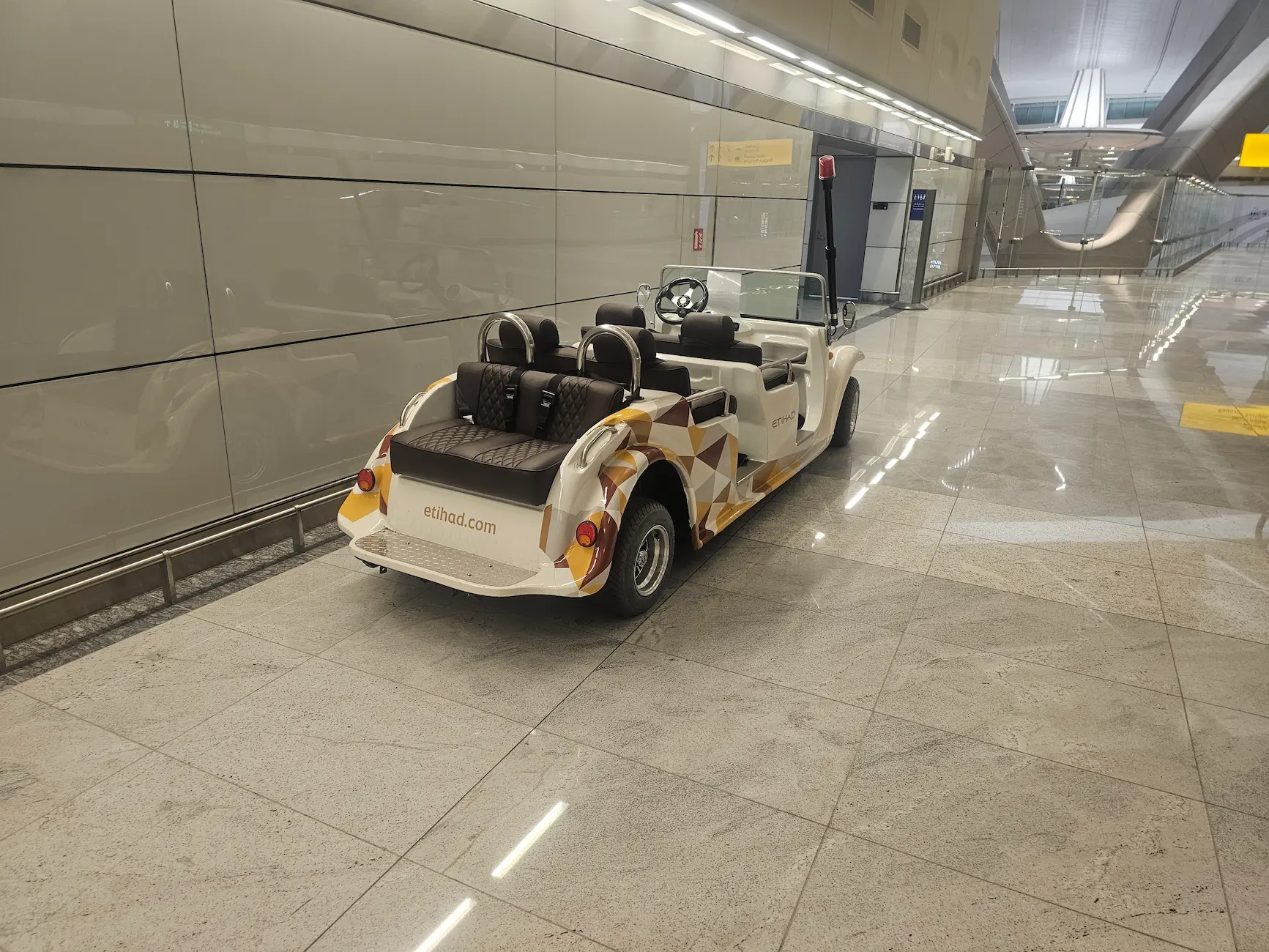
The transfer already sorted before you land
What if there's an unexpected event?
The net underneathBecause I also know what you're thinking: "okay, the magic thing is all very nice… but what happens if something goes wrong?"
That you are not alone. And it is not a pretty agency line. It is one of the reasons we do the trips the way we do.
On our group trips, one of us goes with you from the first airport to the last.
We don't send someone else in our place. We go ourselves.
And when I say "us," I mean a real person who knows who you are and is there when things get complicated.
Plus, you have local Spanish-speaking guides, drivers, accommodations selected by us, and all the logistics taken care of. And if something happens:
- You don't have to work out how the health system works in a country you have just arrived in.
- You don't have to call an airline in another language.
- You don't have to negotiate with a hotel.
- You don't have to chase after a suitcase.
- You don't have to sort out a transfer at three in the morning.
You call us.
And we solve it.
Because unexpected events are part of traveling. The difference lies in who deals with them.
Traveling with us doesn't mean traveling in a bubble. It means being able to venture into the unknown knowing you have a safety net.
We love that our travelers are spontaneous. We'll take care of everything else.
You can say yes to a new experience because you know there's someone behind the scenes taking care of the details.
"But I travel alone…"
From 6 to 13 peoplePerfect.
Our groups are designed precisely for that. You don't arrive in a huge group where you're number 38.
There are few of us. Between 6 and 13 people. The dates are set and spots are limited. From why group size changes everything there are six studies that explain it better than we do.
We want people who travel together to have something in common.
People eager to discover. To laugh. To try new things. To step outside their comfort zone. To enjoy a beer after a long day. And to find some quiet time, too.
To travel. Nothing more.
And there's something we can't organize, no matter how hard we try: you arriving thinking you're going to see a destination and leaving having met someone you weren't expecting.
That can't be booked on Booking either.
And if we don't reach six people, the trip is canceled and the full deposit is refunded. That's the other side of working this way, and we'll tell you about it too.
Perhaps SunZen isn't an agency for everyone.
FilterIf you enjoy spending three months organizing a trip, making spreadsheets and comparing hotels until two in the morning…
You'll probably have more fun doing it yourself.
But if you have been thinking for a while: "I am dying to travel, but I have neither the time nor the energy to organize it."
- If you want adventure, but also a good night's sleep.
- If you want to meet people, but not be part of a 40-person excursion.
- If you want to discover a real place, but don't want to deal with all the logistics.
- If you want to travel alone, but not feel lonely.
- If you want to be able to improvise without improvisation becoming a problem.
- If you want to arrive at the airport and think: "from here on, I let myself go".
Then maybe you're one of us. And if none of the departures this year fits your dates, there is the option to put one together for you or simply write to us and ask.
Because in the end it's not about not organizing anything
The splitIt's about something much nicer.
It's about having someone else take care of what you don't want to handle.
We provide the map
Hotels, domestic flights, drivers, guides, backup plans, contacts, and solutions.
We're making sure everything works.
You bring the curiosity
Which country you're going to, on what dates, and whether the pace suits you. No one else can decide that—in fact, we have a whole test dedicated to you clarifying it.
And you're focused on enjoying yourself.
And in between, we leave room for what cannot be planned.
- For that restaurant we ended up going to.
- For that conversation that lasts for hours.
- For that person you met on the trip.
- For that landscape you didn't know existed.
- For that change of plans that ends up being the best part of the trip.
- For that story that you'll still be telling in ten years.
That's what we're looking for at SunZen, and that's why traveling without organizing anything means what it means here.
Not organizing trips for you to follow. Organizing trips so you can let go.
Organized, but without schedules that haunt you.
And with the peace of mind that, whatever happens, you don't have to solve it yourself.
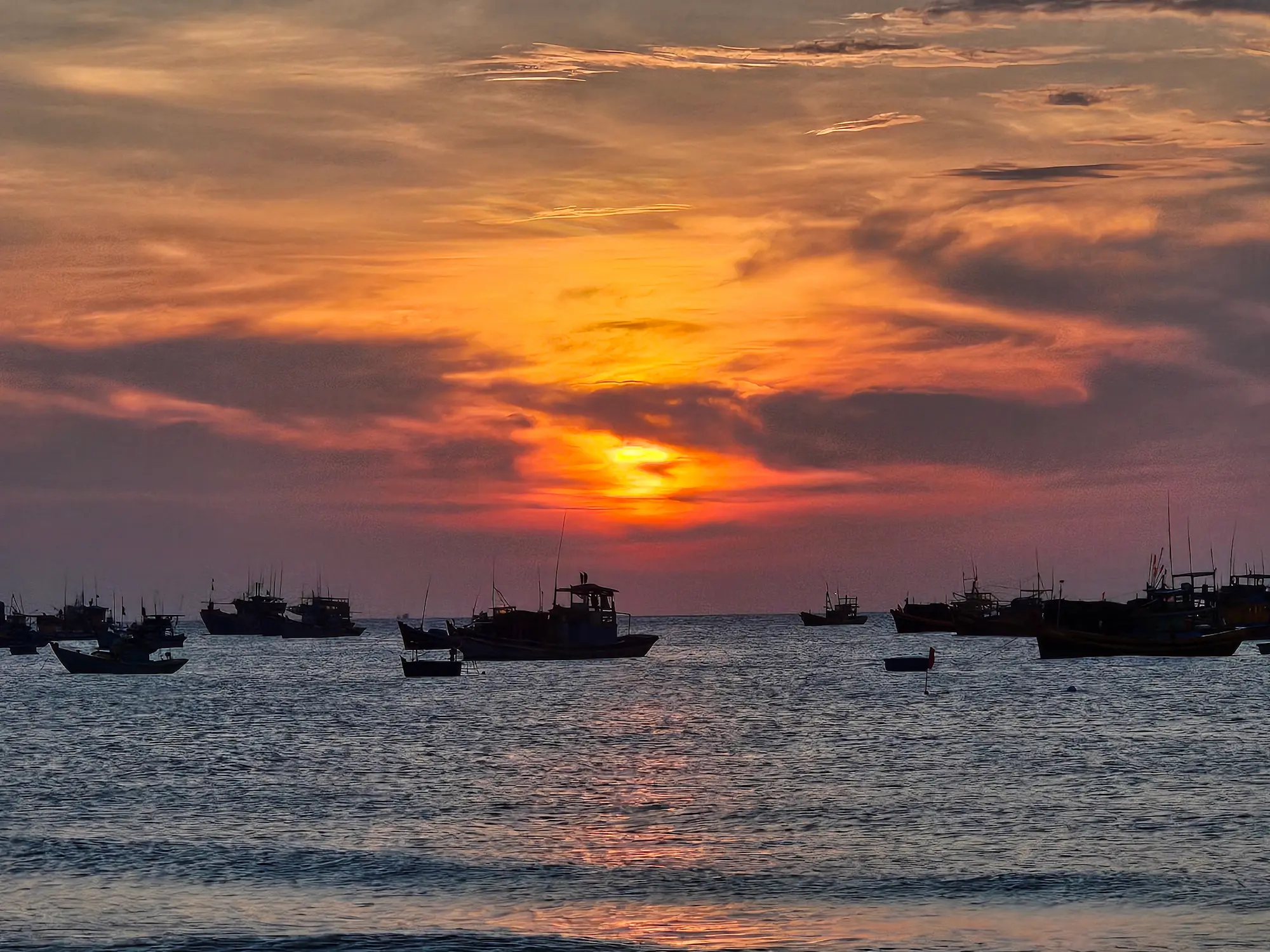
In the end
ClosingWhen you get home, you won't remember how long it took you to compare hotels. Or the seventeen tabs. Or the spreadsheet.
You'll remember a dinner, a conversation with someone you didn't know on Monday, the smell of a street at seven in the morning, a sunrise you hadn't seen a picture of before.
You probably weren't looking for a psychology article. You were looking for permission to stop looking at hotels. Consider it a given.
We are not the best agency in the world.
We are the agency that makes traveling without planning anything make sense.
SunZen Travel: the quiet luxury of traveling without planning anything.
Frequently Asked Questions
Common questionsDoes traveling without organizing anything mean that someone else decides for me?
No. You decide which country you go to, on what dates, and whether the pace of the trip suits you. What's delegated is the logistics: domestic flights, accommodations, transfers, entrance fees, local guide, and the order of the route.
What is lost by delegating the organization of a trip?
You lose the discovery phase, which some people enjoy more than the trip itself. You lose flexibility: with a fixed itinerary, you can't stay three extra days in one place. You lose the pride of having planned it yourself. And it's more expensive, because sharing a local guide, driver, and vehicle among a few people costs more per person.
Isn't improvising a trip the same as not organizing it at all?
No. Improvisation doesn't eliminate decisions; it relocates them. It moves them from your home, with time and a good connection, to a station at seven in the evening after a nine-hour journey. Improvising is about making more decisions, not fewer.
How many people are in each group?
From 6 to 13 people. Each departure has a previously set date. If it doesn't reach six, the trip doesn't go ahead and the full deposit is refunded.
What happens if something unexpected happens during the trip?
One of us will be with the group from the first airport to the last, and there will be local Spanish-speaking guides and contacts on the ground. We handle all the arrangements with airlines, accommodations, luggage, and transfers.
Keep reading
The Inner AtlasSources
- Iyengar, S. S. and Lepper, M. R. (2000). "When choice is demotivating: Can one desire too much of a good thing?". Journal of Personality and Social Psychology, 79(6), 995–1006.
- Schwartz, B. (2004). The Paradox of Choice: Why More Is Less.
- Scheibehenne, B., Greifeneder, R. and Todd, P. M. (2010). "Can There Ever Be Too Many Options? A Meta-Analytic Review of Choice Overload". Journal of Consumer Research, 37(3), 409–425.
- Chernev, A., Böckenholt, U., and Goodman, J. (2015). "Choice overload: A conceptual review and meta-analysis". Journal of Consumer Psychology, 25(2), 333–358.
- An, Q., Ozturk, A. B., Hancer, M., Hua, N. and Berezina, K. (2026). "The effects of information and individual difference factors on online travel agency consumers' confusion and decision postponement". Journal of Hospitality and Tourism Management, 67, 101439.
- YouGov, Booking burnout: reports from the United Kingdom and the United States, 2025.
- ABTA, Holiday Habits Report, 2025.
- Forbes, May 2026, on all-inclusive demand and decision fatigue (statements by Kati Morton).
- CNBC, December 2025, on travel trends 2026 (Lemongrass Marketing report).
- Much Better Adventures, January 2026, on "decision detoxes".