Inner Atlas · Interesting facts about Thailand · Series 05
The nature of Thailand
that nobody teaches you.
Beyond Phuket's beaches. Thailand's natural world is full of facts, records, and secrets that make this country one of the most extraordinary on the planet.
You can't see Thailand's nature from the beach. You step into it.
Thailand has more than 120 national parks covering 25% of its territory. These include tropical rainforests, mountains, mangroves, coral reefs, and more than 1,400 islands.
And within all that, a series of figures and interesting facts about Thai nature that completely change the image of the country.
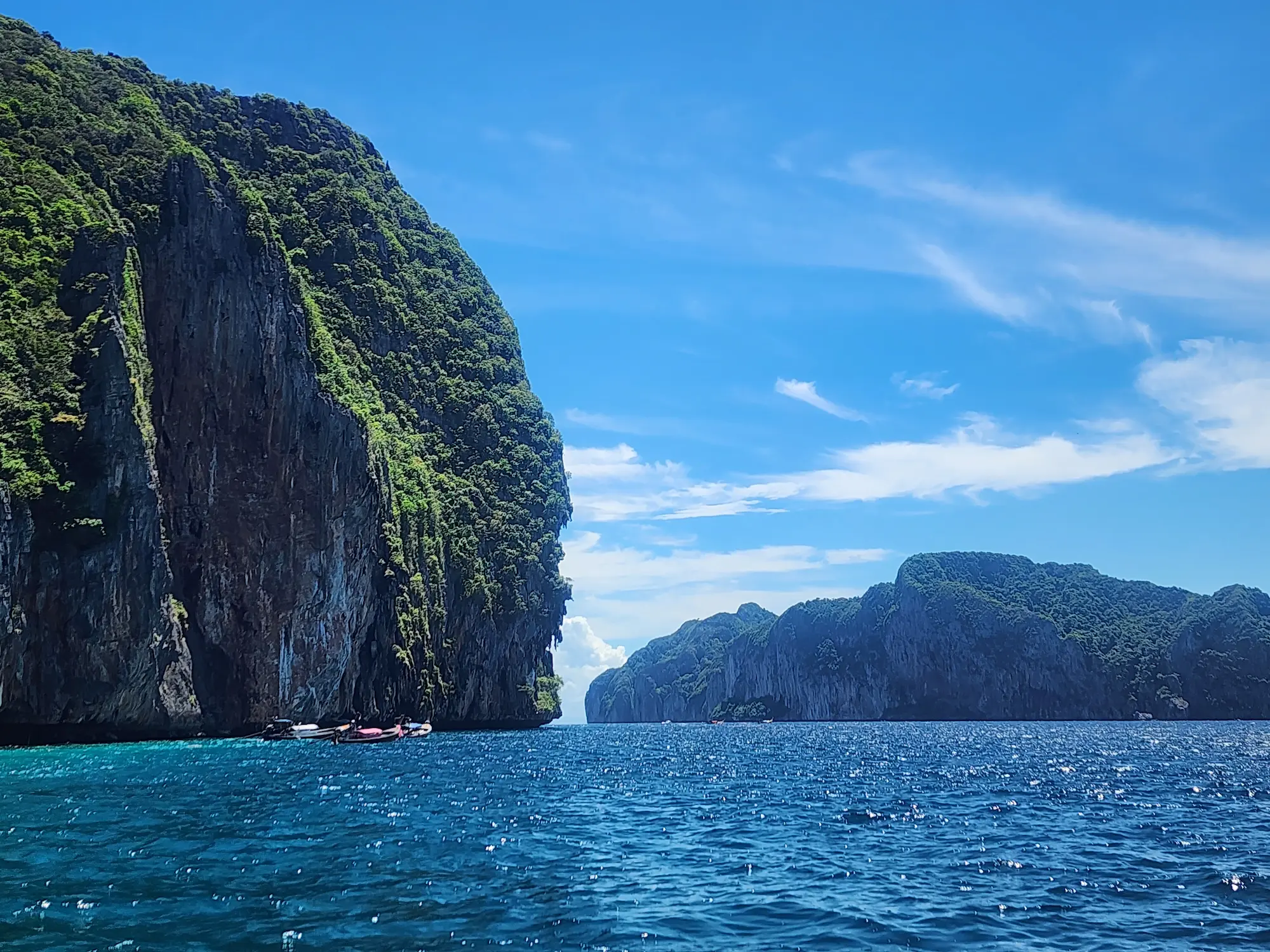
Thailand has more than 1,400 islands
Thailand's territory includes more than 1,400 islands spread between the Gulf of Thailand to the east and the Andaman Sea to the west. Only about 300 are inhabited. Many are inaccessible or can only be visited by private boat. Thailand’s natural environment on its most remote islands remains virtually untouched, with no tourism and no infrastructure.
In Thailand It snows in winter
Doi Inthanon, Thailand's highest peak at 2,565 meters, experiences sub-zero temperatures in December and January. It is the only place in the country where you can see ice crystals and frost. For the people of southern Thailand, who live in a perpetually tropical climate, climbing Doi Inthanon in winter is like seeing snow for the first time.
25% of Thailand's territory is protected area
Thailand has more than 120 national parks, wildlife reserves, and wildlife sanctuaries. They cover 25% of the national territory, one of the highest percentages in Asia. Khao Yai National Park, a UNESCO World Heritage Site, is home to wild elephants, tigers, and more than 300 species of birds, just three hours from Bangkok.
Thailand's nature is discovered away from the most famous beaches.
View the trip to Thailand →Thailand has wild elephants roaming free
There are between 3,000 and 4,000 wild Asian elephants left in Thailand, mainly in the national parks of the north and west. The Asian elephant is smaller than the African elephant and has smaller ears. In Thailand, the elephant is a national symbol, a sacred animal, and has been part of the country's history for centuries. Thai nature would be incomprehensible without it.
The whale shark can be seen in Thailand
The whale shark—the world's largest fish, which is completely harmless—visits Thai waters in the Andaman Sea between March and May. The reefs off Koh Tao, Richelieu Rock, and Koh Similan are some of the best dive sites in the world to spot it. Thailand's marine biodiversity is unmatched in Southeast Asia.
Every night out come millions of bats from a cave
More than two million free-tailed bats live in the Khao Chakan Cave in Sa Kaeo Province. Every evening, they spiral upward for more than 30 minutes, forming a black column visible from kilometers away. It is one of Thailand's most impressive and unexpected natural spectacles—and virtually unknown to tourists.
Thailand's nature isn't in the photos. It is waiting for you.
There are beaches in Thailand where the sea glows at night
On some remote beaches in Thailand—especially on Koh Lanta, Koh Phangan, and some of the southern islands—bioluminescent plankton illuminate the water with an electric blue glow as they move. Swimming in those waters at night is an experience that feels like something out of a movie. The phenomenon is unpredictable and not guaranteed, which makes it even more special.
The Mangroves of Thailand are a unique ecosystem
Thailand's mangrove forests cover more than 2,700 square kilometers of coastline. They are home to crabs, shrimp, fish, birds, and reptiles that are found in no other ecosystem. They also serve as a natural barrier against tsunamis and cyclones—well-preserved mangroves significantly reduced the damage caused by the 2004 tsunami in some areas of Thailand.
Thailand has two seas with different seasons
The Gulf of Thailand and the Andaman Sea have opposite monsoon patterns. While it rains in Phuket (Andaman Sea) from May through October, it's high season on Koh Samui (Gulf of Thailand). And vice versa. This means there’s almost always some part of Thailand with good weather—but you have to know where. Thailand’s climate requires planning.
Thailand is the world's largest exporter of orchids
With more than 1,500 native species and thousands of cultivated hybrids, Thailand exports orchids to more than 50 countries. Thai orchids adorn hotels, temples, markets, and homes around the world. The Pak Khlong Talat Flower Market in Bangkok, which is open 24 hours a day, is one of the largest flower markets in Asia.
The Sacred Trees of Thailand wear monk's robes
In the Thai Buddhist tradition, very old or very large trees are believed to be inhabited by spirits. To protect them from being cut down, monks and environmental activists dress them in orange Buddhist monk robes. A tree wearing an orange robe cannot be cut down without causing spiritual and social conflict. It is one of the most unique forms of environmental conservation in the world.
The gecko is the pest control most efficient in Thailand
Geckos—small lizards that cling to walls and ceilings—are common roommates in any Thai accommodation. Thais consider them to be good luck and actively protect them. They eat mosquitoes, cockroaches, and other insects with an efficiency that no insecticide can match. Their nighttime call—"gecko, gecko"—is part of Thailand’s soundscape.
The world's largest freshwater fish lives in the Mekong
The Mekong giant freshwater stingray can weigh up to 600 kilos. It is the largest known freshwater fish and inhabits the Mekong River on the border between Thailand and Laos. It is critically endangered. Fishermen who catch it by accident throw it back into the water—it is too sacred to eat.
Thailand has more species of snakes than any other country
With more than 200 species of snakes—of which about 60 are venomous—Thailand has one of the world's greatest diversities of snakes. The king cobra, Russell's viper, and the krait are the most dangerous. However, attacks on tourists are extremely rare. Snakes avoid human contact, and most encounters end without incident.
The Caves of Thailand hide entire worlds
The karst formations in northern and southern Thailand are home to caves of extraordinary size. Tham Luang Cave, in Chiang Rai, gained worldwide attention in 2018 when a children's soccer team was trapped for 18 days. But Thailand has dozens of equally impressive and much less visited caves, with underground rivers, lakes, and unique stalactite formations.
Getting to know Thailand
for real is not
arrive with a guide.
Thailand's natural beauty is just the beginning. It's about arriving with the right people. In the moments that matter. With time to understand what can't be explained, you feel it.
Co-founder of SunZen Travel. Traveler. The best moments of my trips weren't on the itinerary.