Inner Atlas · Interesting facts about Thailand · Series 03
Spirituality in Thailand
that doesn't appear in any guidebook.
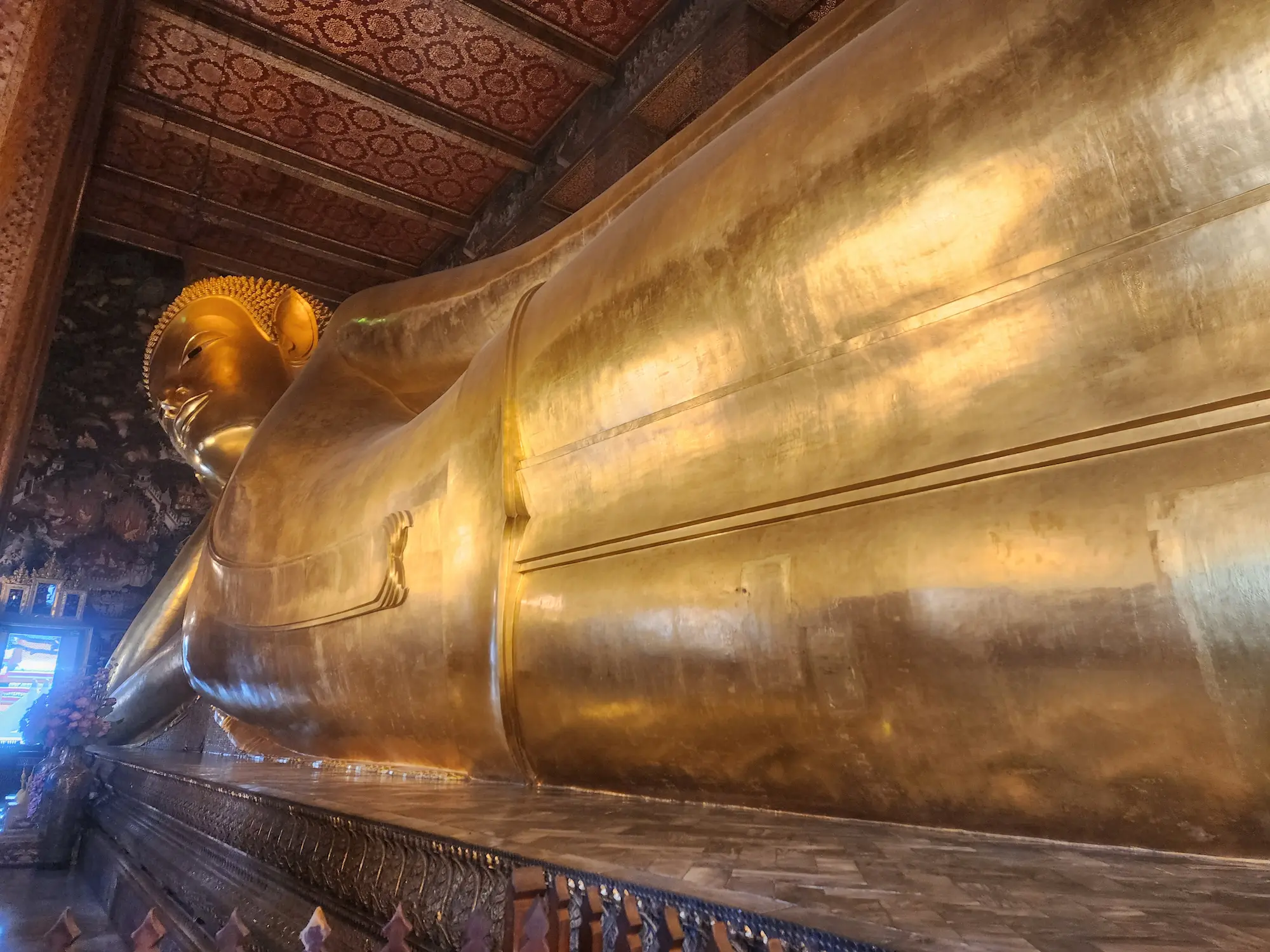
Buddhism in Thailand is not just a religion. It is the air we breathe, the logic that explains everything, and the invisible code that guides every decision.
Spirituality in Thailand isn't found in temples. It's found in everywhere.
In Thailand, spirituality isn't something practiced only on Sundays. It is the lens through which Thais make every decision, interpret every sign, and understand the world.
These are the aspects of spirituality in Thailand that no travel guide will tell you about, but that change everything once you know them.
95% of Thais are practicing Buddhists
It is not just a statistic. In Thailand, Theravada Buddhism is an active, everyday practice. The country has more than 40,000 temples and about 300,000 monks. Almost all Thai men spend at least part of their lives as monks—even if it's just a few weeks. It is a tradition that connects them to their ancestors and to the community.
Monks receive food at dawn in complete silence
Every morning, before dawn, the monks set out in procession through the streets with their orange bowls. The neighbors offer them food in silence, barefoot and with their heads bowed lower than the monks'. It is a ritual of humility and generosity that is repeated every day throughout Thailand. Seeing it in person is one of the most peaceful experiences in the country.
Buddhist Amulets are a market worth millions
Phra kruang are Buddhist amulets blessed by revered monks. Almost all Thais carry one or more of them. Some amulets belonging to famous deceased monks sell for tens of thousands of euros. There are specialty markets in Bangkok where collectors and devotees haggle over items that are centuries old.
You understand Thailand's spirituality when you experience it from the inside.
View the trip to Thailand →Every building in Thailand has a home for the spirits
San phra phum are small, miniature structures placed at the entrances to homes, hotels, and businesses. The protective spirits of the place live inside them. They are offered flowers, incense, water, food, and figurines every day to keep them happy and ensure their protection. If the spirits are unhappy, the household's fortune suffers.
Strawberry Fanta replaced the blood on the altars
In ancient Thai mysticism, rituals required animal blood. With the spread of Buddhism, blood was replaced by the most readily available red liquid on the market. Today, you'll see open bottles of strawberry Fanta with straws at almost any street altar in Thailand. An interesting fact that perfectly sums up Thailand's ability to adapt tradition.
Sak Yant Tattoos are done by monks
Sak Yant is a sacred tattoo performed by Buddhist monks or Brahmins using a bamboo or metal needle. It's not just decoration: it's a permanent blessing on the body which is believed to protect the wearer, give them strength, or bring them good luck. Each design has a specific meaning and a set of rules of conduct that the wearer must follow to maintain its power.
In Thailand, spirituality isn't something you visit. You breathe it in.
The Water Festival has a deep spiritual meaning
Songkran—the Thai New Year in April—is known worldwide as the world's biggest "water fight." But its origins are spiritual: Water purifies the past year, washes away mistakes, and renews the spirit for the coming year. Older Thais have water respectfully poured over their hands. Young people have turned it into a global celebration.
Thousands of lights floating on the river to ask the water for forgiveness
Loy Krathong is one of Thailand's most beautiful festivals. In November, during the full moon, millions of people set small boats made of banana leaves, with candles and incense, afloat on rivers, canals, and lakes. The ritual is an offering of gratitude and forgiveness to the spirit of the water for having used and polluted it over the course of the year. The sight of thousands of lights floating in the darkness is indescribable.
The White Elephant in Thailand is a sacred being
In Thai spirituality, the white elephant is a symbol of power, prosperity, and good fortune. All white elephants in the country automatically belong to the king. Historically, having many white elephants was a sign that the king ruled justly and that the gods approved of his reign. The original Thai national flag featured a white elephant.
Important decisions are made according to the lunar calendar
In Thailand, people consult with monks or astrologers before setting the dates for weddings, moving, business openings, and major operations. The lunar calendar determines which days are auspicious and which bring bad luck. Modern Thais, including businesspeople and politicians, routinely consult their spiritual advisors before making important decisions.
The color of your clothes has its own spiritual code
In Thai spiritual tradition, each day of the week is assigned a lucky color. Monday is yellow, Tuesday is pink, Wednesday is green, Thursday is orange, Friday is blue, Saturday is purple, and Sunday is red. Many Thais choose their clothes each morning depending on the day. On the days of the king's death, the entire nation dresses in black or yellow as a sign of respect.
The number 9 in Thailand brings prosperity
In Thai, the number 9 is pronounced kao, which sounds similar to the word "advance" or "progress.". It is the quintessential lucky number in Thailand. License plates with many nines were auctioned off for hundreds of thousands of euros. Weddings, inaugurations, and important contracts are preferably signed on dates with many nines. King Rama IX reigned for 70 years—the ninth king of the Chakri dynasty.
Getting to know Thailand
for real is not
arrive with a guide.
Thailand's spirituality is just the beginning. It's about being there with the right people. In the moments that matter. With time to understand what can't be explained, you feel it.
Co-founder of SunZen Travel. Traveler. The best moments of my trips weren't on the itinerary.