Vietnam: 107 pages written by the Earth. Caves with their own microclimates, such as Sơn Đoòng, the world’s largest cave; mountain ranges born from vanished oceans; canyons carved out over millions of years; extinct volcanoes; and unique karst landscapes. The Real Geology of Vietnam, by SunZen Travel.
Inner Atlas · Vietnam Series · SunZen Travel
Vietnam: 107 pages
written by the Earth
Caves with their own microclimates, mountain ranges born from vanished oceans, and canyons carved out over millions of years: the geology of Vietnam
wonders
of the Earth
geological history
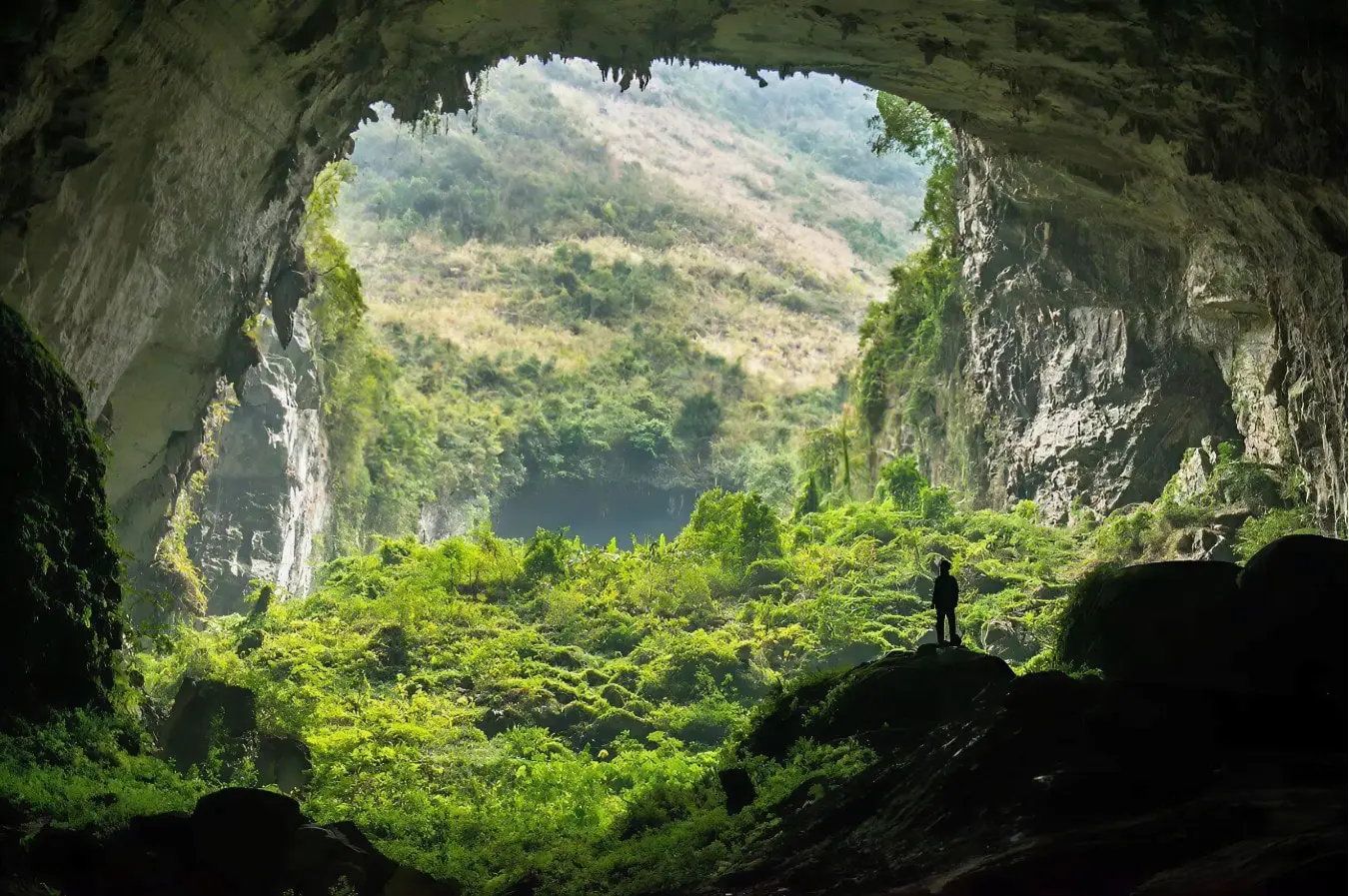
The world's largest known cave has its own internal climate—clouds, fog, and even its own forest in the areas where the ceiling has collapsed.
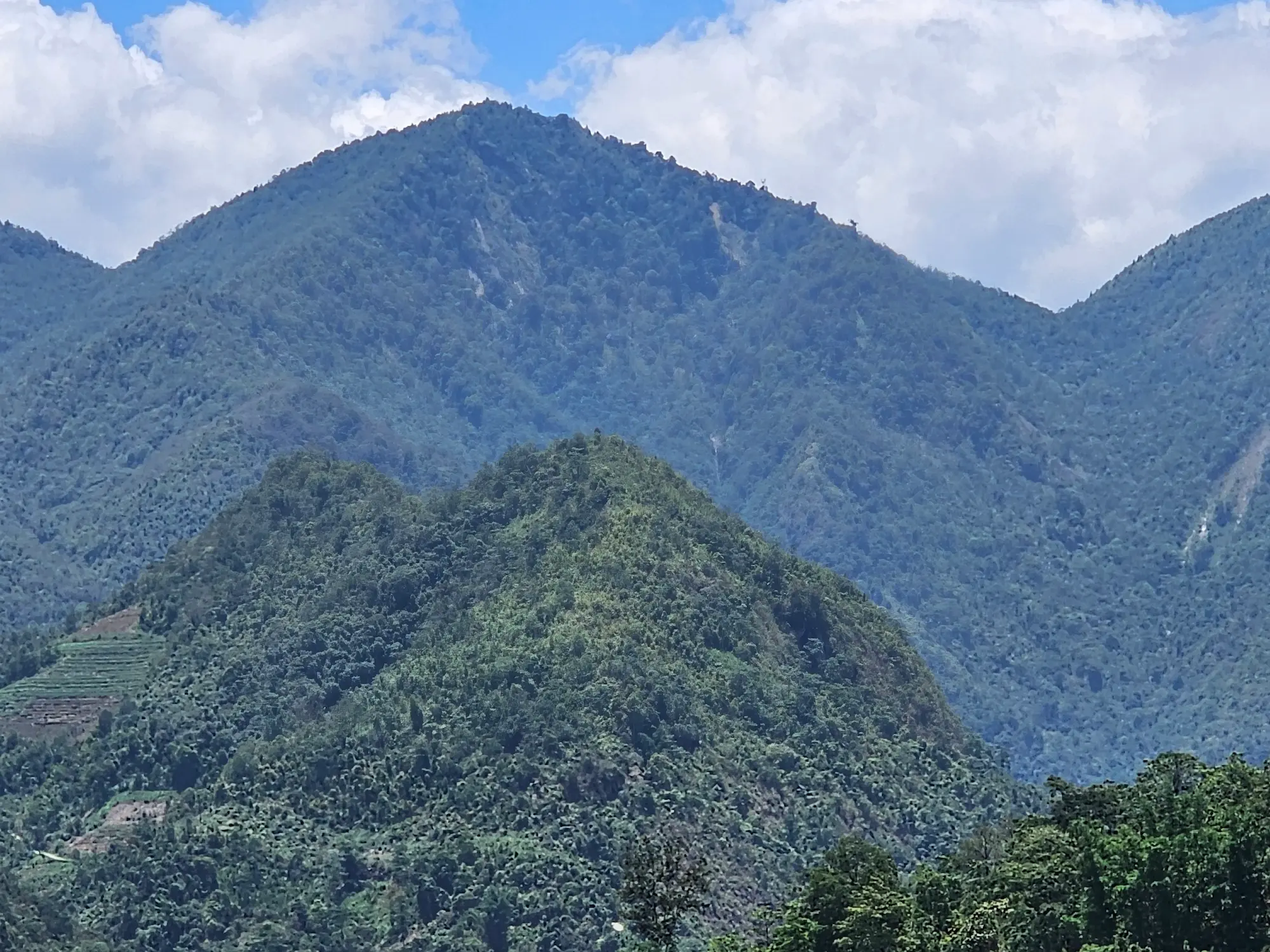
Sơn ĐoòngThe highest mountain in the entire region towers over the Hoàng Liên Sơn mountain range, stretching through tropical rainforests, cloud forests, and alpine zones.
FansipanThe oldest rocks in Vietnam were formed when the country's current territory was the seafloor—a record of the Earth's deep history.
OriginInner Atlas · Vietnam Series
107 Wonders of the Earth
Caves, mountains, volcanoes, rivers, and geological mysteries. Divided into 5 kingdoms.
Inner Atlas
Caves: underground worlds
Sơn Đoòng, the world's largest cave, with its own climate and its own forest. And dozens more, many of which have yet to be fully explored.
Sơn Đoòng, one of the Earth's greatest geological wonders
The world's largest known cave by volume did not form quickly—its creation required millions of years of water flow, rock dissolution, and the formation of passages.
Sơn Đoòng has its own internal climate
Because of its extraordinary size, the cave has its own atmospheric conditions: clouds, fog, air currents, and temperature changes. It is more like an underground valley than a traditional cave.
There are natural forests inside Sơn Đoòng
In areas where the cave ceiling collapsed, enough light entered to allow vegetation to grow. These spaces function as true ecosystems isolated from the rest of the world.
Sơn Đoòng Continues to Reveal New Secrets
Although it is one of the most studied caves in the world, each expedition uncovers new details about its geology, hydrology, and biodiversity. Due to its enormous size, there are still areas that remain largely unknown.
Vietnam's Other Major Caves
In addition to Sơn Đoòng, there are other giant caves—Hang Én, Hang Va, Tú Làn, Paradise Cave, and Phong Nha—and many of them have not yet been fully explored.
Hang Én, a passageway like a natural gateway
Its main entrance is one of the largest known cave entrances. From inside, you can see the jungle outside as if through a huge natural window.
Caves with rivers that continue to carve them out
Underground rivers flow through many of the Phong Nha caves, continuing to carve through the rock. These systems can extend for kilometers beneath the mountains.
Mineral formations that took millions of years to form
Stalactites, stalagmites, mineral columns, and stone curtains—each formation represents thousands or millions of years of slow growth.
Hang Va, Strange Mineral Formations
Its hundreds of mineral cones, rising from crystal-clear pools, are a geological rarity created by an exceptional combination of water flow, mineral composition, and stable underground conditions. There are few places in the world with similar structures.
Caves formed by volcanoes, not just by water
Although karst caves are the most famous, Vietnam also has volcanic caves—Chư Bluk, one of the largest volcanic cave systems in Southeast Asia, formed by ancient lava flows that cooled to create underground tunnels.
Phong Nha, one of the most impressive river caves in the world
It stands out because the main entrance is reached by navigating a river that disappears into the mountain, having carved out enormous chambers, mineral columns, and underground beaches over millions of years.
Phong Nha served as a refuge during the war
In addition to its natural significance, this cave has historical value: its chambers sheltered people and supplies during the conflicts of the 20th century thanks to its difficult access and enormous size.
Paradise Cave, one of Asia's most elegant galleries
Động Thiên Đường boasts one of the most spectacular stalactite chambers in Vietnam—its formations look like man-made sculptures, even though each one took thousands of years to form.
Tú Làn: Mountains, Rivers, and Caves All in One Place
It is not a single cave, but rather a network of caverns connected by jungle and waterways. Exploring it involves a combination of hiking, underground swimming, rock climbing, and navigating inland rivers.
Hang Pygmy, discovered a few years ago
It is part of the Phong Nha-Kẻ Bàng system and ranks among the world's largest caves. Its discovery reinforced the idea that Vietnam still possesses vast, unexplored natural areas.
The Tổ Mòong Cave Reveals Evidence of Ancient Human Presence
Its sediments preserve archaeological evidence of ancient human settlements—tools, animal remains, and past climate changes.
Caves with completely isolated ecosystems
In some caves, there are species that have evolved in isolation for thousands or millions of years, losing their pigmentation, developing reduced eyes, and undergoing changes in their senses.
Caves that Serve as Laboratories of Evolution
Underground environments allow us to study how life adapts to extreme conditions: the absence of light, a scarcity of food, and constant humidity.
Cave-dwelling fish with surprising adaptations
Some subterranean species have reduced pigmentation, extreme sensitivity to movement, and are fully adapted to living in dark waters.
Insects that exist only in a specific cave
Isolated caves promote the emergence of small animals that exist only on a single mountain or within a single underground system, with each cave functioning as a small evolutionary island.
Limestone caves are time machines
Their mineral layers contain information about ancient climates, past rainfall, and environmental changes. Scientists study the planet's history by analyzing these deposits.
Stalactites are records of the ancient climate
Each layer of mineral growth may contain chemical information about the conditions that existed when it formed—a cave can hold thousands of years of climate history.
Caves with their own internal lakes
In several underground systems, permanent bodies of water form as a result of rivers trapped beneath the mountain, creating environments that are completely different from those on the surface.
Caves where the mountains meet the ocean
In places like Ha Long and Cat Ba, there are caves formed when sea levels transformed ancient karst landscapes—an example of how the ocean can reshape a mountain.
Sinkholes that hide entire jungles
When the ceiling of a large cave collapses, a depression called a sinkhole is formed. In some of these sinkholes, entire forests have grown, creating ecosystems isolated from the outside world.
Caves that can only be explored for a few months a year
Monsoon rains cause water levels to rise rapidly, making many caves inaccessible. For this reason, expeditions are concentrated during the dry season.
Vietnam Remains a Frontier for Speleological Exploration
Every year, new expeditions are organized to map unknown passages. There are still underground systems whose full extent is unknown.
The caves maintain a very stable climate
Inside, the temperature and humidity remain virtually constant throughout the year, allowing delicate mineral structures to form and specialized species to survive.
Hua Ma Cave: Mythical Figures Carved in Stone
A spectacular cave within Ba Be National Park, filled with thousands of stalactites shaped like mythical figures.
Mo Luong Cave: Four Chambers Hidden in the Mountains
A hidden karst cave system in the Mai Chau Mountains, featuring four impressive underground chambers.
Nguom Ngao Cave, golden stalactites
One of the most beautiful limestone caves in the north, famous for its golden stalactite formations and underground rivers.
Hell's Cave: The Buddhist Underworld Carved in Stone
Dong Am Phu, located within the Marble Mountains, is a stunning natural cave that resembles the Buddhist underworld.
Fairy Cave, spirals carved by water
Hang Tien, the largest cave in the Tú Làn complex, is famous for the spiral patterns on its ceiling, formed by water over the course of millennia.
Bich Dong Cave, the second most beautiful cave in Vietnam
Commonly known by that name, it is a karst cave that has been converted into a sanctuary inside the mountain.
Inner Atlas
Mountains and Passes: islands of evolution
Fansipan, the highest peak in Indochina, and mountain ranges so isolated that they have given rise to species found nowhere else.
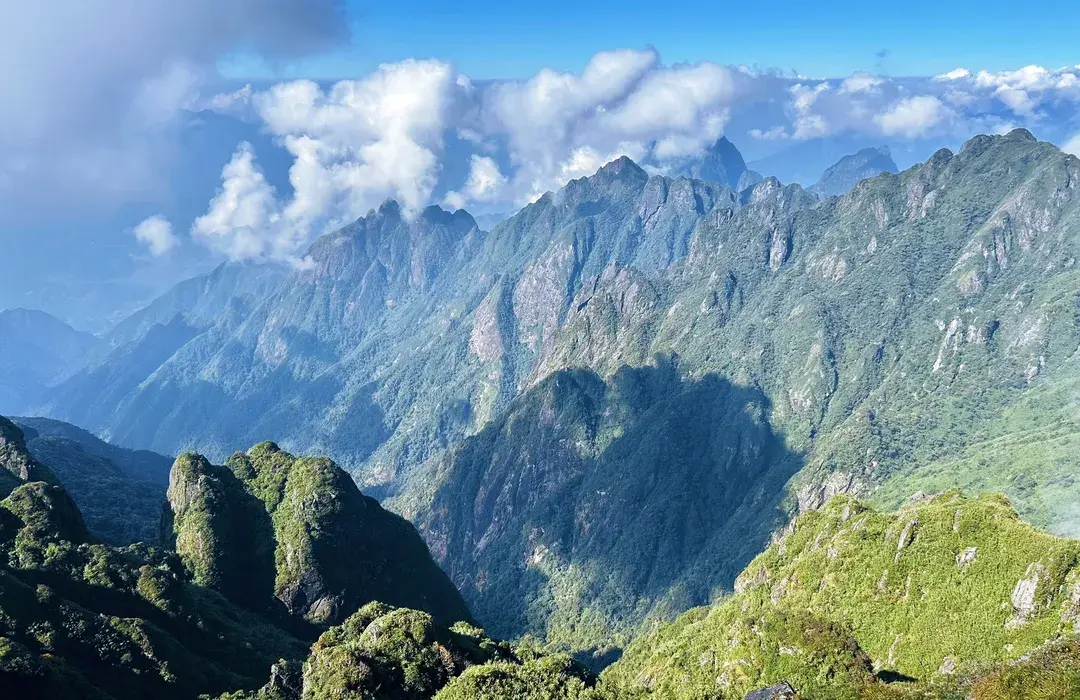
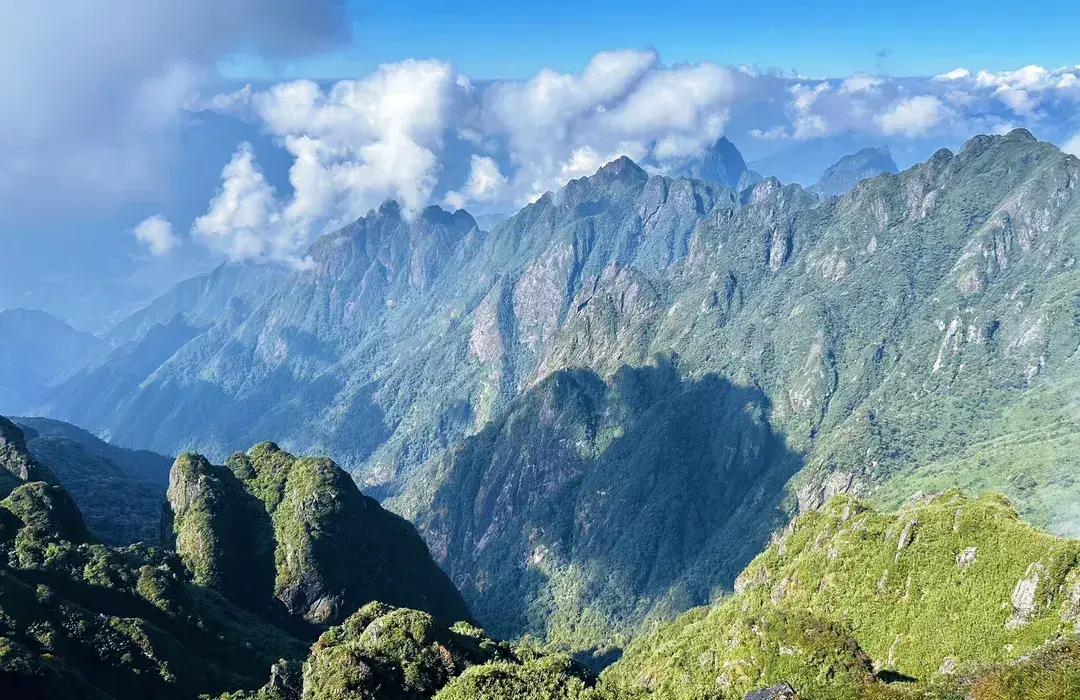
Fansipan, the highest mountain in all of Indochina
At 3,143 meters, it towers over the Hoàng Liên Sơn mountain range. The ascent takes hikers through tropical forests, mountain forests, and areas of permanent fog.
Hoàng Liên Sơn, a major mountain range
This mountain range acts as a natural barrier between Vietnam and the rest of the region. Its isolation has fostered tremendous biological diversity.
The Annamite Range, one of the most important mountain ranges in the world
This mountain range stretches across Vietnam and Laos. Its isolated mountains have allowed unique species to evolve and led to the discovery of animals previously unknown to science.
The Mountains of Hà Giang: An Otherworldly Landscape
This region boasts some of the world's most spectacular karst landscapes, featuring rock spires, vertical towers, and deep valleys.
The Đồng Văn Plateau, an open-air geological museum
It contains some of the country's oldest rocks, including marine fossils, and allows researchers to study millions of years of geological evolution in a single location.
Mã Pí Lèng, one of the most spectacular mountain passes on the planet
This road winds through a landscape where the mountains drop almost vertically toward the Nho Quế River—a striking example of the interplay between tectonics and erosion.
Ngọc Linh, an evolutionary mountain-island
Its isolation has allowed plant and animal species to evolve separately from the rest of the country. It is one of the most important places in Vietnam for discovering new species.
Bạch Mã, the transition between natural worlds
This mountain near the sea combines tropical forests, mountain mist, waterfalls, and coastal ecosystems—its geographic location creates a wide variety of environments.
Tà Xùa, misty forests and cloud-covered mountains
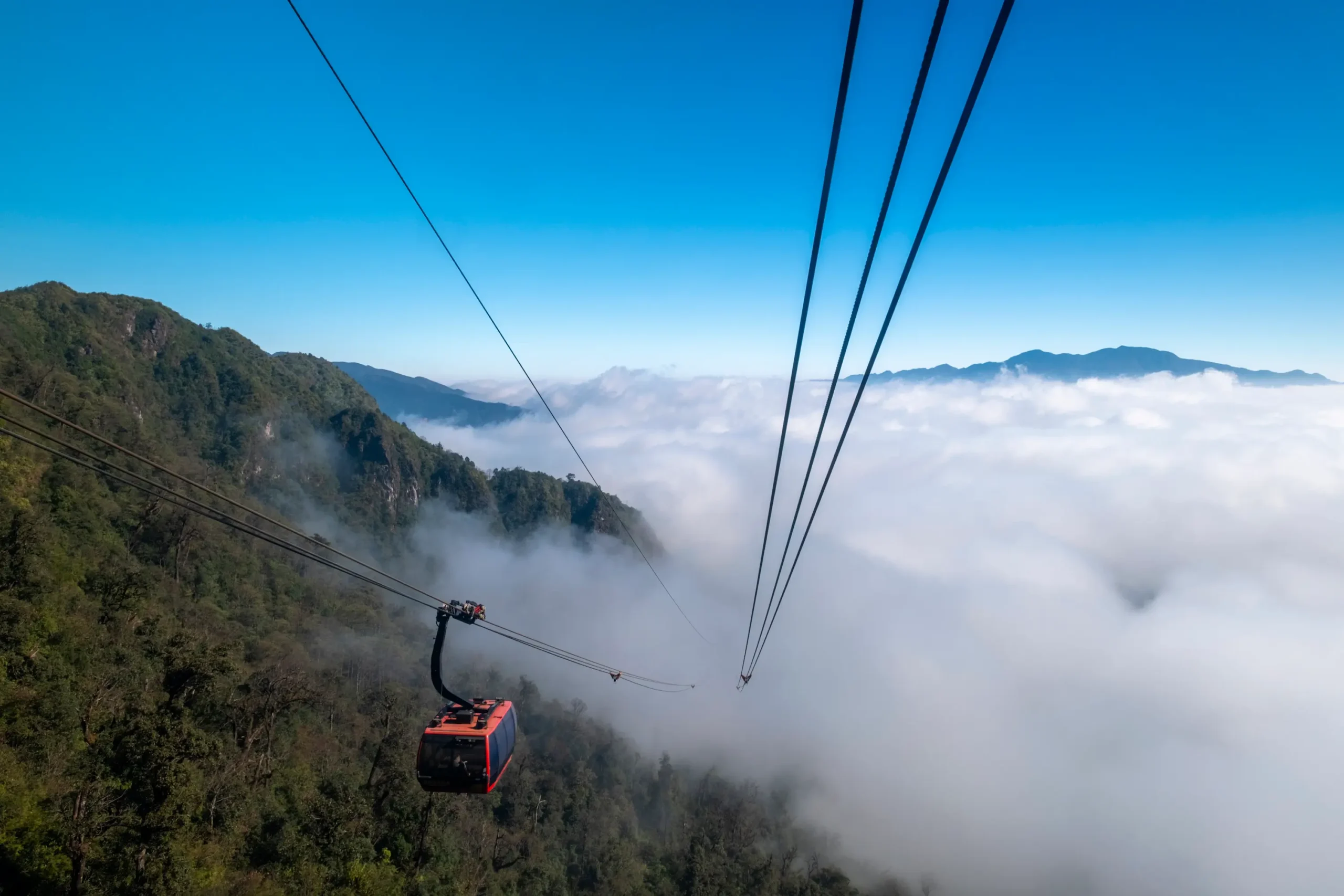
The atmospheric conditions in this area create landscapes where clouds cover the mountains like a white ocean. Its cloud forests are home to highly specialized species.
Vietnam's mountains are islands of evolution
Although they are physically connected, many mountains function as separate worlds. Isolation caused by elevation, deep valleys, and different climates has allowed numerous unique species to evolve.
Mountains that look like real natural walls
The limestone mountains feature nearly vertical cliffs that make access difficult and have protected isolated ecosystems and communities for centuries.
Cloud forests thrive because of geology
The highest mountains force moist air to rise, forming nearly permanent fog that keeps the forests cool even during the dry season.
Pha Din Pass, winding between cliffs
One of the four major mountain passes in northern Vietnam, a road nestled between dizzying cliffs.
Khau Pha Pass, overlooking the Mu Cang Chai Valley
Famous for crossing this valley, it offers spectacular views of canyons and rice terraces.
Mount Ta Chieu, the birthplace of the "sea of clouds"
One of the country's highest peaks, famous for its high-mountain ecosystem and the "sea of clouds" phenomenon.
Mount Lao Than, the birthplace of cloud watching
Known among hikers as the best spot to view the sea of clouds in northwestern Vietnam.
Mount Sam, standing alone over the delta
A solitary geological formation that rises abruptly from the flat alluvial plain of the Mekong Delta.
Tay Con Linh Peak, the roof of the northeast
Known as "the roof of northeastern Vietnam," a sacred mountain shrouded in primary rainforest and ancient Shan Tuyet tea trees.
Inner Atlas
Volcanoes, islands, and coastlines: where fire reigns
Basalt columns that look as if they were built by humans, islands formed by volcanic eruptions, and lakes that fill extinct craters.
Vietnam has ancient volcanic landscapes
The Central Highlands contain evidence of past volcanic activity: craters, basaltic rocks, and fertile soils.
Basaltic rocks that reveal ancient volcanic activity
Basalt forms when lava cools rapidly. These rocks are common in regions such as Đắk Nông, Gia Lai, and Lâm Đồng.
The Đắk Nông Geopark preserves an exceptional volcanic history
Extinct volcanic cones, ancient lava flows, volcanic tubes, and basaltic landscapes—one of the best places in the country to see how the Earth’s internal fire transformed the landscape.
The lava tubes of Đắk Nông: tunnels created by rivers of fire
When a lava flow cools on the surface but continues to flow inside, it can leave behind an empty tunnel—veritable highways created by ancient volcanoes.
The Central Highlands, the vast volcanic region
Regions such as Đắk Lắk, Gia Lai, Đắk Nông, and Lâm Đồng feature numerous volcanic rocks and soils formed by ancient eruptions, which are particularly fertile for forests and crops.
Lake Tà Đùng, hundreds of islands rising from the land
This enormous lake is linked to geological changes in a mountainous region. Its hundreds of green islands resemble a terrestrial version of Ha Long Bay.
Lake Lắk, Nestled Among Volcanoes and Water
Located in a former volcanic region, it is surrounded by hills, forests, and wetlands—an example of how geological processes can create havens for biodiversity.
Basalt columns that look like man-made structures
When lava cools slowly, it can fracture into nearly perfect geometric columns in various coastal and volcanic areas of the country.
Gành Đá Đĩa, Vietnam's "Giant's Causeway"
This coastline is made up of thousands of stacked basalt columns, formed when lava contracted as it cooled upon contact with the sea. Its appearance resembles a massive man-made structure, although it was created entirely by volcanic processes.
Metamorphic rocks that reveal tectonic movements
Some Vietnamese mountains are composed of rocks that have been transformed by extreme pressure, deep heat, and crustal movements—evidence of ancient collisions between tectonic plates.
Chư Đăng Ya Crater, red soil of extraordinary fertility
An ancient, extinct volcanic crater whose red basalt soil is exceptionally fertile; today, it has been transformed into farmland within the crater itself.
Phu Quy Island, of purely volcanic origin
An archipelago of volcanic origin surrounded by coral reefs and black basalt cliffs.
Hon Tre Island, the largest granite island in the bay
Known for its beaches and rock formations eroded by the sea over millennia.
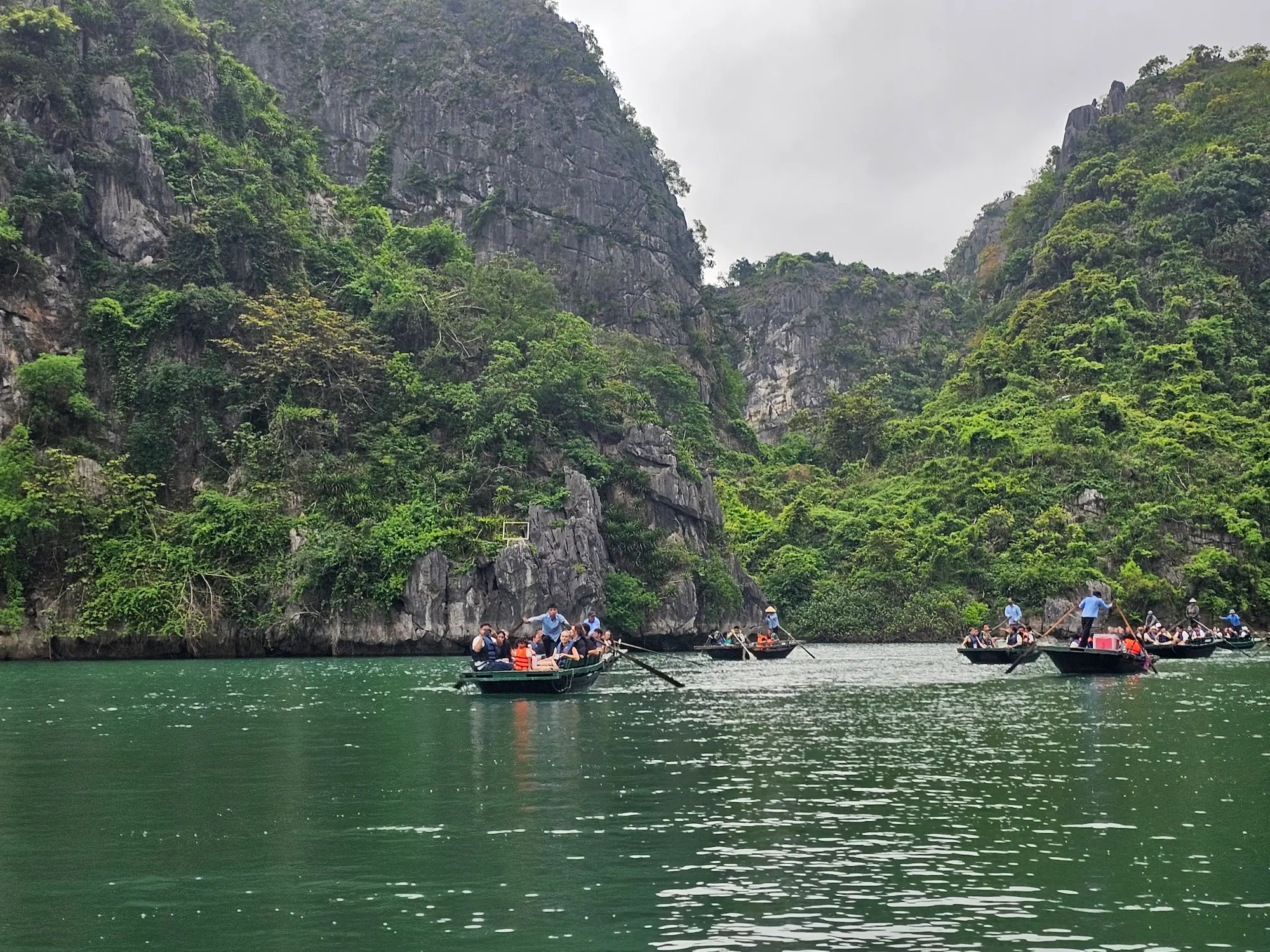
Lan Ha Bay, Ha Long's southern sister
Comprising more than 400 karst islets covered in wild vegetation and featuring secluded beaches—the southern side of Ha Long Bay, less well-known but just as spectacular.
Nam Du Archipelago, 21 islands in the Gulf of Thailand
A group of 21 volcanic islands with mountainous terrain rising from a turquoise sea.
"Every rock tells a story:
some of oceans now gone,
others of fire, others of water."
Inner Atlas
Rivers and Water: the force that shapes
Canyons carved drop by drop over millions of years, deltas that continue to grow every year, and waterfalls emerging from volcanic rock.
The Nho Quế River carved out one of the most impressive canyons in Asia
Over millions of years, this river has carved deep into the mountains of Hà Giang. The result is the Tu Sản Canyon, with vertical limestone walls—the deepest tectonic canyon in Southeast Asia.
Vietnam's rivers continue to shape new landscapes
Although many mountains are millions of years old, erosion continues to take its toll: rivers continue to carve out valleys, transport sediment, and reshape coastlines.
The Mekong Delta: A Structure Still in the Process of Growing
Every year, the Mekong carries enormous amounts of sediment, slowly creating new islands, sandbars, and stretches of land.
The Red River Delta, Another Great Accumulation Project
For thousands of years, this river has shaped one of the most fertile plains in Asia—an example of how a river can create an entire region.
The Marble Mountains: A Transformation of the Coastal Landscape
These landforms were shaped over millions of years by water, wind, and changes in sea level. Today, they are small, isolated mountains along the coast.
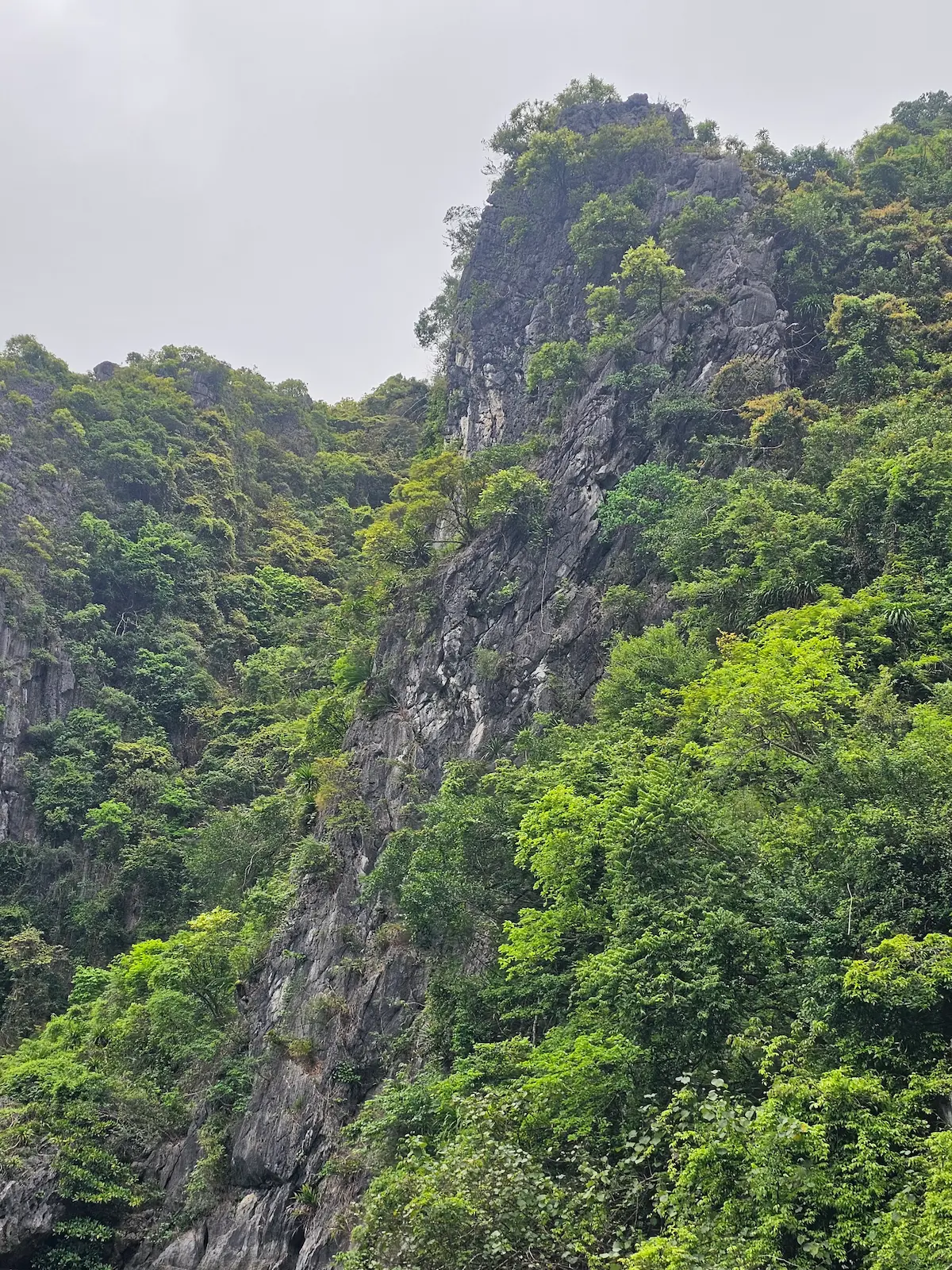
Ha Long Bay: Tropical Erosion on Limestone
The heavy rains of Vietnam's tropical climate accelerate the dissolution of the limestone. The result is the famous rock towers that rise out of the sea.
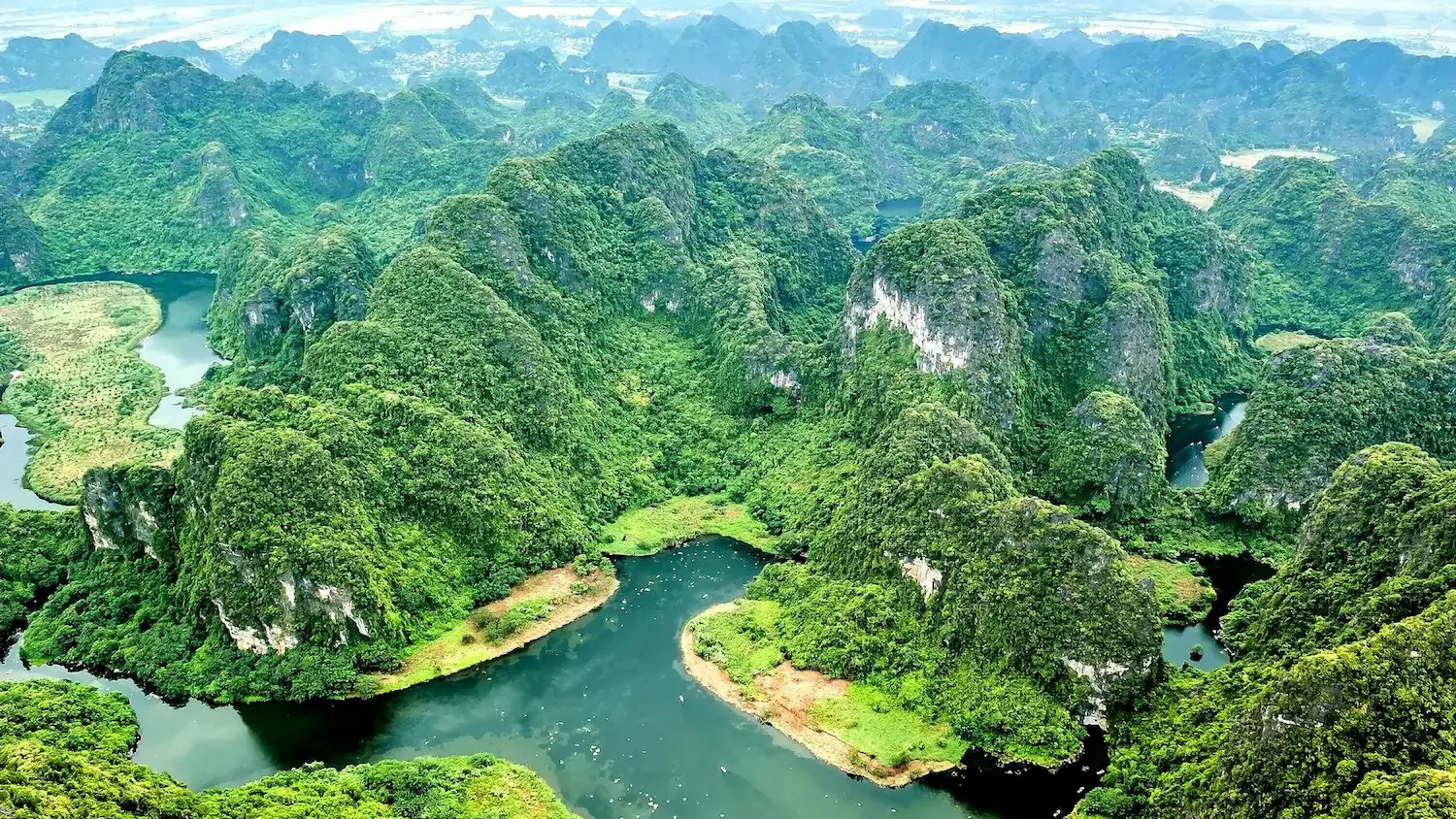
Trang An, a natural laboratory of karst erosion
Its mountains, rivers, and caves show how water can transform an entire region—one of the world's most complete karst landscapes.
Tam Cốc: The Evolution of an Ancient Seascape
The mountains that today surround rice paddies were once marine formations that rose and eroded over millions of years.
Towering mountains, isolated and sheer giants
Isolated rock formations that rise from the ground like vertical giants, especially in Hà Giang, Ninh Bình, and Quảng Bình.
Karst mountains that serve as biodiversity refuges
Their vertical walls create isolated environments where many species survive in isolation—some mountains are home to animals and plants found nowhere else.
Rivers that disappear beneath the mountains
In karst regions, numerous waterways flow into caves and travel for kilometers underground before reemerging on the surface.
The rain continues to shape the landscape
Every drop of water slowly dissolves limestone. Although the process is very slow, over millions of years it creates spectacular mountains, valleys, and caves.
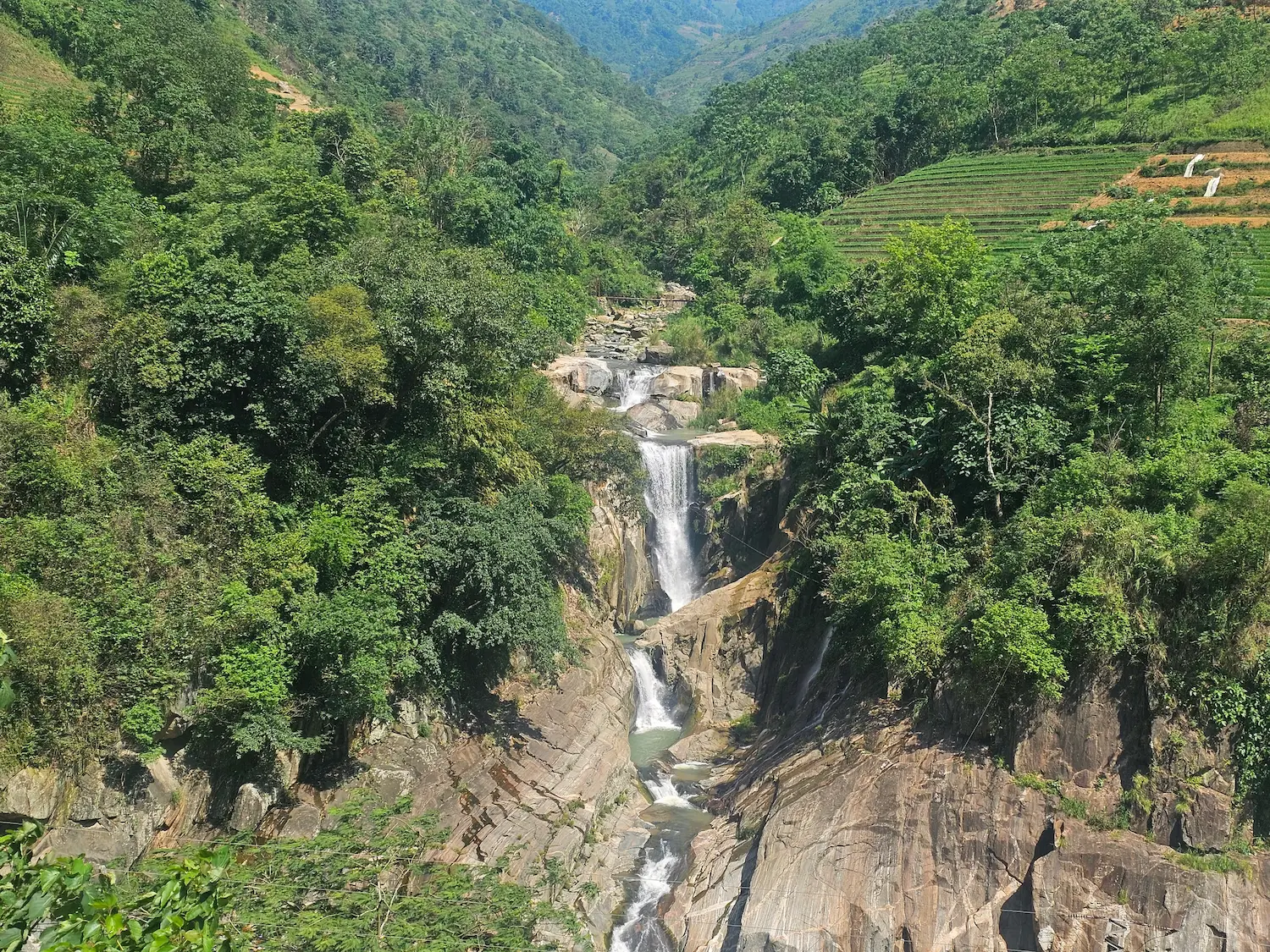
Waterfalls originating in volcanic or karst terrain
The composition of the rocks determines the path of the water, leading to the formation of waterfalls and rapids that change over time.
The Vietnamese coastline is constantly changing
Ocean currents, storms, and sediment carried by rivers reshape beaches, estuaries, and small islands year after year.
Tac Tinh Waterfall, crystal-clear among the peaks
A breathtaking crystal-clear waterfall hidden among the peaks of the Hoàng Liên Sơn mountain range.
Thac Ba Lake, with more than 1,300 limestone islands
One of Vietnam's largest man-made lakes, with more than 1,300 green limestone islands rising from its waters.
Lake T’Nung, located within an extinct volcanic crater
A stunning lake that fills the crater of a volcano that has been extinct for millions of years, in the Central Highlands.
K50 Waterfall, hidden deep in the jungle
Tucked away in the Kon Chu Rang Nature Reserve, it is one of the most majestic wild waterfalls in Southeast Asia.
Dray Nur and Dray Sap Waterfalls, Connected Basalt Colossuses
A colossal system of basalt waterfalls formed by the erosion of the Serepok River.
Bau Trang Dunes, a desert with a lotus oasis
A desert of constantly shifting white sand dunes surrounding a natural freshwater oasis covered with lotus flowers.
Inner Atlas
Minerals and Mysteries: The Earth's Archive
Marine fossils at the tops of mountains, crystals that take millennia to form, and why geology explains the country’s entire biodiversity.
A geological history spanning more than 500 million years
The oldest rocks in Vietnam were formed when the land as we know it today was undergoing completely different processes: oceans emerged, mountains rose, and continents disappeared. Vietnam is, quite literally, an archive of the Earth’s deep history.
Much of Vietnam was once covered by ancient seas
Many of today's mountains were once the seafloor. The evidence for this can be found in fossils of marine organisms, layers of limestone, and the remains of ancient reefs.
Limestone, a defining feature of the Vietnamese landscape
Vietnam is home to some of the world's most impressive karst formations. The limestone gives rise to giant caves, rock towers, underground rivers, and mountains with impossible shapes.
The Vietnamese karst landscape, one of the most spectacular on the planet
A karst landscape forms when water slowly dissolves limestone over millions of years, creating thousands of isolated mountains, enormous caverns, enclosed valleys, and complex underground systems.
Phong Nha-Kẻ Bàng, one of the oldest karst systems in Asia
Its mountains began to form approximately 400 million years ago. Over that vast period of time, water carved out a gigantic underground network.
Fossils That Tell the Story of Ancient Seas
Vietnamese rocks contain the remains of marine mollusks, ancient corals, trilobites, and microscopic organisms—evidence that the territory has changed completely over time.
Marine Fossils at High Altitudes in Đồng Văn
Finding marine fossils in high mountains seems impossible, but it proves that those lands were once under the ocean before they rose.
Vietnam's geology continues to change today
Although many geological formations are millions of years old, the Earth remains active: erosion, tectonic movements, coastal changes, and the formation of new landscapes. Vietnam is not just a geological museum; it is a miniature planet still in the process of transformation.
Fossils from Hà Giang Help Reconstruct Ancient Continents
Scientists use these rocks to understand how the region has changed over hundreds of millions of years.
Underground deposits of rare minerals
The country's complex geology has contributed to the presence of minerals used in modern technology.
Unique crystals and deposits in each cave
The combination of groundwater and minerals produces formations of great beauty—each cave has a different "geological signature.".
Geology explains the country's extraordinary biodiversity
Isolated mountains, caves, volcanoes, and rivers created thousands of small, separate habitats. These landscapes allowed evolution to produce an enormous variety of species.
Rock fractures that determine the course of the caves
The cracks caused by ancient tectonic movements serve as pathways for water, which over millions of years widens these fissures until they form enormous caverns.
Mountains with caves on various levels
Changes in river levels over time have left ancient galleries at different elevations within the same mountain.
Some of the world's best-preserved karst landscapes
The combination of mountains, rainforests, and rivers has made it possible to preserve vast regions where geological processes can be observed with almost no human interference.
Cliffs that provide a refuge for very rare species
The rock walls provide a home for plants, birds, and small mammals, which find safe havens there from predators and environmental changes.
Earthquakes that have helped shape the landscape
Although Vietnam is not a country with intense seismic activity, ancient tectonic movements helped raise mountain ranges and fracture large blocks of rock.
Tree roots also transform the mountains
As they grow into small cracks, the roots exert pressure on the rock and cause it to break apart, accelerating natural erosion.
Lichens help erode rocks
These organisms produce chemicals that slowly alter the surface of the stone, setting in motion processes that will continue for thousands of years.
Geology determines where forests occur
The type of rock influences soil fertility, water availability, and nutrient levels, determining which plant species can thrive in each region.
Inner Atlas · SunZen Travel
More reasons to travel to Vietnam
If this has made you see Vietnam in a new light, check out our feature article for the complete guide—visas, culture, cuisine, and interesting facts, plus the 105 extraordinary species that call this unique geological landscape home.
Let's talk whenever you want
Write to us
When you write, someone responds.
Keep exploring
The Inner Atlas
In Vietnam, every mountain, every cave, and every rock formation is a page written over hundreds of millions of years. Ancient seas transformed into mountain ranges, rivers that carved out immense caverns, and unique karst landscapes make this country one of the planet’s greatest geological treasures. In these pages, I’ve highlighted 107 wonders where the Earth reveals, with patience and beauty, the extraordinary story of its own creation.