Bali, the Island of the Gods: Magic, Rituals, and Balinese Spirituality. Canang Sari, Melukat, Nyepi, Ogoh-Ogoh, Galungan, and all the secret rituals that pulse through every corner of Bali. This is SunZen Travel’s definitive guide to Balinese magic.
Inner Atlas · Bali Series · SunZen Travel
Bali, the Island of the Gods: magic
and rituals that pulse through every corner
Canang Sari, Melukat, Nyepi, Ogoh-Ogoh, and the spiritual secrets that can only be understood by experiencing them
that beat in
every corner
sections
of absolute silence on Nyepi
The Bali Starling is the only bird found exclusively in Bali; it is not found anywhere else in the world. Today, it has also been reintroduced to Nusa Penida.
JalakBali's tallest volcano marks the Kaja axis: the direction toward which all Balinese people turn their heads when they sleep, to receive the pure energy of the gods.
AgungThe philosophy that underpins the entire island: balance among the gods, nature, and people. That is the foundation of every ritual you’ll discover in this article.
KaranaBali, the Island of the Gods
It's fascinating to read and research Bali, a sacred destination where the universe, nature, and the gods coexist in perfect balance.
For a Balinese person, the universe is full of energy. It is a living universe in which everything has a spirit: animals, mountains, the sea, trees… Everything is connected.
While in the West we tend to view luck as the result of chance or effort, in Bali it is believed that good fortune comes when a person lives in harmony with the gods, with nature, and, above all, with themselves, keeping their energy in balance.
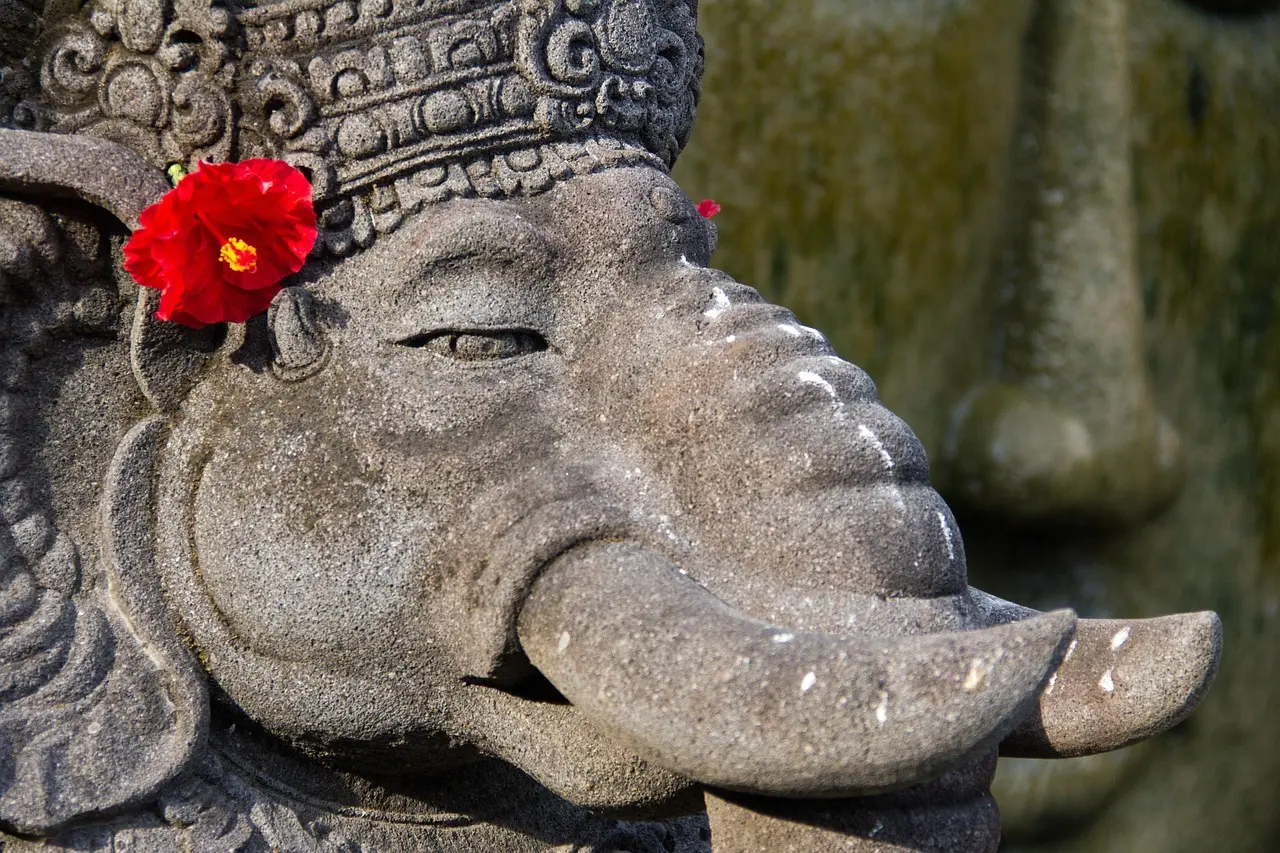
The mountain, the sea, and the sun have deep spiritual significance. The mountain represents the gods, the ancestors, and purity. The sea symbolizes change, transformation, and the power of nature. The sun, associated with Surya, represents life force, energy, birth, mental clarity, and the beginning of new cycles.
In essence, Bali, the Island of the Gods, teaches us that true magic comes from within us, from being in harmony with the forces of nature and the energy of the universe.
Inner Atlas · Bali Series
30 Rituals and Secrets of Bali
Those that beat in every corner of the island. Divided into 3 thematic sections.
Inner Atlas
The Magic of every day
The rituals that the Balinese practice tirelessly, every day of the year, to maintain the balance of the universe.
Canang Sari: The Offerings That Maintain the Balance of the World
Every morning, millions of Balinese place small baskets made of palm leaves filled with flowers, rice, and incense. These are not decorations; they are a daily act of gratitude and a negotiation with the universe. Each flower color points to a direction and a god—white to the east for Ishvara, red to the south for Brahma, yellow to the west for Mahadeva, blue or green to the north for Vishnu. The incense smoke carries the prayer up to the heavens.
Kaja and Kelod: The Sacred Axis That Explains All Other Rituals
Bali is governed by an invisible axis: Kaja, toward the sacred mountain where the gods dwell, and Kelod, toward the sea, where the spirits of the underworld reside. When sleeping, one’s head must always face Kaja to receive the pure energy of the gods. This same logic explains why the sea purifies during Melasti and why the mountain is sacred throughout the island.
Tridatu: the bracelet you don't buy—you receive it
That three-colored braided cord you’ll see on the wrists of almost all Balinese people is called a Tridatu. Red, white, and black represent the Hindu trinity—Brahma, Shiva, and Vishnu—and the cycles of birth, life, and death. It’s not a souvenir: a priest at a temple places it on your wrist after a purification ritual, and it’s believed to protect against evil spirits.
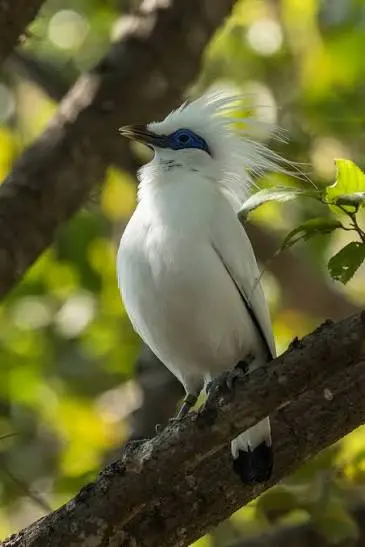
The Bali Starling, the island's only endemic bird—critically endangered, with only about 50 individuals remaining in the wild.
Melukat: Magic Through Sacred Water
When a Balinese person feels blocked or is experiencing a streak of bad luck, they go to a temple with a sacred spring—the most famous of which is Tirta Empul. Guided by a priest, they pass their head under a series of water jets, each with a different purpose: to purify the karma of past lives, cleanse negative thoughts, heal spiritual ailments, or attract success in business.
Nunas Tirta: Asking for Holy Water Before a Trip
Before opening a business, moving, or setting out on a trip, Balinese people ask for holy water at the temple and sprinkle it on doors, backpacks, vehicles, and documents. It’s a ritual commonly practiced by local guides and drivers—literally, the ritual they perform before taking you on a trip.
Mecaru: The Ritual Hotels Perform Every Morning
Small offerings of rice, salt, flowers, and fire, placed to neutralize negative energies before an event or at the start of the day. Many hotels do this every morning without tourists realizing it—that offering you see on the floor at the entrance isn’t something that needs to be cleaned up; it’s the hotel’s ritual.
Rambut Sedana: The Altar of Money in Every Business
In shops, hotels, and restaurants in Bali, you’ll see a small altar dedicated to Rambut Sedana, the goddess of wealth. On full moon days, shopkeepers thoroughly clean their cash registers, place ancient Chinese coins tied with sacred strings on them, and offer flowers so that money will never stop flowing.
Kajeng Kliwon: The Day the Two Worlds Meet
Every 15 days, the Balinese calendar marks Kajeng Kliwon, the date when the visible world (Sekala) and the invisible world (Niskala) intersect, making magic much stronger. To protect themselves, people prepare special offerings called Segehan, which are placed on the ground at the entrance to their homes or at crossroads to appease the lower spirits and turn them into protectors.
Kayu Sakti: The Magical Woods That Protect You on the Road
The Balinese carve amulets from specific types of wood. Kayu Nagasari wards off spells and envy; Kayu Galih Kelor, made from the moringa tree, is used to protect against road accidents—many local drivers keep a piece of it in their car’s glove compartment or on their motorcycle’s handlebars.
Bhuta Kala: The Stone Demons That Absorb Bad Luck
At the entrances to homes and temples, there are stone statues that look like demons, often draped in black-and-white poleng cloth. They aren’t there to scare visitors: Balinese mythology says that evil spirits are drawn to these figures and stay at the entrance "playing" with them, forgetting to go inside and cause trouble.
Suwuk: Protective Magic Written on Palm Leaves
Priests write magical symbols on palm leaves, which are then burned. The smoke is used to protect homes, businesses, and travelers. It is one of the oldest rituals in Bali, and it is almost never mentioned in tourist guidebooks.
Beras Baro: Divination Using Rice Grains
When a Balinese person experiences a prolonged streak of bad luck, they turn to a balian, the traditional healer. While in a trance, the balian prays and asks the person to take a handful of rice from a sacred bowl and let it fall onto a banana leaf. The balian does not count the grains; instead, he analyzes the geometric patterns they form as they fall, believing that spirits alter their descent to reveal the source of the bad luck.
Barong vs. Rangda: The Dance That Keeps Chaos at Bay
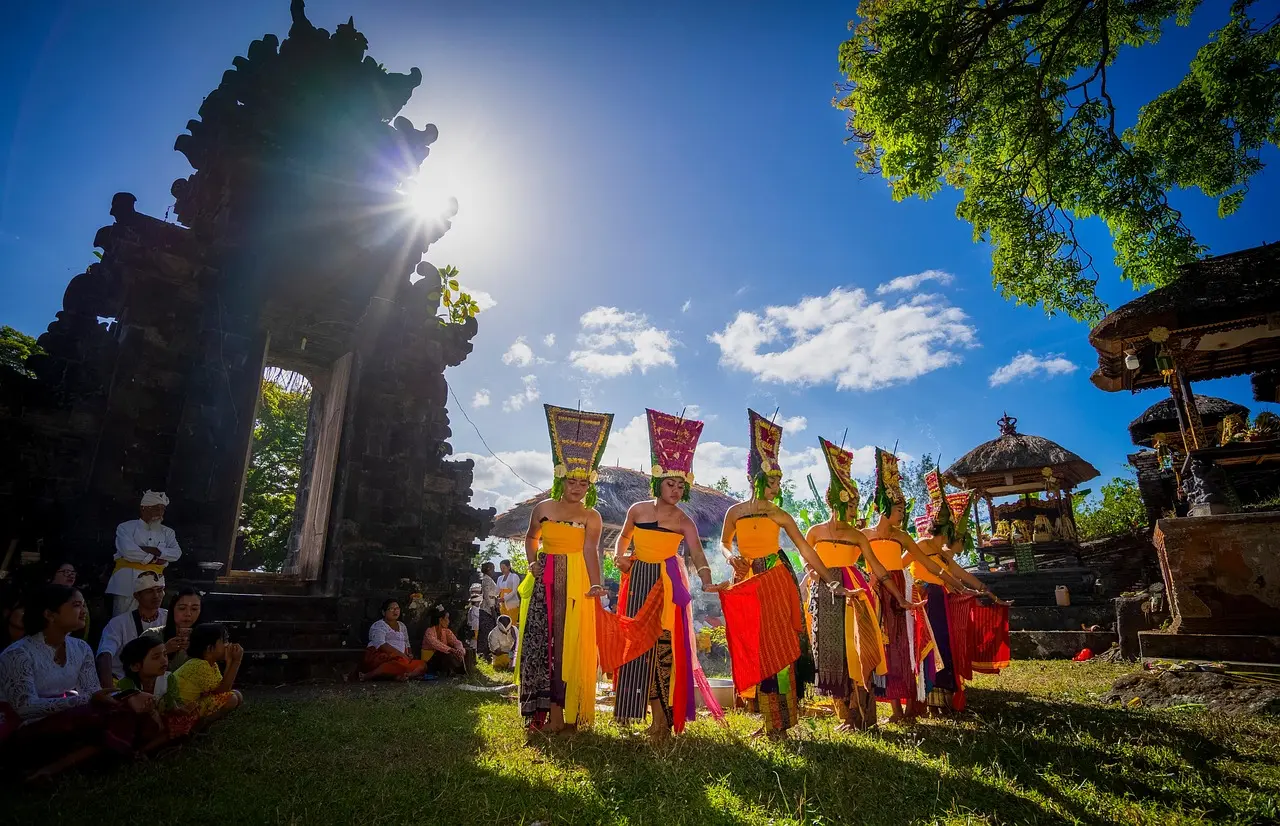
The Barong is a protective spirit that represents order. Its enemy is Rangda, the demon queen of chaos. The Barong dances you see in cultural performances aren’t just theater: for the Balinese, they are real ritual battles that keep the people’s fortune in balance.
Ngaben: The Funeral That Sets the Soul Free
A Balinese funeral is not viewed as a tragedy, but rather as a ritual act of liberation. The body is cremated so that the spirit may be set free and reincarnated. The entire community participates, because it is believed that the deceased’s fate in their next cycle affects everyone around them.
Otonan: The True Spiritual Birthday
Balinese people do not celebrate their birthdays every 365 days, but rather according to the Pawukon calendar, which spans 210 days. On that day, a priest ties a white string around the birthday person’s wrist to bind their soul to their body, and rubs ash on their hands and feet to cleanse them of the mistakes of the previous cycle. If a Balinese person is going through a rough patch, they often check to see if they neglected their last Otonan.
Tumpek Landep: The Day Even Cell Phones Are Blessed
Every 210 days, Bali celebrates Tumpek Landep, a festival dedicated to metal objects. In the past, sacred daggers and farming tools were blessed; today, Balinese people bring their cars, motorcycles, computers, and cell phones to be blessed; they wash them and cover them with floral offerings—they believe that metal objects are the modern channels through which money and good fortune at work flow.
Ngaturang Ayah: Asking Permission Before Entering the Jungle
Guides and locals leave small offerings before entering forests or mountains—a ritual of respect for the spirits of the place, intended to prevent accidents along the way.
Sekala and Niskala: The Two Worlds That Explain All of Bali
For a Balinese person, there are two realms: Sekala, the material and visible, and Niskala, the spiritual and invisible. Any business in Bali—a hotel, a store, a restaurant—includes a budget for offerings and rituals in its fixed expenses. If sales drop one month, the owner doesn’t invest in advertising first; instead, they hire a priest to perform a larger cleansing ceremony. This is the key that explains everything mentioned above—luck isn’t a matter of chance; it’s a daily practice of maintaining balance between both worlds.
Inner Atlas
Galungan and Kuningan: When the Ancestors Return Home
Every 210 days, the streets of Bali are filled with giant bamboo poles, and families are visited by their ancestors.
Galungan: The Triumph of Good and the Return of the Ancestors
Every 210 days, according to the Pawukon calendar, Bali celebrates Galungan: the commemoration of the triumph of good over evil and the symbolic return of the ancestors to the earth. Families clean their temples, prepare ceremonial food, and decorate entire streets—it is one of the festivals that most visually transforms the island.
Penjors aren't decorations—they're spiritual antennas
Those giant, curved bamboo poles you see on every street during Galungan aren’t just tourist decorations. Each penjor is designed to attract abundance, fertility, and good luck—every curve, every flower, and every leaf that adorns it has its own meaning within the ritual.
Kuningan: The Day the Ancestors Say Goodbye
Ten days after Galungan comes Kuningan, which marks the end of the ancestors’ visit. It is associated with blessings and prosperity—it is the closing of the cycle that Galungan had begun.
Mekotek: The Human Pyramid Calling for Protection
In the village of Munggu, during the Kuningan festivities, hundreds of men and boys lift a huge structure made of wooden poles into the air, forming a human pyramid that parades through the streets to the beat of the music. The goal is to ask the gods for protection against crop failures or disease. Those brave enough climb to the top to give orders to the group—a spectacle of faith and courage almost unknown outside the island.
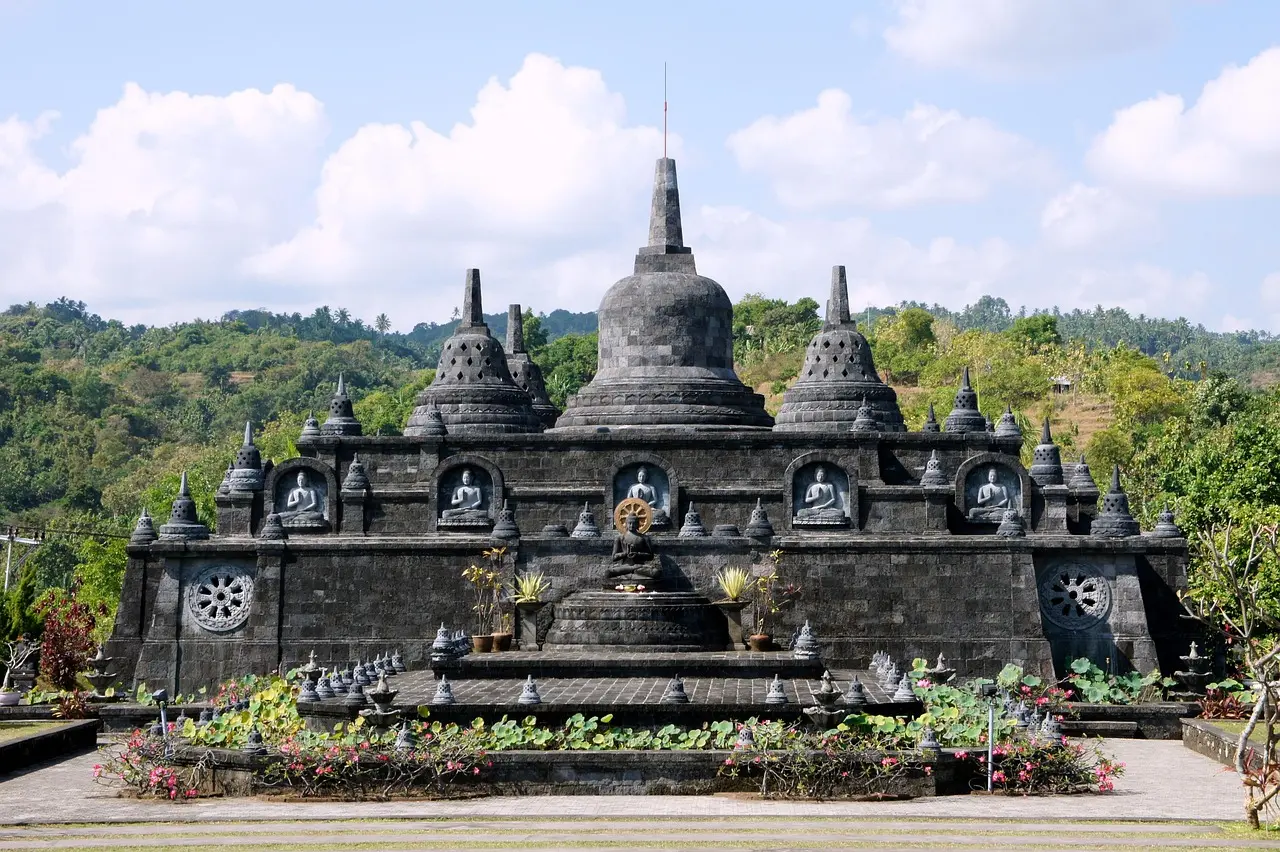
Brahmavihara Arama — where Hinduism and Buddhism coexist on the same island.
"Good fortune is not a matter of chance.
It means living in balance with the gods, nature, and oneself."
Inner Atlas
Nyepi: the great annual purification
The only airport in the world that closes for an entire day. The island falls silent, and in that silence, the new year is born.
The most surprising fact in the entire article: Bali is the only place in the world where the international airport shuts down completely for 24 hours. Not a single flight takes off or lands. No other island, no other country, does this for a religious celebration.
Melasti: Thousands of People Walking Toward the Sea
Days before Nyepi, thousands of Balinese dressed in white make their way to beaches such as Sanur, Kuta, and Tanah Lot. In a procession, they carry the sacred statues from the temples down to the water to purify them—and, in doing so, leave behind the negative energies that have accumulated over the year. There may be more than 20,000 people praying by the sea on that same day.
Ogoh-Ogoh: Burning Away the Negative to Start Fresh
The night before Nyepi, entire villages compete to build giant figures of demons out of bamboo and papier-mâché. They parade them through the streets, making noise to awaken and scare away evil spirits. By the end of the night, almost all of them are burned—an act of collective magic that destroys evil before the new year begins.
Tawur Agung Kesanga: Offerings to Restore Balance
On the day before Nyepi, large offerings are made at major crossroads throughout the island, at various levels—in homes, neighborhoods, towns, and provinces—with the aim of asking the gods to maintain the balance between nature and human life.
24 hours of complete silence — and the airport closes
During Nyepi, the entire island comes to a standstill. No light, no fire, no work, no entertainment, and no leaving the house—the four restrictions of the Catur Brata Penyepian. This also applies to tourists, without exception: you stay at the hotel. And Bali’s airport closes completely for 24 hours, something that doesn’t happen anywhere else on the planet. The goal is twofold: to trick evil spirits into believing the island is deserted, and to allow Balinese people to reconnect with themselves.
Ngembak Geni: Asking for forgiveness to start with a clean slate
The day after Nyepi, life returns to normal. Families and friends visit one another to ask for forgiveness and complete the final religious rituals—with pure hearts and no hard feelings, the new year can truly begin.
Omed-Omedan: The Kissing Ritual
In a village south of Denpasar, young singles kiss to celebrate the start of the new year, while the rest of the community throws buckets of water at them. It is one of the most curious and least-known rituals of the entire Nyepi celebration.
Mebuug-buugan: The Mud Bath That Wards Off Bad Luck
In the village of Kedonganan, the day after Nyepi, men, women, and children smear their bodies with mud from the mangroves. It’s not just for fun: the mud is used to ward off bad luck and negative energy. Afterward, everyone goes together to the nearby beach to rinse off, now purified.
What about December 31? Bali celebrates it, too.
In addition to Nyepi, many Balinese and tourists also celebrate Western New Year’s Eve—with fireworks at the beach clubs in Seminyak, Kuta, and Canggu, and the Denpasar Festival in late December. Some take advantage of these dates to perform the Nunas Penglukatan, a deep cleansing ritual at water temples such as Tirta Empul, immersing themselves in the sacred springs to release the negativity of the year that is ending—the Balinese way of welcoming a new year that is not their own.
SunZen Travel · Small-Group Trips
Bali with someone who understands its magic
This isn't a picture-perfect trip. It's about understanding why every corner of the island holds meaning. Small groups, local guides—the Bali you don't see from the outside.
Contact · SunZen Travel
Let's talk whenever you want
When you write, someone responds.
It’s fascinating to read and research Bali, a sacred destination where the universe, nature, and the gods coexist in perfect balance. For a Balinese person, the universe is full of energy. It’s a living universe in which everything possesses a spirit: animals, mountains, the sea, trees… Everything is connected. While in the West we tend to view luck as the result of chance or effort, in Bali it is believed that good fortune comes when a person lives in harmony with the gods, with nature, and, above all, with themselves. In essence, Bali, the Island of the Gods, teaches us that true magic comes from within—from balance with the forces of nature and the energy of the universe.