The treasures you’ll only find in Vietnam: 100 extraordinary and endemic species. The saola, the Asian unicorn, Delacour’s langur, the clouded leopard, flying frogs, tiger geckos, and hundreds of unique species found nowhere else on the planet. Vietnam’s True Biodiversity, by SunZen Travel.
Inland Atlas · Vietnam Series · SunZen Travel
Jewelry You'll Only Find Here
in Vietnam
105 extraordinary and endemic species: almost legendary primates, felines with the most beautiful fur in the animal kingdom, and amphibians in impossible colors
unique and
extraordinary
of nature
«Asian unicorn»
The «Asian unicorn» was one of the most significant zoological discoveries of the 20th century—a large mammal completely unknown to science.
SaolaThe entire global population of the Cat Ba langur depends on a single island. If that forest disappears, the entire species will disappear.
Cat BaThe Vietnamese king cobra can grow to more than five meters in length—and it is one of the few snakes that builds a nest for its eggs.
CobraInland Atlas · Vietnam Series
105 Extraordinary Species
Unique and endemic. Divided into the five kingdoms of nature.
Interior Atlas
Mammals: almost legendary primates
From the «Asian unicorn» to a venomous primate, including the feline with the most beautiful coat in the animal kingdom.
The saola, the «Asian unicorn»
Pseudoryx nghetinhensisVietnam’s most iconic species and one of the rarest mammals on the planet. Discovered in 1992 in the Annamite Mountains, it has two long, parallel horns and an appearance reminiscent of a cross between an antelope and a bovine. Its extreme rarity has made it a global symbol of conservation.
The Giant Muntjac That Surprised the Scientific Community
Muntiacus vuquangensisDiscovered in 1994 in the Vũ Quang Nature Reserve, this deer can be twice the size of other muntjac species. Its discovery proved that Vietnam’s forests still harbored large, previously unknown mammals.
The Anamite Striped Rabbit: A Relic from Another Era
Nesolagus timminsiThis elusive rabbit has several dark stripes running along its body, a trait that is very rare among lagomorphs. It is found only in the forests of the Annamite Mountains, between Vietnam and Laos.
The Cat Ba langur, trapped on an island
Trachypithecus poliocephalusThe entire global population of this primate depends on the karst forests of Cát Bà Island. It is one of the most endangered primates on the planet and a true symbol of Vietnam’s biodiversity.
The Delacour's langur is found only in Vietnam
Trachypithecus delacouriIts elegant combination of black fur and white patches makes it one of the most striking monkeys in Asia. It lives exclusively in the limestone mountains of northern India.
The northern white-cheeked gibbon, which sings in duets
Nomascus leucogenysTheir complex duets can be heard several kilometers away and serve to strengthen the bond between mates and defend their territory.
The Southern White-cheeked Gibbon
Nomascus sikiAnother treasure of the Annamite Mountains. It inhabits very specific mountain forests and depends on well-preserved rainforests for its survival.
The yellow-cheeked gibbon, which turns golden as it grows
Nomascus gabriellaeMales and females exhibit very distinct color differences, which is uncommon among primates—adults are notable for their golden hue.
The Long-tailed Macaque: Key to Coastal Forests
Macaca fascicularisIn addition to feeding on fruit, it helps disperse seeds, promoting the natural regeneration of coastal vegetation.
The Assam macaque, a mountain dweller
Macaca assamensisOne of the most elusive inhabitants of the Vietnamese mountains. It prefers dense forests at medium and high altitudes, where it lives in organized family groups.
The Malayan bear, the smallest in the world
Helarctos malayanusIts distinctive yellowish patch on its chest and its extraordinary ability to climb trees make it one of Vietnam's most unique mammals.
The Moon-Chested Bear
Ursus thibetanusThe Asian black bear still finds refuge in the forests of Vietnam. Its distinctive crescent-shaped white mark on its chest has given it its common name.
The Asian elephant, engineer of the jungle
Elephas maximusSmall wild populations remain in Vietnam. Although it is much rarer today than in the past, it remains one of the great ecological engineers of tropical forests.
The clouded leopard: the most beautiful coat in the animal kingdom
Neofelis nebulosaThe large, irregular spots covering its body look like real clouds, which is where its name comes from. One of the most elegant felines in all of Asia.
The Asian golden cat, which changes color depending on the region
Catopuma temminckiiDepending on the population, it may have reddish, gray, brown, or nearly black coats—a level of variability that is unusual among felines.
Owston's civet, one of the rarest in Indochina
Chrotogale owstoniIts elongated body, ringed tail, and pointed snout make it unmistakable among the mammals of Southeast Asia.
The large-spotted civet, almost invisible
Megaspila civetExtremely difficult to spot. It is a nocturnal animal that inhabits dense forests, and its population has declined significantly in recent decades.
The spotted linsang, half cat, half weasel
Prionodon pardicolorIts slender body and long tail allow it to move with great agility among the trees at night.
The Chinese pangolin, a living suit of armor
Manis pentadactylaOne of Vietnam's most endangered mammals. Covered in large keratin scales, it can curl up into an almost perfect sphere to protect itself from predators.
The Malayan Pangolin and Its Endless Tongue
Manis javanicaIts extremely long tongue, which can reach into ant hills and termite mounds, allows it to catch thousands of insects every day.
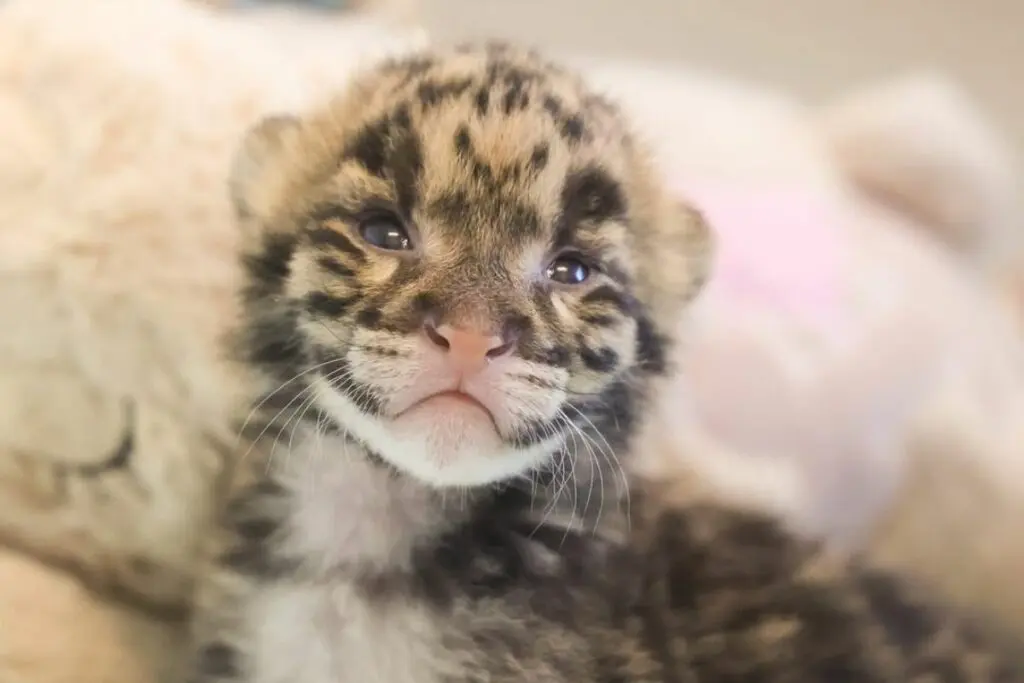
A clouded leopard cub—one of Asia's most elegant and elusive big cats.
The Tonkin Leaf-Nosed Bat
Hipposideros sp.It has a sophisticated echolocation system. The unusual structures surrounding its nose help direct the ultrasonic waves it uses to navigate in complete darkness.
Pearson's Horseshoe Bat
Rhinolophus pearsoniiIt uses an extremely precise «sonar.» Thanks to echolocation, it can catch small insects even in very dense forests.
The Giant Red Flying Squirrel
Petaurista sp.It glides among the trees without flapping its wings. A membrane of skin between its limbs allows it to travel dozens of meters by riding air currents.
The Indochinese Striped Squirrel
Tamiops sp.It stands out for its striking coat. The light and dark stripes running along its body help it blend in among the tree trunks and branches illuminated by the sun.
The Asian crested porcupine
Hystrix brachyuraIt uses thousands of spines for defense. When it feels threatened, it raises its long spines and produces a distinctive sound by making them vibrate.
Thomas's Woolly Flying Squirrel
Hylopetes phayreiIt glides through the jungle without flapping its wings. Thanks to a membrane of skin connecting its limbs, it can glide dozens of meters among the trees to search for food and escape predators.
The Vietnamese white-toothed shrew
Crocidura annamitensisFirst described by scientists in 2002, this finding shows that even small mammals continue to be discovered in Vietnam's forests.
The Vietnamese spiny rat
Typhlomys chapensisA true survivor of the mountain forests. Its thick fur and nocturnal habits make it one of the most elusive species in the northern part of the country.
The pygmy slow loris, a venomous primate
Nycticebus pygmaeusOne of the few venomous primates in the world. It produces a toxic substance in glands located near its elbows, which it mixes with its saliva to defend itself against predators.
The Asian striped linsang, a miniature feline
Linsang (Prionodon)Although it resembles a cat in appearance, it belongs to a different family and is known for its agility in moving among the branches at night.
The Hairy-nosed Otter
Sumatran otterOne of the rarest otters on the planet. Its fur-covered snout and extremely secretive habits led people to believe for years that it had practically disappeared.
The Asian small-clawed otter
Aonyx cinereusIt uses its hands with remarkable skill. Its partially free fingers allow it to handle crabs, mollusks, and other small animals with a dexterity rarely seen among mammals.
The Irrawaddy Dolphin
Orcaella brevirostrisVisit Vietnam's coastal waters and estuaries. Its rounded head and lack of a long snout give it a very different appearance from that of most dolphins.
The dugong, the only herbivorous marine mammal
Dugong dugonIt spends much of its life feeding on underwater grasslands, which is why it is nicknamed the «sea cow.».
The Asian bumblebee bat
Craseonycteris thonglongyaiOne of the tiniest flying mammals in the region. Its small size allows it to take refuge in small crevices and caves, where it forms large colonies.
The Eastern Black-cheeked Gibbon
Nomascus nasutusIt was on the verge of disappearing. For years, it was believed to be extinct in Vietnam until small groups were rediscovered in forests in the northern part of the country.
The Northern Pig-tailed Macaque
Lion-tailed macaqueIt stands out for its distinctive appearance. Its short tail and stocky build clearly set it apart from other Asian macaques.
The sambar deer, Vietnam's largest deer species
Unicolored RussianMales develop large antlers that they shed and regrow each year, and these antlers play an important role during the breeding season.
The continental serau defies gravity
Capricornis sumatraensisThis relative of the goat lives in rugged limestone mountains, where it moves with surprising confidence along nearly vertical cliffs.
The binturong smells like popcorn
Arctictis binturongThe smell of their urine is reminiscent of freshly cooked corn due to a chemical compound called 2-acetyl-1-pyrroline, a scientifically verified rarity among mammals.
The Indochinese Giant Squirrel
Ratufa bicolorOne of the world's largest squirrels, which lives in trees and has two-toned black-and-cream fur, capable of leaping several meters through the treetops.
The fishing cat, a feline that hunts in the water
Prionailurus viverrinusA wild cat adapted to hunting fish and aquatic invertebrates in mangrove forests—its partially webbed feet make it an exceptional swimmer for a cat.
Interior Atlas
Birds: out-of-this-world plumage
Beaks that act as resonators, iridescent plumage, and one of the most endangered birds on the planet.
Edwards' Pheasant, a Symbol of Conservation
Lophura edwardsiOne of the most iconic symbols of conservation in Vietnam. Endemic to central Vietnam, it is distinguished by the brilliant dark blue color of its plumage and its striking white crest.
The Vietnamese pheasant, one of the world's rarest birds
Lophura hatinhensisFor decades it was considered a separate species, and today it remains one of the country's greatest ornithological treasures.
The double-horned hornbill: a beak like a loudspeaker
Buceros bicornisIt has one of the most spectacular beaks in the animal kingdom. The large casque that crowns its beak acts as a sound resonator and as a visual signal during courtship.
The Eastern Crowned Hornbill, Sower of the Forest
Anthracoceros albirostrisIt plays an essential role in forest regeneration. By feeding on fruit, it disperses seeds over long distances, helping new forests to grow.
The green peacock, one of Asia's most elegant birds
Pavo muticusMales display a spectacular iridescent tail during courtship to attract females—one of the most elegant birds in Southeast Asia.
The Osprey and Its Extraordinary Precision
Pandion haliaetusIt can launch itself from great heights and catch fish with its sharp claws in a fraction of a second.
The White-throated Kingfisher
Halcyon smyrnensisIt displays some of Vietnam's most vibrant colors. Its electric blue, white, and brown plumage makes it one of the most striking birds found along rivers and in rice paddies.
The White-cheeked Spoonbill, a Threatened Migratory Bird
Platalea minorVisit Vietnam's wetlands during their migrations. It is one of the most endangered waterbirds on the planet and depends on the conservation of estuaries.
The Woolly-necked Stork
Ciconia episcopusIt is notable for its elegant black-and-white plumage. It frequents wetlands, rice paddies, and riverbanks, where it catches fish, amphibians, and insects.
The Brown Fishing Owl, a River Specialist
Ketupa zeylonensisUnlike most owls, it feeds mainly on fish, crabs, and other aquatic animals, which it catches at night with extraordinary stealth.
The Annamese pitta, a rainbow on the forest floor
Pitta sororA vibrantly colored passerine bird—green, blue, and brown—that inhabits the damp forest floor, where its plumage contrasts with the leaf litter.
Mrs. Robinson's Pond, a Resident of the Highlands
Yuhina zantholeucaA small mountain bird that is very common in the forests of northern Vietnam and easily recognized by its distinctive crest.
The crested eagle snake, a reptile expert
Spilornis cheelaA majestic bird of prey that specializes in hunting snakes and other reptiles from the jungle canopy, with eyesight capable of detecting the slightest movement among the leaves.
«Every species is a jewel that nature
»decided to keep it exclusively for Vietnam."
The Cat Ba leopard gecko, found only on an archipelago
Goniurosaurus catbaensisDiscovered in 2008, this nocturnal gecko has large, eyelidless eyes and a striking pattern of black and orange bands. Its range is so limited that it is considered one of the jewels of Vietnam’s herpetofauna.
The Vietnamese tiger gecko
Goniurosaurus araneusIts body is covered with vivid yellow, orange, and black stripes that resemble a feline's pattern. It is found exclusively in the karst forests of northern Vietnam.
The Hainan gecko, a cave specialist
Goniurosaurus luiiIt spends the day hidden among cracks in the limestone and comes out at night to hunt insects and small invertebrates.
More than 100 species of curved-toed geckos
Cyrtodactylus spp.They are turning Vietnam into an evolutionary laboratory. The country is home to more than a hundred species, many of which were discovered in recent decades and are found only on a single mountain or in a single cave system.
The flying dragon glides among the trees
Draco maculatusThanks to membranes supported by its ribs, this small lizard is able to travel dozens of meters without touching the ground, moving from tree to tree.
The Five-lined Forest Lizard
Takydromus sexlineatusIt is known for its extraordinary speed. Its slender body and long tail allow it to move quickly through low vegetation to escape predators.
The king cobra, the world's longest venomous snake
Ophiophagus hannahIt can grow to more than five meters in length and is one of the few snakes that builds a nest to protect its eggs until they hatch.
The white-lipped pit viper, an emerald gem
Trimeresurus albolabrisIts vivid green color allows it to blend in with the jungle foliage as it waits motionless for its prey to pass by.
The reticulated python, one of the longest snakes on the planet
Malayopython reticulatusThe largest specimens can exceed six meters in length and have a complex geometric pattern that provides them with excellent camouflage.
The Red River Soft-shelled Giant Turtle
Rafetus swinhoeiOne of the rarest turtles in the world. For years, it was believed that only a few specimens remained—it is the same species linked to the legend of Hanoi’s Hoàn Kiếm Lake, where a giant turtle returned a magical sword to the gods.
The Vietnamese moss frog, invisible to everyone
Theloderma corticaleIts skin replicates with incredible precision the appearance of the damp moss that covers rocks and tree trunks, making it one of the animal kingdom’s masters of camouflage.
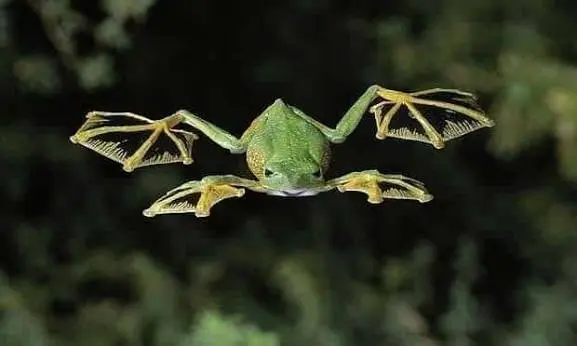
Helen's Flying Frog
Rhacophorus helenaeIt uses large webbed membranes between its toes to glide. When jumping from branches, it spreads its legs wide and can control its descent to another tree.
The Annam flying frog lives in the treetops
Rhacophorus annamensisIt rarely comes down to the ground. It lays its eggs in foam nests on the water's surface to protect them from numerous predators.
The Vietnamese crocodile salamander
Tylototriton vietnamensisIt looks like a little dragon. Its black, rough skin, crisscrossed with ridges and orange spots, gives it a prehistoric appearance that makes it one of the most striking salamanders in Asia.
The Emperor Salamander: Colors That Serve as a Warning
Tylototriton asperrimusThe orange bumps on its head and back stand out against its shiny black body—a coloration that serves as a warning of its toxic secretions.
The Vietnamese Glass Frog
Gracixalus spp.It has surprisingly translucent skin. In some specimens, internal organs and muscular structures are partially visible, a rare trait among amphibians.
The warty tree frog, covered in lichen
Theloderma asperumIts body mimics the appearance of damp bark and moss, making it nearly invisible during the day.
Frogs that live only on a single mountain
The isolation of numerous mountain ranges has favored the evolution of species with extremely limited ranges, some of which are confined to just a few square kilometers.
Salamanders that live only in pure, cold water
These amphibians depend on oxygen-rich mountain streams, so any change in the water can seriously affect their populations.
The Indochinese Dragon Lizard
Physignathus cocincinusAlso known as the Chinese water dragon, it is a deep green color and has a semi-aquatic lifestyle—when it feels threatened, it doesn't hesitate to jump into the water and swim away.
The Tokay gecko, Southeast Asia's most famous call
Gekko geckoOne of the world's largest geckos, it is very popular in Vietnamese culture because of its distinctive call—a repeated «to-kay» that gives it its name and can be heard throughout the region.
The fossa viper with tiny horns
Protobothrops cornutusA striking venomous snake from the Annamite Mountains with tiny «horns» above its eyes, perfectly adapted to blend into the moss on the forest floor.
The Indochinese Box Turtle
Cuora galbinifronsOne of the most beautiful and endangered land tortoises in Southeast Asia, with a shell that can close completely like a box to protect itself from predators.
The Annam Striped-necked Turtle
Mauremys annamensisA freshwater species endemic to central Vietnam, recognizable by the thin yellow lines running along its neck and head.
The White-trunked Tree Frog
Gracixalus supercornutusA small amphibian endemic to the northern mountainous regions, with pointed protrusions above its eyes that give it the appearance of a miniature dragon.
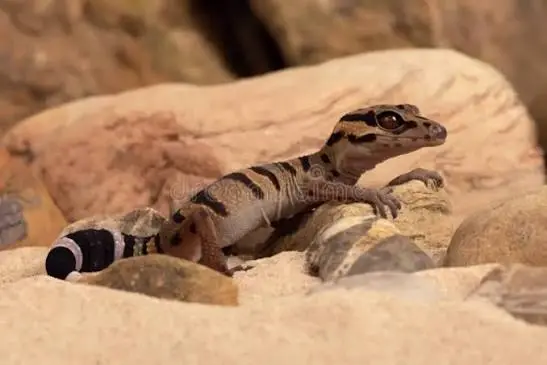
The Vietnamese tiger gecko, with a pattern that looks as if it were hand-painted.
Interior Atlas
Aquatic life: giants and wonders
From the world's largest fish to a fish that walks out of the water.
The Giant Freshwater Stingray
Urogymnus polylepisOne of the largest freshwater fish on the planet. It can exceed two meters in diameter and weigh several hundred kilograms. It inhabits the Mekong River system.
The Giant Mekong Catfish
Pangasianodon gigasIt is one of the largest known freshwater fish. This colossus can grow to more than three meters in length and is one of the biological symbols of this great Asian river.
The whale shark visits Vietnamese waters
Rhincodon typusThe world's largest fish can grow to more than twelve meters in length, and despite its enormous size, it feeds by filtering plankton and small fish.
The Spiny Seahorse
Hippocampus histrixOne of the most intriguing inhabitants of Vietnam's reefs. Its body is covered with spines, and it is the male who incubates the eggs in a ventral pouch—a behavior unique among fish.
The archerfish knocks insects off their perches with jets of water
Toxotes jaculatrixThis ingenious fish shoots fine jets of water with surprising precision to knock insects off leaves and branches. It can hit prey more than a meter away.
The climbing fish moves out of the water
Anabas testudineusThanks to a special respiratory organ, this fish is able to survive for hours out of the water and travel short distances over damp ground in search of new ponds.
The mud jumper lives between two worlds
Periophthalmus argentilineatusIt spends much of its time on the muddy bottoms of mangroves and estuaries. Its eyes protrude from its head, and it can propel itself by using its pectoral fins as if they were small legs.
The common reef octopus, a master of disguise
Blue-ringed octopusFound in the tropical waters of Vietnam, it changes its color, texture, and even posture in a matter of seconds to blend in with corals, rocks, or sand.
The giant clam, a microscopic garden
Tridacna squamosaThis enormous mollusk lives in symbiosis with tiny algae that perform photosynthesis. Thanks to them, it obtains some of the energy it needs to grow.
The Wild Betta Fish of Indochina
Betta smaragdinaThe ancestor of the famous fighting fish that everyone knows as a pet, but in the wild: iridescent emerald green hues, native to the Mekong Delta.
Interior Atlas
Insects and Plants: The Art of Disguise
Insects that mimic leaves down to their imperfections, and orchids that caused a sensation among botanists.
The Common Birdwing Butterfly
Aeacian TroidesOne of the largest in Vietnam. Its black and gold wings can have a wingspan of more than 20 centimeters—an elegant flight that makes it one of the most spectacular butterflies in Southeast Asia.
The Atlas moth, with wings shaped like a snake's head
Attacus atlasIts wings resemble a snake's head. The curved tips confuse many predators, which hesitate before attacking, believing they are facing a reptile.
The Giant Stag Beetle
Dorcus titanusIt uses its enormous jaws as weapons. Males fight each other for access to females using impressive jaws that resemble a deer's antlers.
Rhinoceros beetles, among the strongest insects
Chalcosoma spp.With their large horns, they lift and push their rivals in spectacular battles on tree trunks.
The flower mantis, a living petal
Creobroter gemmatusIts white, green, and yellow colors help it blend in with the flowers as it waits motionless for an insect to come close enough.
The leaf insect: the best camouflage on the planet
Phyllium bioculatumIt not only mimics the shape and color of a tropical leaf, but also its veins and even the small imperfections caused by herbivorous insects.
The giant stick insect, a living branch
Phobaeticus spp.Some species found in Vietnam are over 40 centimeters long and remain completely motionless for hours to avoid being detected.
The Vietnamese Slipper Orchid: A Botanical Sensation
Paphiopedilum vietnamenseDiscovered in 1997, this spectacular orchid with large pink flowers caused a sensation among botanists due to its extraordinary beauty and limited range.
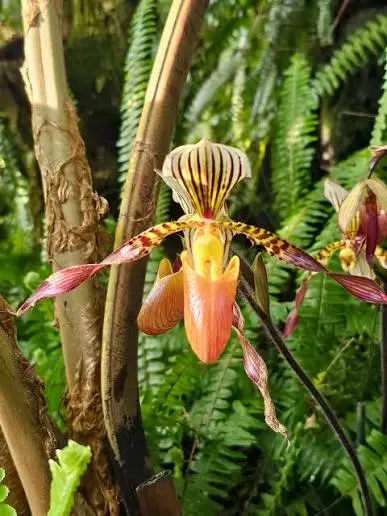
Vietnam, a global haven for slipper orchids
Paphiopedilum spp.The limestone mountains are home to numerous species of slipper orchids, many of which are found exclusively in small regions of the country.
The carnivorous plant: pitcher-shaped traps
Nepenthes mirabilisIts modified leaves contain a digestive fluid that traps small animals, which provide essential nutrients for its growth.
Iron Trees: Wood of Extraordinary Strength
Hopea spp.Its wood is so hard and dense that for centuries it has been considered one of the most valuable types of wood in Southeast Asia.
The Winged Dipterocarp, a Jungle Giant
Dipterocarpus alatusIt can grow to over 50 meters in height. This tropical rainforest giant is part of the forest canopy and provides shelter and food for numerous animal species.
The Five-Horned Rhinoceros Beetle
Eupatorus gracilicornisAn impressive giant beetle native to the forested regions of Indochina, with five distinct horns that make it unmistakable among rhinoceros beetles.
La mariposa Reina de la Selva
Stichophthalma louisaMariposa de gran tamaño con intrincados patrones visuales en las alas, diseñados para confundir a los depredadores en pleno vuelo.
La mantis orquídea asiática
Hymenopus coronatusDepredador que mimetiza a la perfección la forma y el color de las flores tropicales para cazar — probablemente el insecto camuflado más fotografiado del mundo.
Inland Atlas · SunZen Travel
Más razones para travel to Vietnam
Si esto te ha hecho mirar Vietnam con otros ojos, en nuestro artículo principal tienes la guía completa — visado, cultura, gastronomía y curiosidades, incluida la leyenda de la tortuga gigante del lago Hoàn Kiếm que también protagoniza esta lista.
Let's talk whenever you want
Write to us
When you write, someone responds.
Sigue explorando
El Atlas Interior
Vietnam no solo enamora por sus arrozales, su gastronomía o la bahía de Ha Long. Entre sus selvas, montañas y cuevas viven especies que no existen en ningún otro rincón del planeta. Desde primates casi legendarios hasta anfibios de colores sorprendentes, la biodiversidad vietnamita es un tesoro escondido que convierte cada ruta por la naturaleza en una auténtica expedición. Viajar por Vietnam también es descubrir un mundo que la naturaleza decidió guardar en exclusiva.