Inner Atlas · Extreme Botany · August 2, 2026
Fascinating, strange, and extreme birds
Flowers that smell of death to attract life. Trees that wait eighty years to bloom just once. A dictionary of the strange plants of Asia: the continent's most unlikely flora.
The strange plants of Asia that seem made up
Asia is more than just temples, beaches, and cities. There’s another side to the story that unfolds in the shadows of its jungles and in the silence of its mountains: plants that smell of death to attract life, trees that bloom only once in their entire existence, flowers that form partnerships with mammals, and woods that transform a wound into the world’s most expensive perfume.
This is a dictionary of rare plants from Asia, featuring twenty species that have been verified one by one. It begins with Sri Lanka, Thailand, Vietnam, and Bali—the destinations our small-group trips— and ends by exploring the far corners of the continent where evolution took an even stranger turn.
The data comes from leading botanical sources: the database Plants of the World Online from the Royal Botanic Gardens, Kew, and peer-reviewed scientific publications, such as the study in PLOS ONE which documented the symbiotic relationship between a carnivorous plant and the mammals that fertilize it. When a piece of information could not be confirmed, it was omitted.

Sri Lanka
Plants that get only one chance
On the island, there are species that go decades without blooming—and when they finally do, that one time is also the last.
La nelu
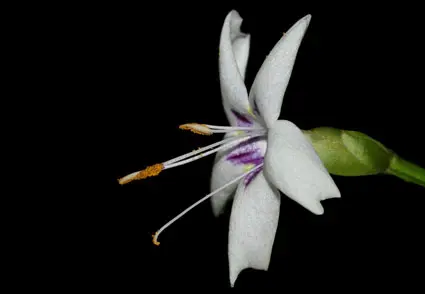
Strobilanthes
Sri Lanka is home to about thirty species of this shrub, almost all of which are found exclusively in the country. They bloom en masse, all at once, covering the hills of Horton Plains with a carpet of purple, pink, and white. And after they bloom, they die.
4—12 years between blooms
The talipot palm
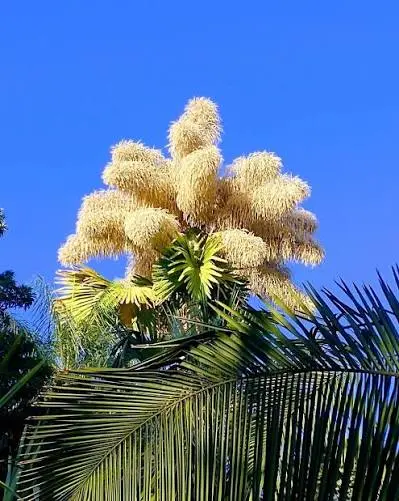
Corypha umbraculifera
It lives between thirty and eighty years, accumulating starch in its trunk without ever blooming. When it finally does bloom, it produces the largest inflorescence of any plant in the world — and dies shortly thereafter.
8 m inflorescence, millions of flowers
The Sri Maha Bodhi
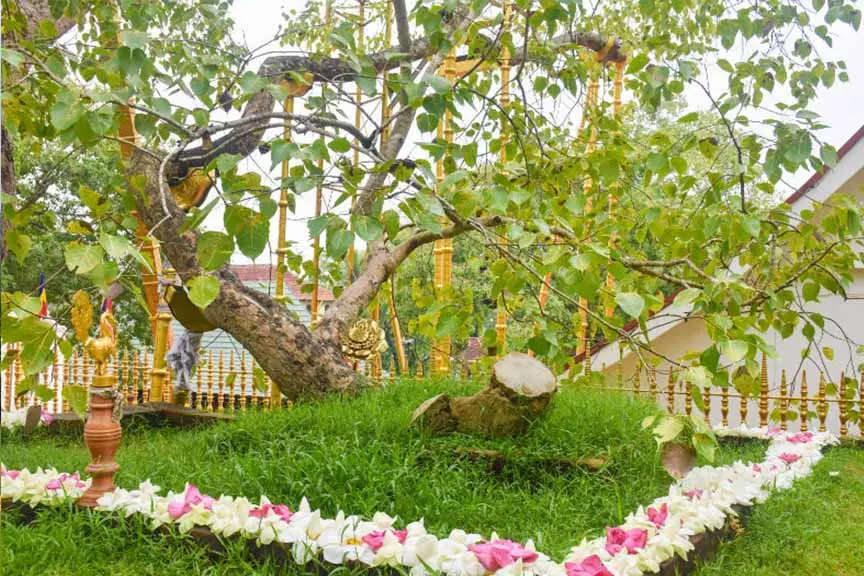
Ficus religiosa
It was planted in Anuradhapura from a cutting taken from the tree under which, according to Buddhist tradition, the Buddha attained enlightenment. It is the oldest cultivated tree in the world with a known planting date—and it is still alive.
288 B. C. · more than 2,300 years
Thailand
What Grows in the shade
Under the canopy of the Thai jungle, where very little light penetrates, plants have had to devise other ways to feed, grow, and reproduce.
The Thai Rafflesia
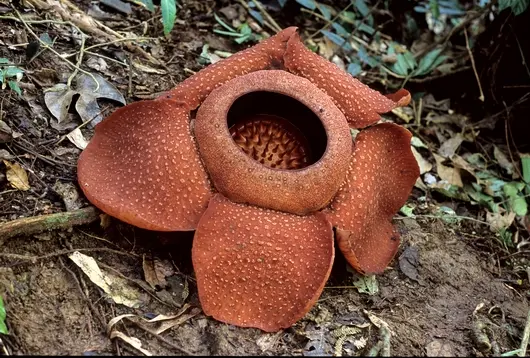
Rafflesia kerrii
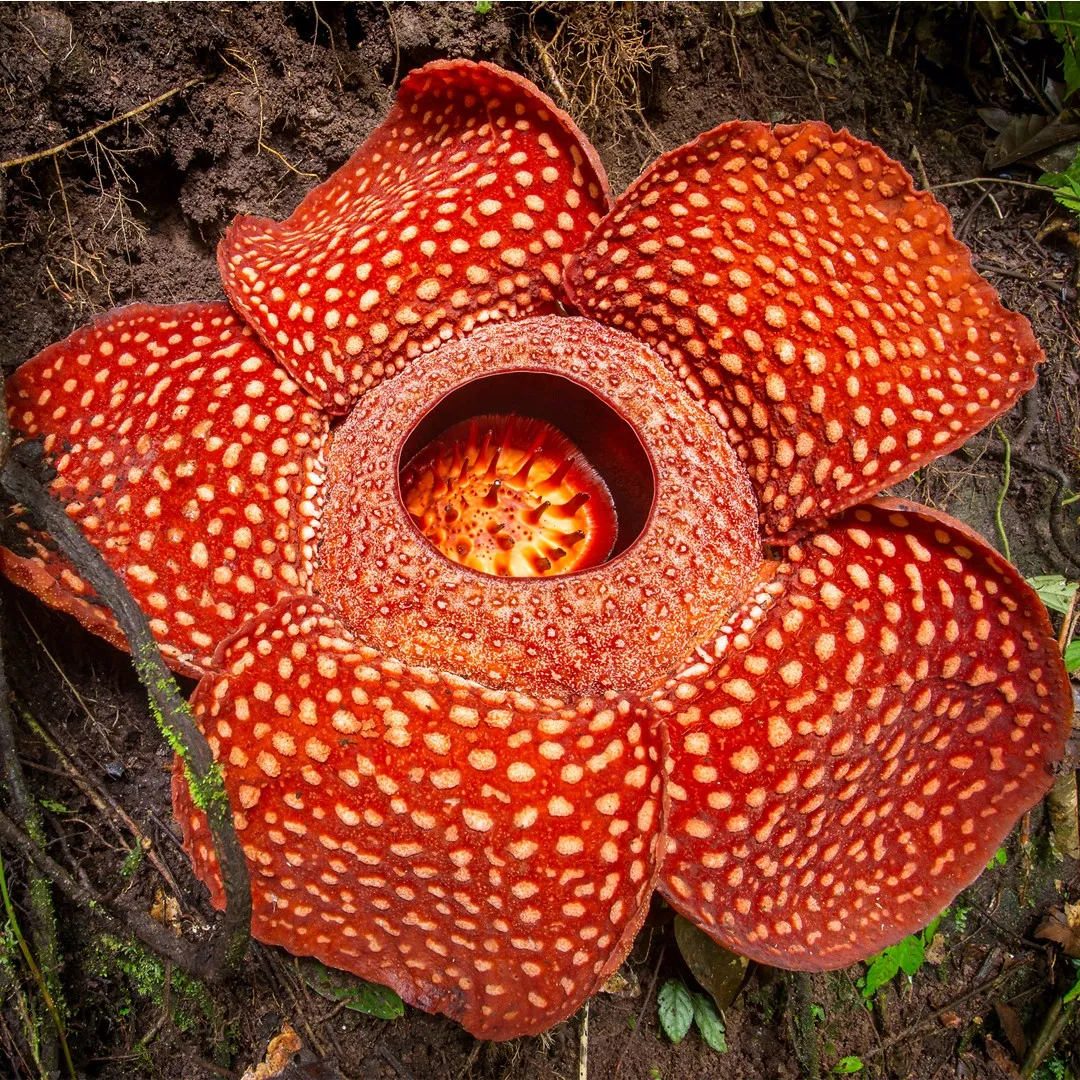
In Khao Sok, they call it bua phut. It has no leaves, no roots, and no stem: it lives as a parasite on vines, remaining invisible for months until it blooms, releasing a scent of rotting meat to attract the flies that pollinate it.
90 cm flower · the second largest in the genus

The ant‑plant
Dischidia major
You may have seen it in a pot without realizing what it does in the wild: its leaves turn into hollow sacs where entire colonies of ants build their nests. In exchange for shelter, the plant feeds on what the ants leave inside.
Deal lodging for nitrogen
The basket fern
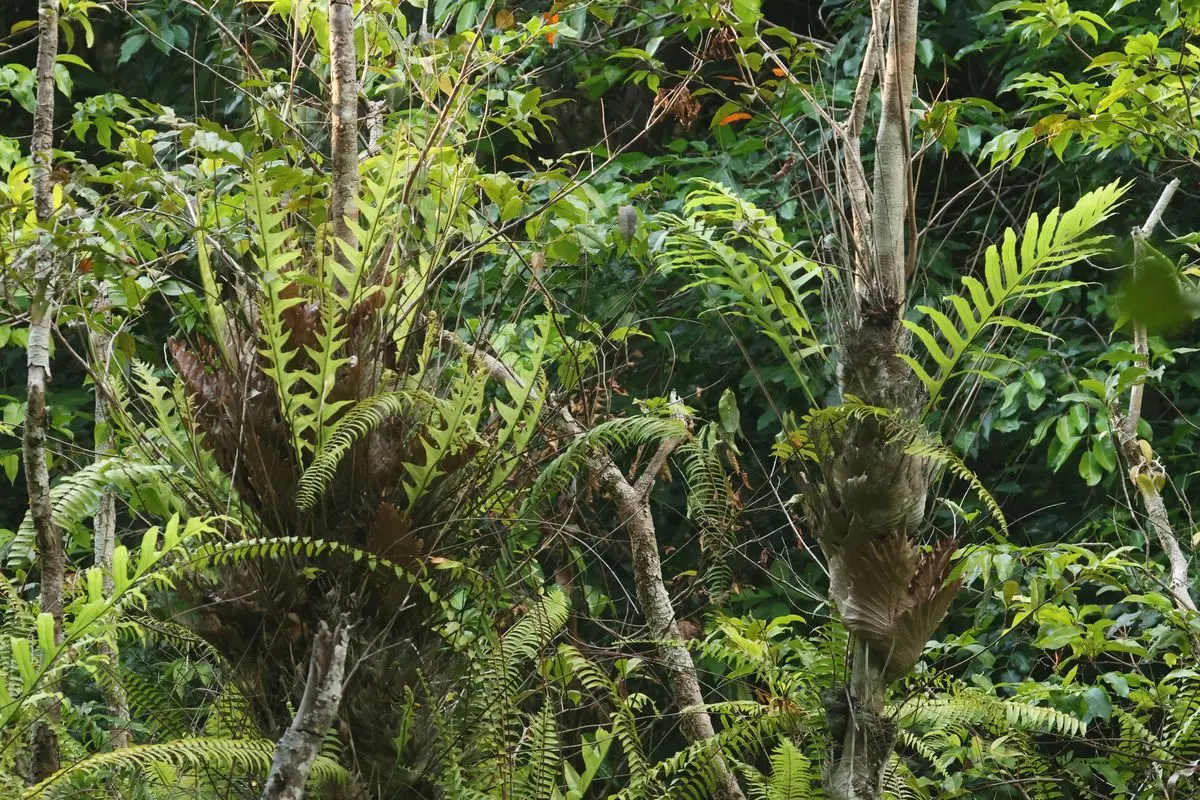
Drynaria quercifolia
It lives perched on tree trunks, where there is no soil from which to draw nutrients. Its solution: to produce two different types of leaves. Some are green, for photosynthesis. Others are dry and overlapping, trapping leaf litter and rainwater.
2 leaf types, two functions
Thailand and Vietnam
Those that grow in the two countries
Two species that know no borders: one hides in the shadows by turning itself black, while the other transforms an infection into the world’s most expensive perfume.
The Bat Flower
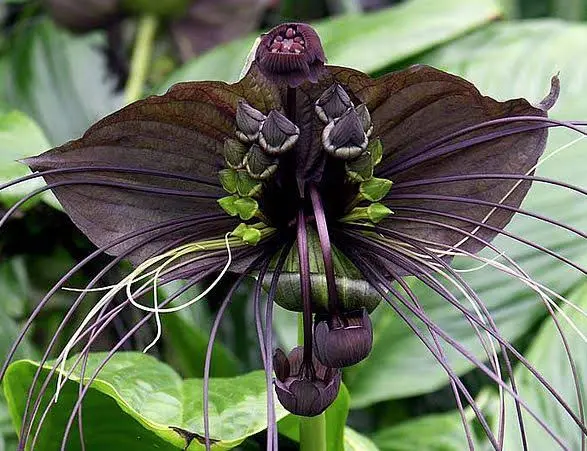
Tacca chantrieri
Its bracts are a shade of purple so dark it borders on black—a color that is almost nonexistent in the plant world, because it absorbs light rather than reflecting it. Here, it serves as camouflage in the dim light of the understory. Long filaments hang from the flower, giving it the appearance of outstretched wings.
30 cm with hanging strands
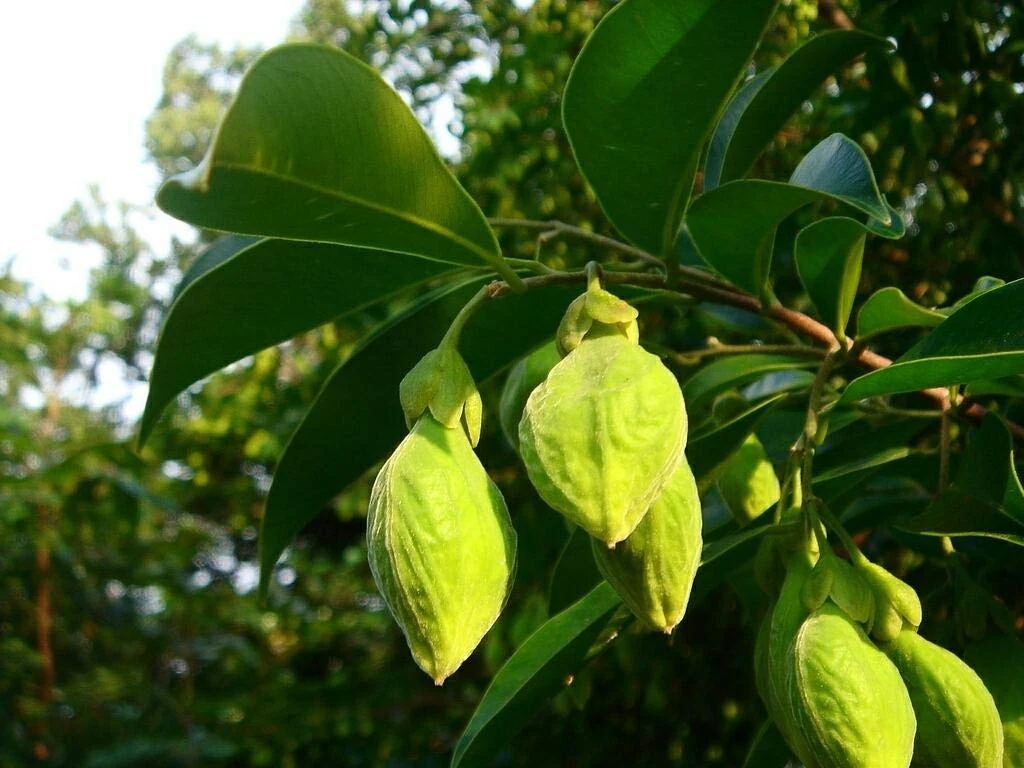
Agarwood
Aquilaria malaccensis
A tree with no special value—until a fungus infects it. Then it reacts by saturating the damaged tissue with a dark, intensely aromatic resin: the oud in the world of fine perfumery. Only a tiny fraction of the trees become infected naturally, and the species is classified as vulnerable.
$ 100,000 per kilo at auction
04 · Vietnam
The orchid that was given up for lost
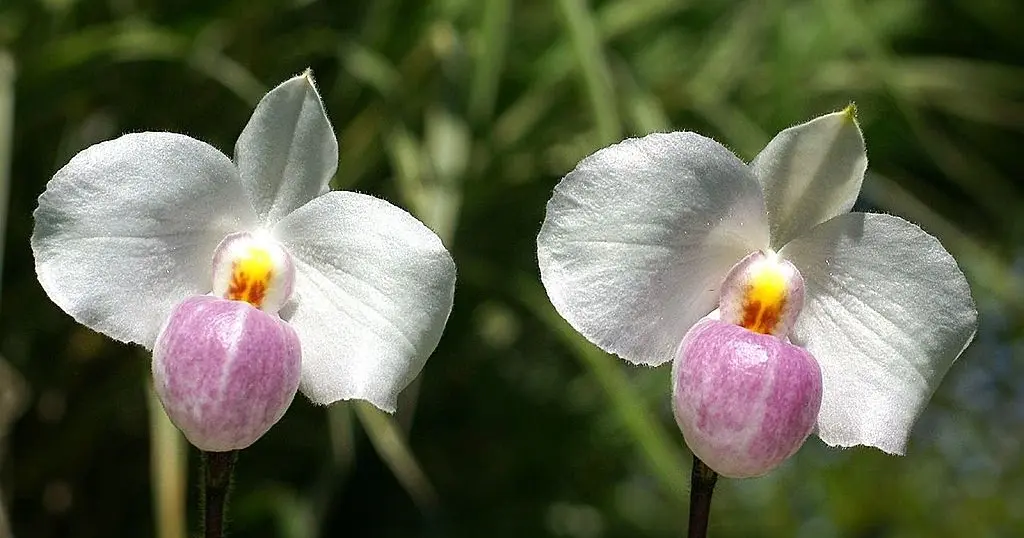
Paphiopedilum delenatii
In 1922, a French collector found it near Nha Trang and sent several plants to France. All but one died. That sole survivor was self-pollinated and became the source of all the specimens in the world for nearly seventy years—because it was believed to be extinct in the wild. In 1990, it reappeared, once again near Nha Trang. The joy was short-lived: in the following years, tons of the species were harvested.
Today, there are only a few hundred wild specimens left. Critically endangered.
05 · Bali
The Largest Flower on the planet
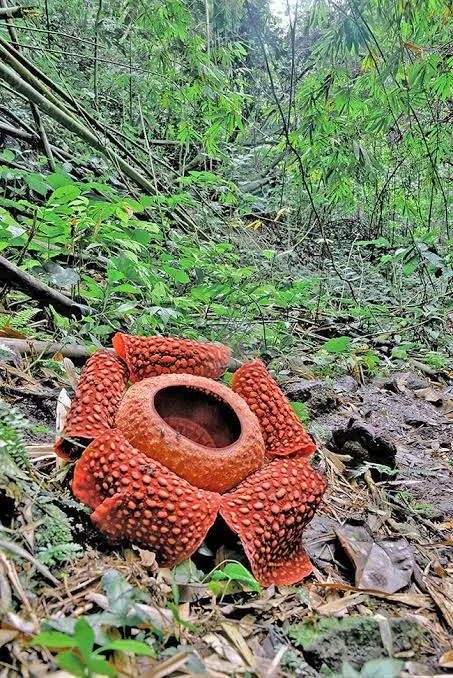
Rafflesia arnoldii
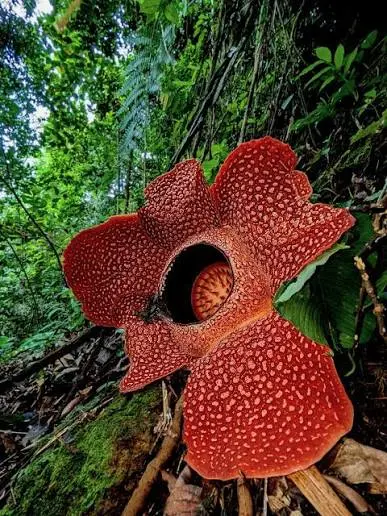
Up to one meter in diameter and weighing eleven kilograms. It has no roots, no stem, no leaves, and does not photosynthesize: it lives as a network of threads inside a vine, completely invisible for months. The bud takes nine months to form. The flower lasts less than a week, and during that time it releases a smell of rotting meat precisely designed to attract the flies that pollinate it.
It is Indonesia's national flower — and one of the hardest plants in the world to find in the wild, because its flowering window is very short.
06 · Thailand, Vietnam, and Sri Lanka
It grows buried in the mud and rises to the surface without a single blemish
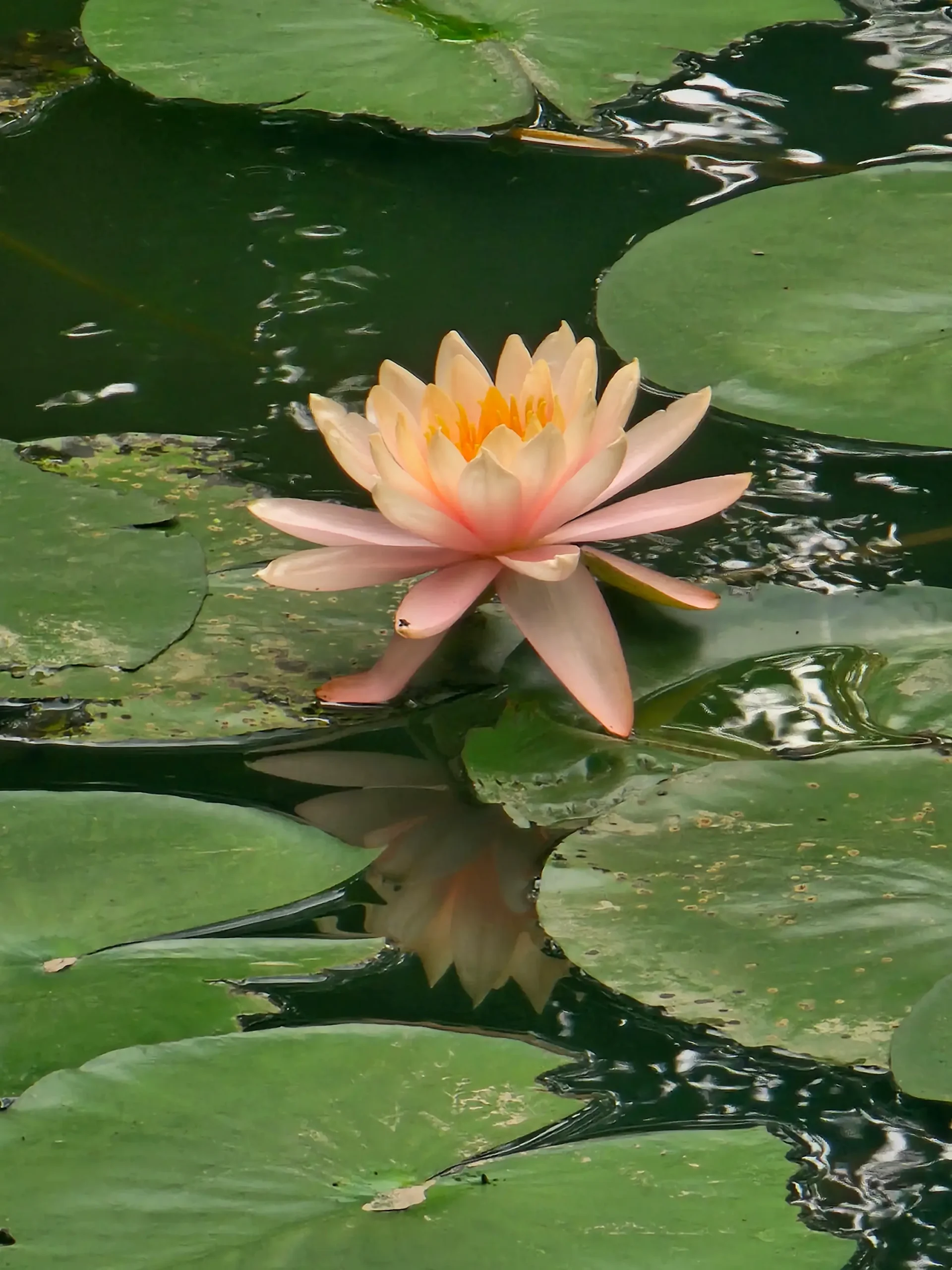
Nelumbo nucifera
This isn't a metaphor: its leaf has a microstructure of nanoscale wax crystals that prevents water from wetting it. The droplets roll right off, carrying away any dirt particles—a mechanism so effective that materials engineering has given it its own name: the "lotus effect." Furthermore, while in bloom, the flower maintains an internal temperature between 30 and 35 °C even when the ambient temperature drops to 10, to benefit its pollinators.
It is the central offering in Buddhist temples in all three countries, and the throne on which Buddha is depicted.

The rest of the continent
Nine plants that complete the map
Borneo, the Philippines, Sumatra, Socotra. Some of them are in places where we haven't taken groups yet—including Malaysia, which we hope to announce soon.
The carnivore that negotiates
Nepenthes rajah
The largest carnivorous plant on the planet. But what’s truly amazing isn’t that it hunts: the mountain tupaya visits its pitcher to lick the nectar from the lid, and while it eats, it defecates inside. This behavior is so common that a local rat does the same thing.
3.5 L liquid in a single pitcher
The Flower That Warms Itself
Rhizanthes lowii
A relative of the rafflesia and, like it, a complete parasite with neither leaves nor roots. But it has a unique trait: it generates and regulates its own heat. Its tissue has been measured to be several degrees warmer than the surrounding air, even days after it has wilted.
+9 °C relative to room temperature
The Mautam
Melocanna baccifera
A bamboo species that blooms in unison every forty-eight years. This massive bloom triggers a plague of rats that devour the seeds—and when the seeds run out, the rats turn on the crops. Famine caused by this phenomenon has been documented since 1815.
2007 the last recorded famine
The Forest That Blooms All at Once
Dipterocarpaceae
The forests that cover Borneo synchronize their flowering with the dry seasons associated with El Niño. When this happens, the entire forest blooms for about six weeks—and a single tree can produce millions of flowers all at once.
4—9 years between blooms
The Corpse Flower
Amorphophallus titanum
The world's tallest unbranched inflorescence. It takes between seven and ten years to accumulate enough energy to bloom for the first time, and the blooming period lasts just over a day—during which it raises its internal temperature to spread its scent for kilometers.
36 °C of its own temperature
Attenborough’s pitcher
Nepenthes attenboroughii
Discovered in 2007 in the mountains of Palawan and named in honor of naturalist David Attenborough. Its pouches are among the largest of the genus, capable of holding more than two liters of digestive fluid.
2 L digestive fluid
The Rainbow Eucalyptus
Eucalyptus deglupta
The only eucalyptus tree that grows naturally in the tropical rainforest of the Northern Hemisphere. Its bark peels off in strips throughout the year, revealing inner layers that change from bright green to blue, purple, orange, and maroon.
1 trunk in constant change
The jade vine
Strongylodon macrobotrys
Hanging clusters up to three meters long with flowers of a turquoise color that looks almost artificial—one of the rarest colors in the plant kingdom. It is pollinated by a single type of visitor: bats that drink its nectar while hanging upside down.
3 m hanging cluster
The Dragon Tree
Dracaena cinnabari
A tree shaped like an upside-down umbrella, with its leaves concentrated at the top to capture fog and slow evaporation. Its sap is a deep red—the "dragon’s blood" that has been used for centuries as medicine, dye, and in rituals.
Socotra one of the world's most significant examples of endemism
We'll wrap up this guide to strange plants from Asia with one that's been here longer than all the others: the Ginkgo biloba, which first appeared more than 200 million years ago. Several specimens growing near the epicenter of the Hiroshima bomb survived the 1945 explosion and sprouted again the following year. Some are still alive.
What I Think, by Toni
There are places where nature seems to have forgotten all the rules. Asia is one of them.
It is the continent where the rainforests hide flowers so large they seem unreal, where a plant may wait decades to bloom for just a few days, and where a simple stroll through the vegetation can become a journey into a world that defies the imagination.
Nature here isn't trying to be pretty. It's trying to survive.
And in doing so, it has created some of the most extraordinary forms of life on Earth: fascinating, strange, and extreme. I’ve always been fascinated by the thought that, while millions of people wander through cities, temples, or beaches, just a few kilometers away there might be a plant growing that exists only in that corner of the planet.
A flower that no one will see this year. A tree that was already ancient when the first empires were founded. A species that has spent millions of years perfecting a strategy to deceive an insect, capture prey, or survive where it seemed impossible.
Maybe that's why plants move me so much—because of their beauty, the wonder of their forms, and the most incredible stories of evolution.
The most beautiful thing about these trips is rediscovering a sense of wonder—that feeling we had as children, when everything seemed possible. Because nature still holds secrets: there are still places where science continues to discover new species and where every expedition can find something no one has ever seen before.
This article is not meant to be merely a collection of extraordinary plants. It is an invitation to see the world through different eyes. To pause. To imagine the silence of a tropical rainforest at dawn, the smell of the earth after the rain, the moisture hanging between the trees, and the thrill of discovering that, among thousands of green leaves, one of the strangest plants evolution has ever created has just appeared.
Traveling isn't just about changing locations. It's about letting nature surprise us all over again.
And few places in the world do it as well as Asia.

Toni
Co-founder of SunZen Travel. He personally leads small-group trips throughout Asia.
Frequently Asked Questions
What you ask us most
Why does the rafflesia smell bad?
Because its pollinators are not bees, but flesh flies. The smell of carrion is the perfect evolutionary strategy for attracting them to the flower, in a place—the forest floor—where there is hardly any light or color to serve as a lure.
Can you see the nelu in bloom on any trip to Sri Lanka?
No. It blooms unpredictably, in cycles ranging from 4 to 12 years depending on the species, and the last major bloom was in October 2025. Seeing it in person depends on being there during that cycle, and there’s no way to book it in advance.
Why is the lotus so important in Buddhist temples?
Because it grows buried in the mud and emerges clean—an image that Buddhism uses as a symbol of purity and self-improvement. That is why it appears as an offering and as the base for Buddha statues in temples in Thailand, Vietnam, and Sri Lanka.
Can you buy any of these plants?
No, and it shouldn't be attempted. All the species mentioned are protected or endangered. Part of the problem with the Vietnamese orchid was precisely its massive harvesting for the international trade following its rediscovery in 1990.
Will we see these plants on a trip with SunZen?
Some yes, and others almost certainly not: the rafflesia and the nelu have blooming periods that last anywhere from days to years, so seeing them is a matter of luck. What does make the trip worthwhile, however, is exploring the ecosystems where they live, with enough time to really take in what’s growing along the way.
What are the rarest plants in Asia that are hardest to spot?
Among Asia's rare plants, the most elusive are those with unpredictable blooming patterns: the rafflesia remains in bloom for less than a week, the Sri Lankan nelu blooms in cycles ranging from 4 to 12 years, and the talipot palm blooms only once in its lifetime, after decades of waiting.
Where does the data in this article come from?
From scientific publications and authoritative botanical sources, verified one by one before publication. When a piece of information could not be confirmed—such as the alleged bioluminescence of the jade flower—it was omitted from the text rather than repeated.
Small-group trips
Asia with thirteen people at most
One trip per year to each destination, on a set date, with one of us accompanying the group from start to finish. Real time to stop and take in what’s growing along the way.
View tripsThe guide, free
Before you decide, get properly informed
We're sending you our guide to planning a trip to Asia without any surprises: what to pack, when to go, and what to expect at each destination.
Download the guide