
What's happening in our head when we break out of our routine and we travel to a completely different place?
Nine verified findings on what happens to attention, memory, and trust when the brain stops making predictions. And an entire chapter on what science doesn't tell us.
Schultz · Cambridge
Your brain doesn't reward pleasure. It rewards the surprise
For decades, it was taken for granted that dopamine was the “pleasure molecule”: something good happens, the brain releases dopamine, and you feel good. It turns out that’s not how it works.
Wolfram Schultz's work at Cambridge established that dopaminergic neurons fire at the moment of the surprise, not at the moment of the reward. The signal is strongest when the gap between what you expected and what actually happens is the greatest. The brain doesn't measure pleasure; it measures the unexpected.
A 2024 study in PLOS Computational Biology, from the University of Oxford, describes how this encoding of novelty allows for more judicious exploration in uncertain environments.
Your brain has been operating for years in an environment it can already predict: it knows what time the alarm will go off, what it will smell like in the building’s entrance, and how long the commute takes. The price you pay for this efficiency is that you haven’t truly looked at your own city in years.
When a system predicts well, it stops looking.
 Not a single sign you can predict
And you realize that maybe you weren't so tired of life after all. You were tired of living the same way all the time.
The vacation paradox
Two weeks away weigh more than four months of routine
It's short while you're living it. It's long when you remember it.
You're traveling, and the days fly by. You come back, look back, and those two weeks take up more space in your memory than the previous four months.
British psychologist Claudia Hammond coined the term in her book Time Warped. The very thing that makes time feel short while you're living it—the mental engagement, the constant shift in context—is what makes it feel long when you look back on it.
The reason lies in how the brain calculates the duration of something that has already happened. It doesn't count hours. It counts how many different memories it formed during that time, and from that, deduces how long it lasted.
In rodents, activating the dopaminergic pathways that lead to the hippocampus is enough to strengthen a memory one hour later. Novelty doesn't just wake you up—it etches itself into your memory.
It is the only known way to stretch time backward.
 You could still turn around
Kaplan · 1989
What rests you isn't sleep: it's changing the type of attention
Why spending an entire weekend on the couch sometimes doesn't help at all.
In 1989, Rachel and Stephen Kaplan formulated the theory of attention restoration. There are two forms of attention, and only one of them becomes depleted.
The directed attention is the conscious effort to concentrate while blocking out everything else: emails, driving through the city center, a meeting with your phone buzzing. It is limited, and when it runs out the directed attention fatigue: irritability, difficulty concentrating, poorer decision-making.
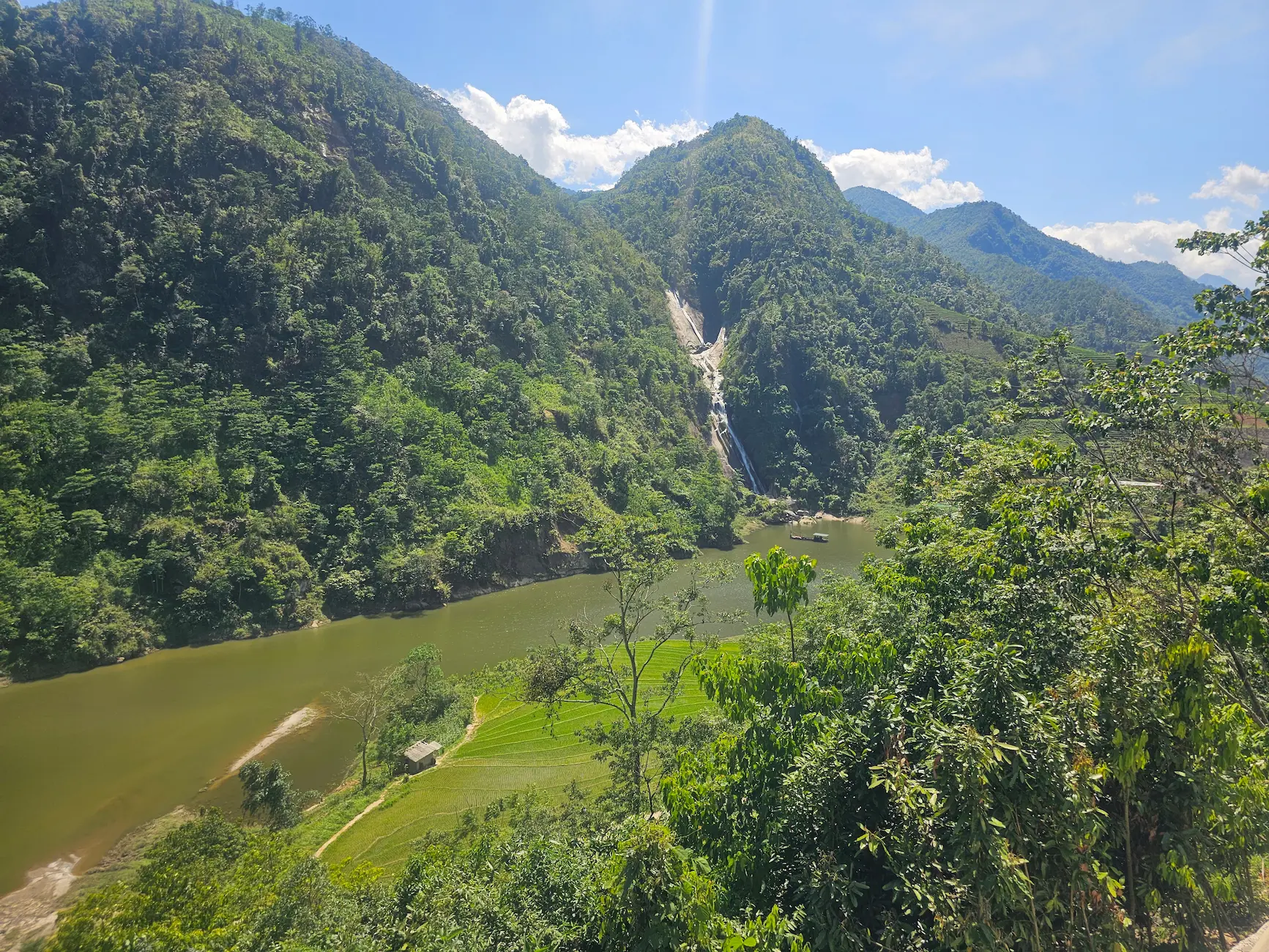
The other one is the soft fascination: watching something that effortlessly captures your attention. Moving water. A fire. Leaves. A market viewed from a chair. The first recovers by using the second.
Of the four conditions Kaplan requires, one is literally called "being away": escaping from one’s usual activities. The others are extent, soft fascination, and compatibility.
A framework from thirty years ago ended up describing the difference between a Sunday on the couch and fourteen days on the other side of the world.
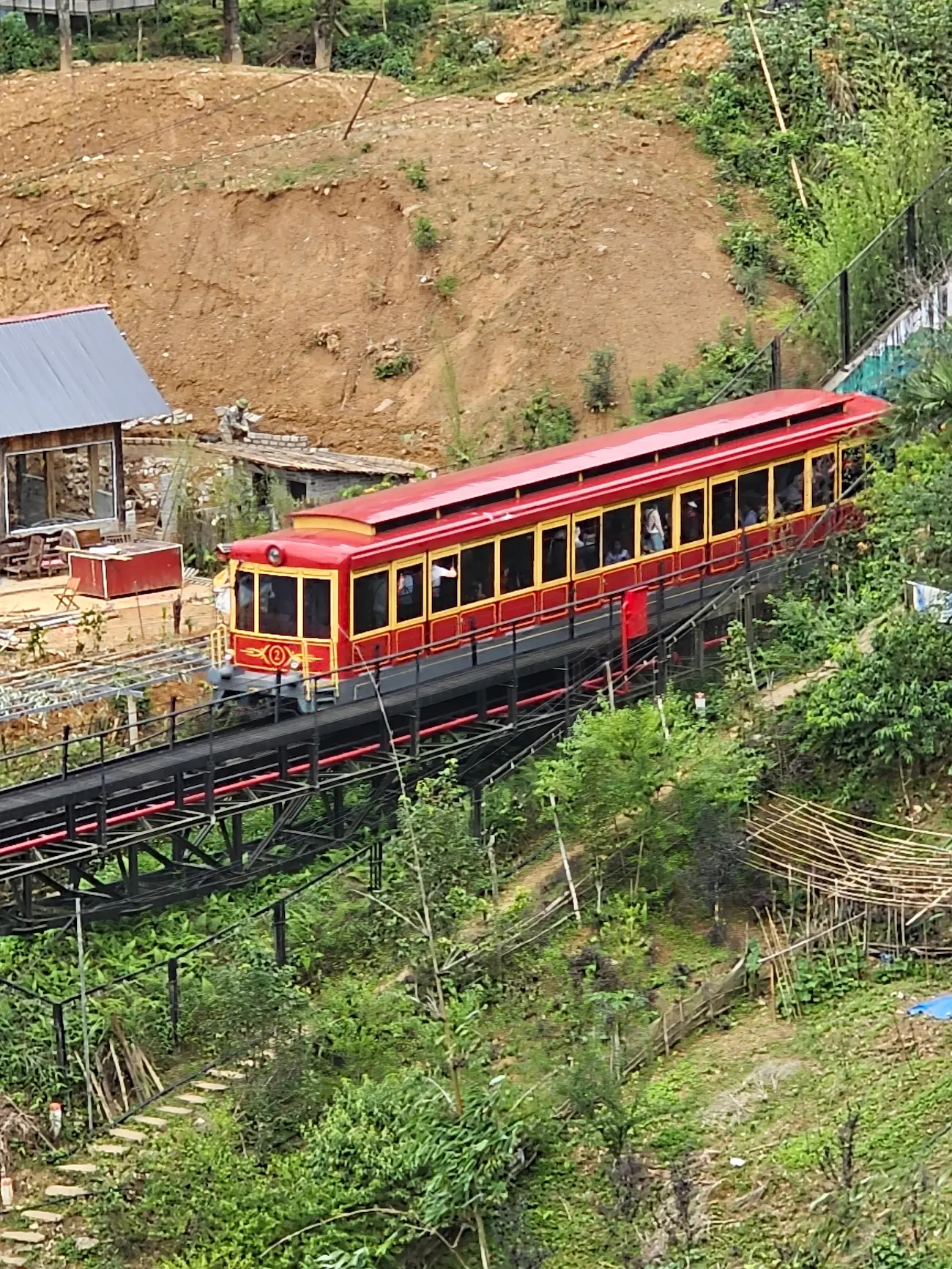
 Soft fascination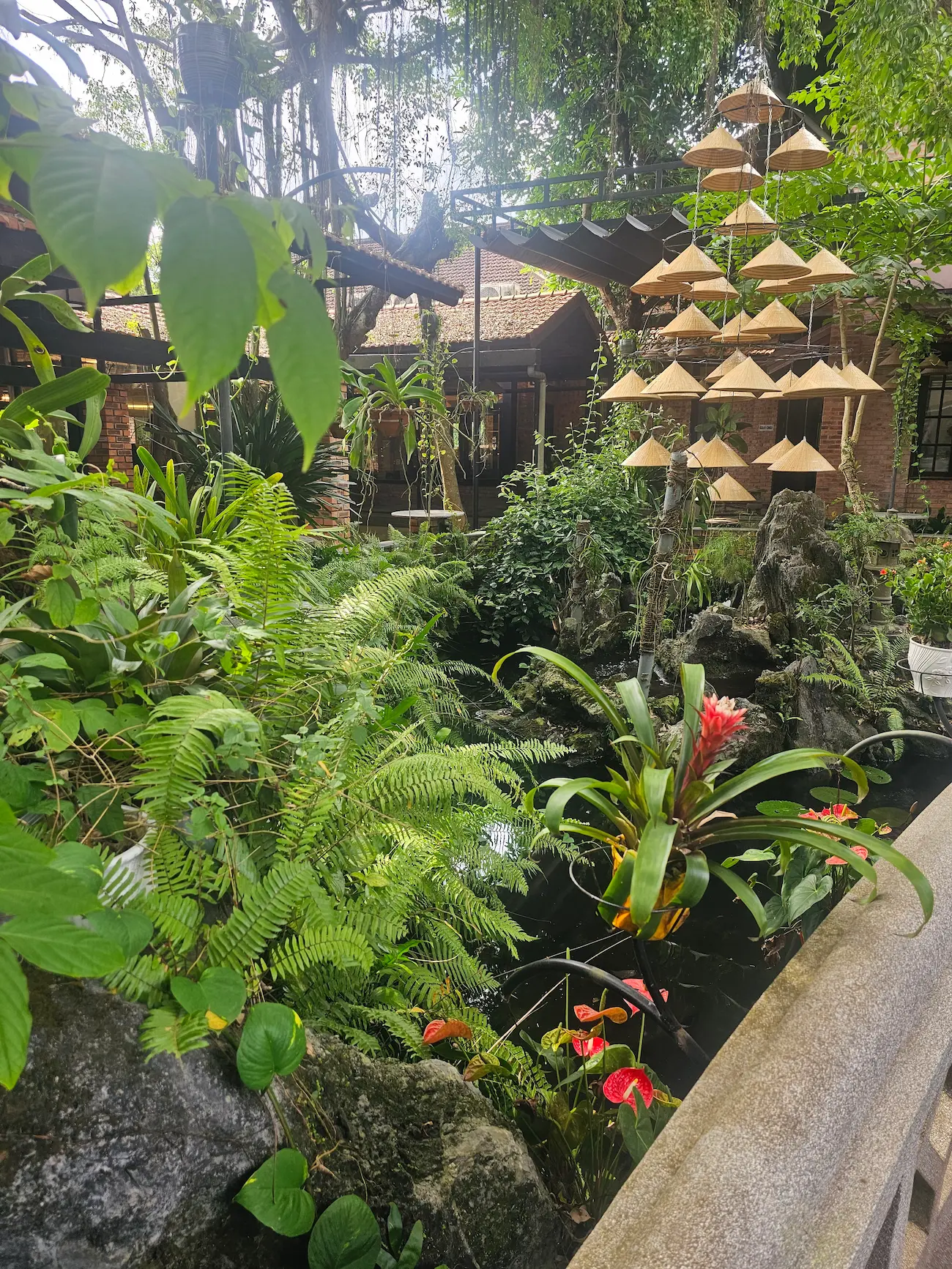

Maddux and Galinsky
Just looking won't do any good. You've got to dive right in
There is a broad body of research on how intercultural experiences affect thinking. It found that recalling a cultural learning experience facilitates the flexibility of ideas: solving a problem in different ways, seeing connections that weren't apparent before, and breaking through that mental block where you can only think of using an object for its intended purpose.
But the turning point came later, when other teams began to wonder what kind of experience produced the effect. The answer was clear: interactions, not exposures.
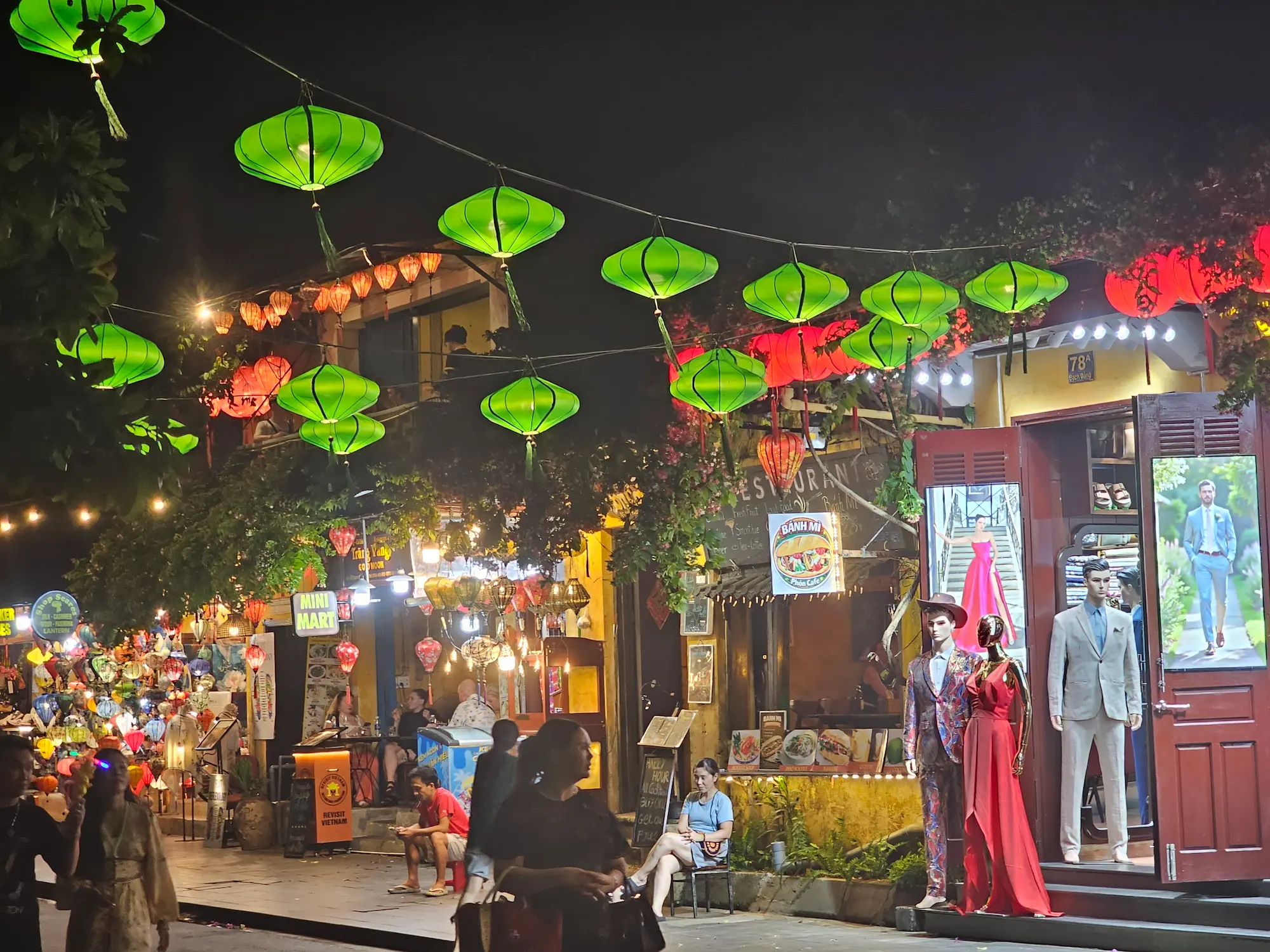
Just being in a country doesn't change the way you think. Interacting with it does. It happens when you've had to ask questions, negotiate, make mistakes, and understand why someone does something in a way you wouldn't have thought of.
It’s worth saying, even if it doesn’t flatter anyone in the industry: seeing a lot and touching nothing has no effect. Taking a photo of a market from the car window isn’t the same as shopping there without speaking the language.
A group of sixty people turns any destination into a stage set. A group of 6 to 13 forces you to be part of it.
 You have to ask here
Meyerson, Weick, and Kramer
Why, on the fourth day, people start talking to you seriously
It's often explained by blaming it on some hormone. There's a better way to look at it.
In 1996, they described the swift trust studying temporary teams: film shoots, crews, groups that form, do something intense together, and then disband without ever meeting again.
Traditional trust is built on a shared history. Temporary groups don't have that time, and yet they still work: The group assumes trust right from the start and verifies it as it goes along, rather than building it up bit by bit.
Applied to a trip: no one knows what your role is, who left you, how much you earn, or what part you’re supposed to play at your usual table. And when you have to figure things out together—a delay, a long walk, a plan that falls through—that process of figuring things out speeds up dramatically.
It's not a promise: no one can guarantee you friendships, and be wary of anyone who promises you that. What the research describes is why the situation is different.
That could lead to a conversation at 11 p.m. that you wouldn't have had with anyone at home.
 Eleven at night
No one knows what role you're supposed to play at your usual table. There are no labels to uphold.
The Cost of Getting Around
Crossing out places and inhabiting a place don't leave the same memory
This chapter isn't as science-heavy as the previous ones, and I'd rather mention that before we begin.
There is no solid body of research showing that traveling slowly leads to better memories. What does hold true, however, is the rest of what we’ve seen: if memory is built on different reference points, if flexibility comes from interaction, and if attention is restored when it can remain still, then fourteen activities in a single day work against all three of these things at once.
Changing accommodations every night comes with a cost that no one takes into account: packing and unpacking, the commute, finding your bearings, and starting over. It takes hours, but above all, it requires focused attention—which, as we know, is a finite resource.
One of our trips is structured in reverse: eleven nights at the same base in Ubud. No days wasted on the road—the excursions start and end at the same place.
You see less of the island. You live more fully. Pace is a choice, not a detail.
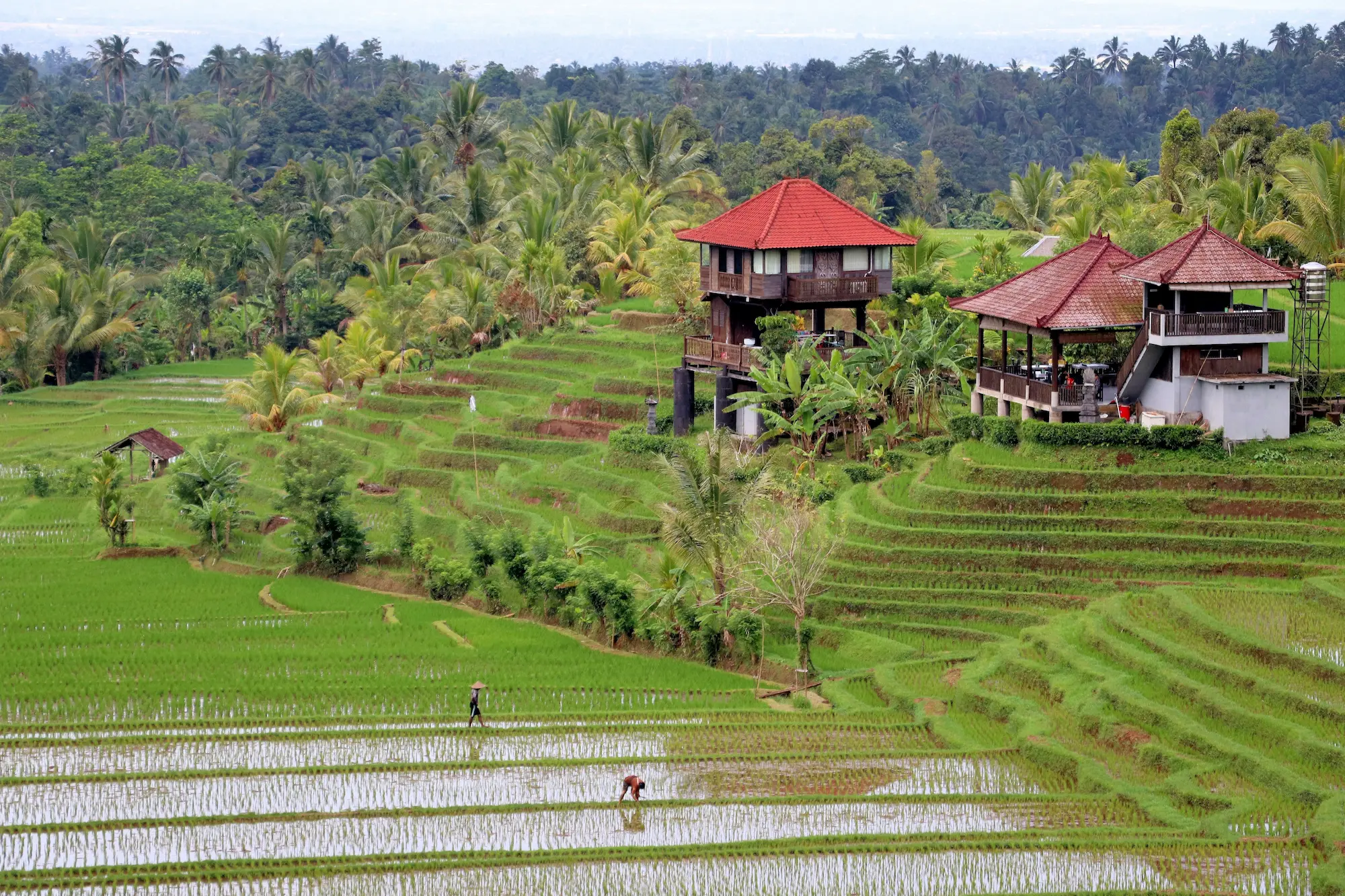 Eleven nights without repacking
Bandura
Proof that you can do it is to have been able to
There are 1,200 steps at Sigiriya. In Krabi, there are 1,260.
Albert Bandura called self-efficacy the belief that one is capable of successfully completing a specific task. It’s not self-esteem or general confidence: it’s specific, and it’s a better predictor than almost any other variable of whether you’ll give it a try and how long you’ll stick with it when things get tough.
He identified four sources. The most powerful one, far surpassing the others, is the mastery experience: Having done it yourself and succeeded. More than just watching someone else do it. Much more than just being told about it.
Those experiences carry more weight when there has been a real obstacle involved, because then you can't attribute the outcome to luck or to the fact that it was easy.
Ordering food without understanding the menu. Getting up at two in the morning to climb a volcano. Spending an entire night on a train without really knowing where it’s going. Each one is a small thing. None of them changes your life.
What builds up isn't a fond memory—it's a test.
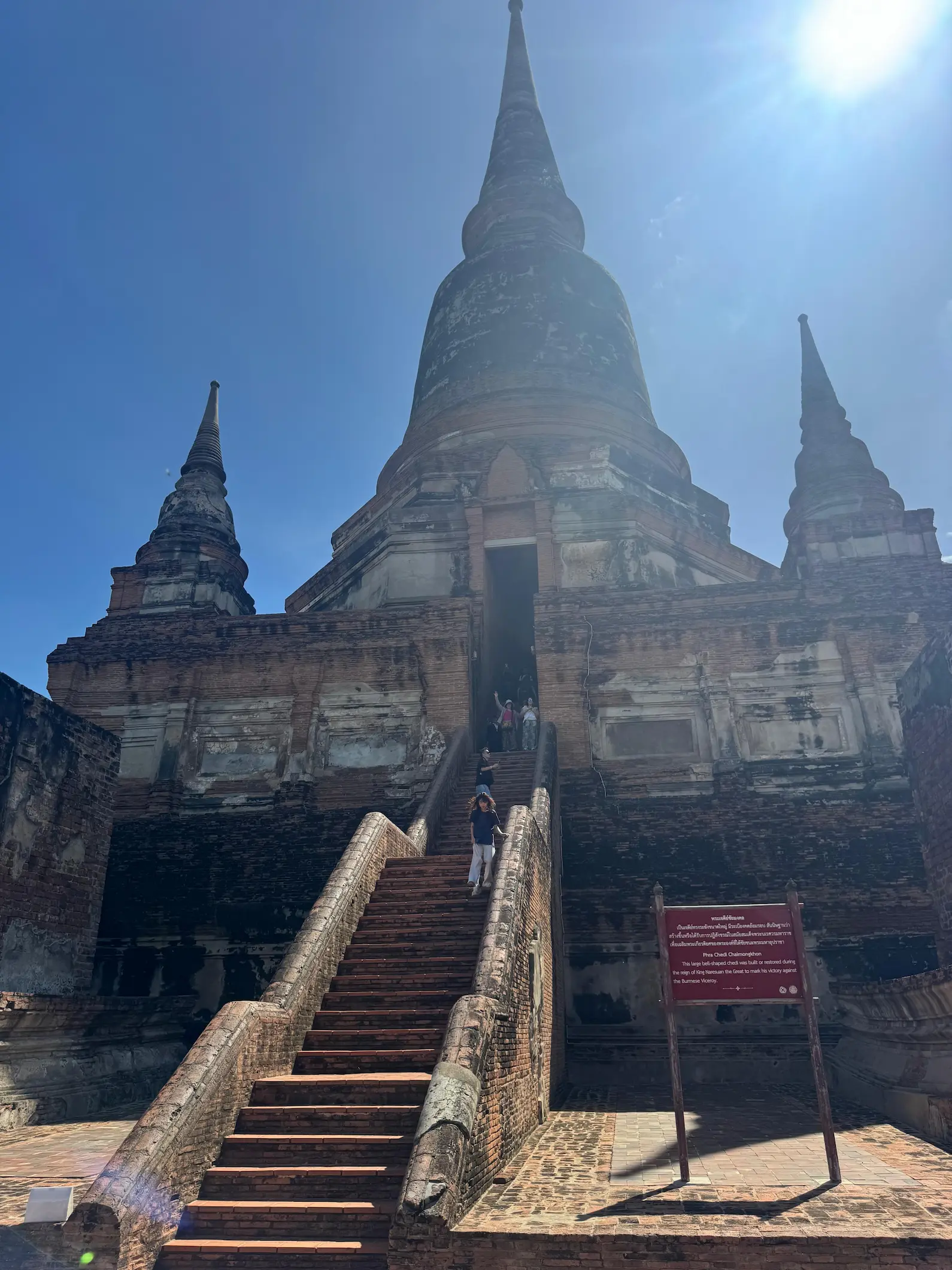 You climb this
Oishi and Westgate · 2021
Discomfort isn't a fault in the trip
Neither happiness nor meaning explains why we remember what we remember.
In 2021, Shigehiro Oishi and Erin C. Westgate published in Psychological Review a different proposal: a third dimension of the good life was missing, made of varied, interesting experiences capable of changing your perspective.
Their most useful insight for anyone who hesitates before booking something is this: psychologically rich experiences aren't necessarily pleasant, nor do they have to have a clear purpose. They can be uncomfortable, confusing, or downright bad while they're happening. And yet they're the ones that change the way you see things.
It features a validated questionnaire, has been replicated in samples from various countries, and has been the subject of subsequent research on mental, social, and physical health.
It correlates above all with openness to experience. Curiosity, basically. In practice, this means that the rough patch on the third day is part of what makes the trip worthwhile.
The stories people end up telling most often aren't usually the ones about perfect days.
 The rough patch on the third day
Keltner · Berkeley
What happens when something is bigger than you
It's the hardest to measure out of the nine, which is why it comes last and carries the least weight.
Dacher Keltner, a professor of psychology at the University of California, Berkeley, has been studying awe for years: the response to something vast that transcends your current understanding of the world.
His research points to measurable effects on the body and the brain, and to something he describes as a reduction of the self: when faced with something enormous, the part of you that compares itself to others, criticizes itself, and worries about itself turns down the volume.
Much of what is written about awe in travel articles is popular science based on a single book, not a long series of replicated studies. He is a serious researcher, but the evidence here is weaker.
Even so, I'm including it because it describes something that almost no one disputes when it happens to them: the feeling of being speechless in the face of something. A sunrise over a sea of clouds. A temple that has stood there for a thousand years.
For a few seconds, your problems take on their proper proportions.
 Falling silent
that nobody writes
The limits of the neuroscience of travel
If you've made it this far, you deserve to read the part that almost no one writes about.
The law that everyone cites is a stretch
Any article about stepping out of your comfort zone mentions the Yerkes-Dodson law. It’s real, but it dates back to 1908 and stems from an experiment with mice learning a task while subjected to electric shocks. There’s a considerable leap from that to applying it to your vacation.
"Comfort zone" is not a scientific term
It was popularized by Judith Bardwick, a management thinker, in a 1991 book. It is a useful metaphor. It is not a finding from neuroscience.
Attention restoration is widely cited and poorly demonstrated
A systematic review published in 2016 concluded that, despite the widespread acceptance of the theory, it is unclear how much empirical evidence supports the specific mechanism it proposes. I am including it because it accurately describes the experience, not because it is conclusive.
Correlation does not imply causation
Studies on intercultural experience and creativity show associations—and, in some cases, causal effects in laboratory settings with specific tasks. They do not prove that a two-week trip will make you a more creative person permanently.
The samples are biased
Much of this research has been conducted with Western college students, the most overrepresented group in the history of psychology.
And none of this happens just because you buy a ticket
Dopamine responds to the unexpected, not to an airport. Flexibility comes from interaction, not from mere presence. Self-efficacy comes from having done something yourself.
A Trip doesn't fix a life
You don't come back with your life all figured out. If only.
A trip is no substitute for a therapist. It doesn't cure a disorder. It doesn't fix a relationship that was already broken. It doesn't make what you're trying to get away from disappear—and besides, it will still be waiting for you, just as it was, when you return.
If you’re going through a really tough time—if you haven’t slept in weeks, if you don’t feel like doing anything, if the idea of going far away is really just the idea of getting away—talking to a professional matters a lot more than buying a ticket. And the two aren’t mutually exclusive: it’s just the right order.
What a trip can do is more modest, and yet it’s no small thing. It creates distance. It restores your curiosity. It reminds you that you’re still capable of finding your way in a place where you know nothing. What it can't do is do the work for you.
What is gets lost along the way
And while we're on the subject, what a trip like that takes away from you.
It costs more
A small group doesn't spread the costs among sixty people. It's arithmetic, not positioning.
You cannot disappear
In a group of sixty, you can remain anonymous: you sit at the back of the bus and no one looks for you. With 6 to 13 people, that’s not the case. You’re visible every day, and for some people, that’s not worth it.
If someone doesn't fit in, you can tell
There isn't a crowd to blend into. You might end up with a travel companion you don't click with, and there's no corner far from the group where you can go.
The itinerary is locked in before departure
With tickets paid for, domestic flights booked, and accommodations arranged. Traveling in a small group gives you some flexibility during the day—it doesn't mean you can just change your itinerary on the fly.
And the trip might not happen
If the minimum of 6 people is not reached, the tour will not take place. In that case, the full deposit—€300—will be refunded without any deductions.
If it still works for you
If, after reading all this, you still think it sounds good, we're probably on the same page.
By Toni
Co-founder.
Written upon my return.
Maybe you don't need a vacation.
Maybe you need to leave.
Not because there's anything wrong with you.
Not even because you want to escape your life.
Simply because you've been doing the same thing for too long.
Work.
Solve.
Reply to messages.
Come home tired.
Wait for the weekend.
And that's how the weeks go by.
Until one day you start looking into trips.
You're not quite sure what you're looking for.
You just know you want to be somewhere else.
And then something happens.
You wake up without knowing what time it is.
You step outside, and everything seems new to you.
You try something you don't even know the name of.
You might end up laughing with someone you met yesterday.
You go for a swim in the ocean.
You walk without having to get anywhere.
And, before you know it, you haven't looked at your phone for hours.
That feels so good.
You haven't figured out your life.
You haven't quit your job.
Your problems are still there.
But you're different.
Lighter.
With more drive.
With a slightly clearer head.
And maybe you remember something pretty simple:
Not everything has to be useful.
Sometimes you just need to do something that makes you feel good.
And traveling has that power.
It takes you out of the familiar.
It reawakens your curiosity.
It puts you in touch with new people.
And for a few days, it lets you just be yourself.
No schedule.
No rush.
Without having to organize everything.
That's why we don't think so much about where you want to go.
We're more interested in knowing:
How do you want to come back?
Because maybe you don't need another trip.
Maybe you need to go home thinking:
"Damn. That really hit the spot."
And if we can achieve that, it will have been worth it for us.
Your brain is designed to stop paying attention to things it already knows. You come back with more stories to tell, and that's the same as having lived more.
Set a date.
We'll take care of the rest.
Groups of 6 to 13 people, one trip per year per destination, and one of the two of us who founded SunZen will be with the group for the entire trip.
The guide, free
23 Things You Should Know Before Traveling to Asia. It takes just an afternoon to read.

Questions about the neuroscience of travel
Why does the brain become so active in an unfamiliar place?
Because dopaminergic neurons fire at the moment of surprise, not at the moment of reward: the signal is strongest when the gap between what you expected and what actually happens is greatest. In your daily routine, your brain predicts things accurately and stops paying attention. A country you don’t understand shatters that prediction every two minutes.
Why do two weeks of travel leave more memories than months of routine?
It’s the paradox of vacations, as described by psychologist Claudia Hammond in her book Time Warped. The brain doesn’t calculate the duration of a past event by counting hours, but rather by counting how many distinct memories it formed during that time. A year of routine leaves very few reference points, and when you look back, the stack is thin.
Does traveling make you more creative?
Research on intercultural experiences reveals greater flexibility of thought, but with one crucial caveat: the effect arises from interactions, not from mere exposure. Simply being in a country doesn’t change the way you think; interacting with it does. And these are associations—not proof that a two-week trip will change you permanently.
Why do people connect so quickly in a small group?
Because of what Meyerson, Weick and Kramer described in 1996 as swift trust, studying temporary teams. The group assumes trust from the start and verifies it as it goes, instead of building it little by little. Nobody knows what role you are supposed to play at your usual table, so there are no labels to keep up.
Can traveling help me if I'm going through a rough patch?
A trip isn't a substitute for a therapist; it doesn't cure a disorder or fix a broken relationship. If you haven’t slept in weeks or don’t feel like doing anything, talking to a professional is far more important than buying a ticket. What a trip can do is more modest: create some distance, reignite your curiosity, and remind you that you’re capable of getting by even in places where you know nothing.
Sources
- Schultz, W. — Research on prediction error and dopaminergic neurons, University of Cambridge.
- Wang, Y., Lak, A., Manohar, S. G., Bogacz, R. (2024). Dopamine encoding of novelty facilitates efficient uncertainty-driven exploration. PLOS Computational Biology.
- Research on dopaminergic modulation of memory persistence and the hippocampus.
- Hammond, C. Time Warped: Unlocking the Mysteries of Time Perception.
- Kaplan, R. and Kaplan, S. (1989); Kaplan, S. (1995). The theory of attention restoration.
- Ohly, H., et al. (2016). A Systematic Review of the Theory of Attention Restoration. Journal of Toxicology and Environmental Health, Part B.
- Maddux, W. W., Adam, H., Galinsky, A. D. (2010). How Multicultural Learning Experiences Facilitate Creativity.
- Leung, A. K., Maddux, W. W., Galinsky, A. D., Chiu, C. (2008). Multicultural Experience Enhances Creativity. American Psychologist.
- Further research on interactions between multicultural exposure and cognitive flexibility.
- Meyerson, D., Weick, K. E., Kramer, R. M. (1996). Swift Trust and Temporary Groups. In Trust in Organizations, Sage.
- Bandura, A. (1977, 1997). Theory of Self-Efficacy.
- Oishi, S., Westgate, E. C. (2021). A Psychologically Rich Life: Beyond Happiness and Meaning. Psychological Review.
- Keltner, D. (2023). Awe: The New Science of Everyday Wonder.
- Yerkes, R. M., Dodson, J. D. (1908). An original study on arousal and performance.
- Bardwick, J. M. (1991). Danger in the Comfort Zone.