Curious laws of Vietnam that are worth knowing
Nine curious laws of Vietnam with their decree and date. And finally, what you actually see on the street—which isn't always the same.
Zero alcohol means zero. Also by bicycle
Of all the curious laws in Vietnam, this is the most surprising: absolute zero tolerance with alcohol. There is no minimum permitted level: any detectable amount is an offense. And it does not apply only to cars and motorbikes — also to bicycles, with its own scale of fines.
Refusal to take a breathalyzer test carries the maximum penalty. Testing is conducted at night and on weekends: over seventeen thousand cases were detected during the 2025 Tet.
Beware of old guides: Decree 100, which almost all of them cite, expired on May 15, 2026.
They do wear helmets. What you can't see in the photos is the loose sleeve.
Vaping is prohibited. And this one ruins trips
Of all the recent Vietnamese laws, this one ruins the most trips. Since the January 1, 2025, the country bans e-cigarettes and heated tobacco. Not just selling them: also import them, transport them, own them and use them.
There is no exception for personal use or for tourists. What you can expect is that they take it off you at customs. They can confiscate and destroy it on the spot.
And what almost no one talks about: hotels are liable for up to ten million if they allow it. That is why staff are not going to turn a blind eye.
Leave it at home. The patches are sold at any pharmacy.
Paying in dollars is illegal, even if they ask you for them
All transactions, payments, and advertisements within Vietnam must be made in dong. It is one of the oldest laws in Vietnam on this list and one of the least known.
A tourist who pays for a souvenir in dollars won't face any consequences. But there are two reasons not to: it's illegal, and they'll give you the change at whatever rate they want. You always lose.
Just because they accept dollars doesn't mean it's legal.

Where to exchange money changed this year
There are laws in Vietnam that changed months ago and almost nobody has updated. For years every blog recommended the same thing: change your money at the jewelry shops, they give a better rate.
That advice is now illegal. Since February 2026, jewelry stores have been prohibited from exchanging currency, and non-bank exchange bureaus can only buy foreign currency.
Plan it: You can only exchange dongs back to euros in the international departure area. Not in the city. You either spend them, or you take them with you for next time.
Changing money outside an authorized point can cost you the money you changed.
Your international driving permit may not be valid here
Of all the Vietnamese laws that affect people's wallets, this is the worst. Vietnam signed the Vienna Convention of 1968 in August 2014, and only recognizes international permits issued under that agreement.
There is an earlier one, the one from Geneva, 1949, and several countries issue their own under that. A permit from 1949 is not valid in Vietnam: legally it is like driving without a license.
And this is what really matters: If you have an accident without a valid permit, your travel insurance may void all coverage.
Furthermore, it is only valid when accompanied by the original license, and this must include the motorcycle category. Check with the DGT (Spanish Traffic Authority) under which agreement the Spanish license is issued before renting anything.
Rental shops only require a passport and a deposit. That doesn't mean you're covered.
What needs to be declared when entering and leaving
Among Vietnam's curious laws, this is one of the easiest to break unintentionally. There's no limit on the amount of currency you can bring in or take out. However, there is an obligation to declare amounts exceeding certain thresholds.
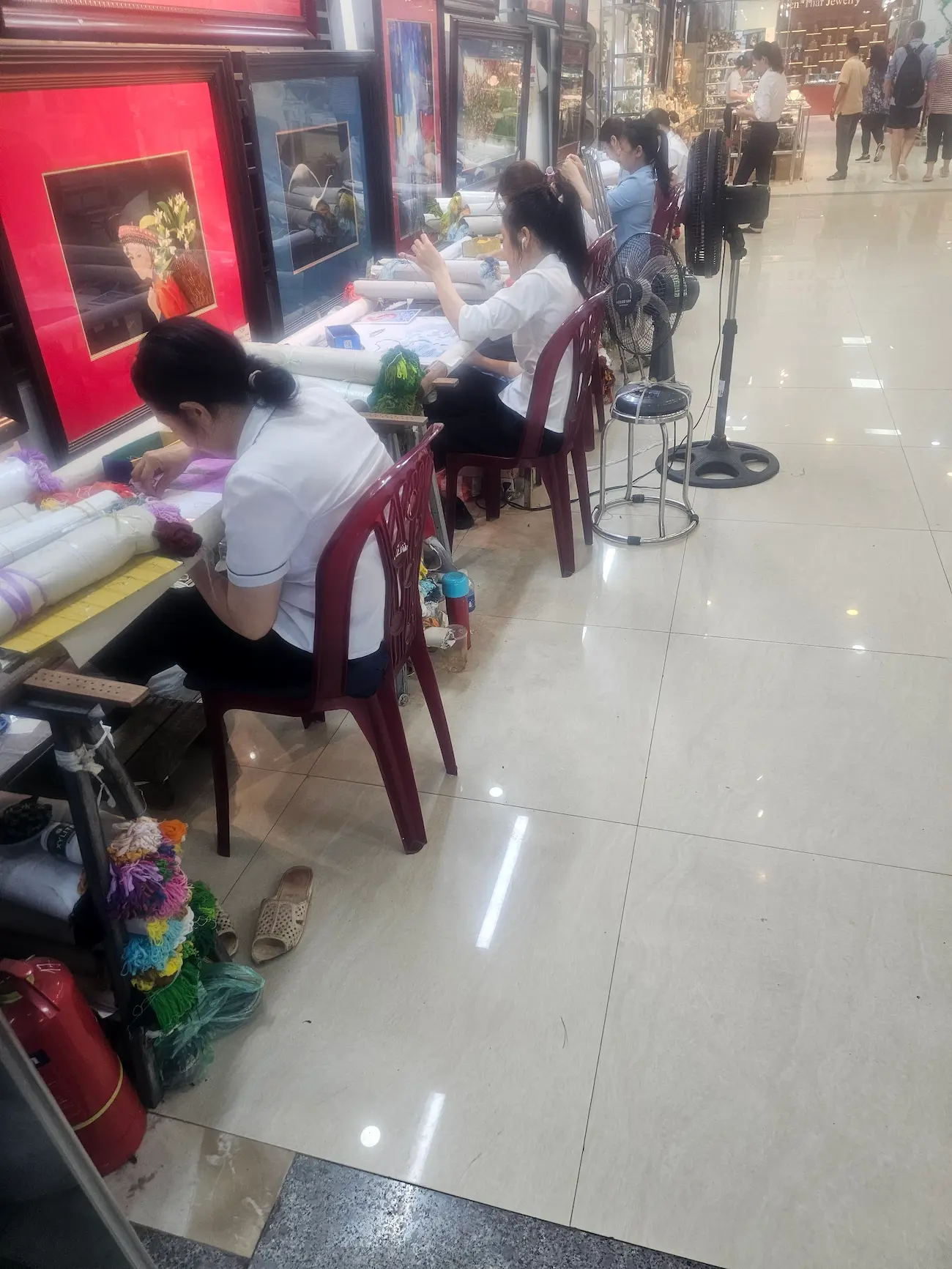
Handmade items leave without a problem. Antiques do not.
The drone: although it weighs 249 grams, it has to be registered
Among Vietnam's curious laws, this is the one that travel websites misrepresent. It's true that drones under 250 grams are exempt from a flight permit, always outside prohibited areas and without losing sight of it. That includes the DJI Mini.
But being exempt from permission doesn't mean being exempt from everything. Since July 2025 all drones must be registered before use, whatever they weigh. The provincial police handle it.
Starting at 250 grams, you need permission from the Ministry of Defense, with seven business days' notice. Foreigners usually also need a Vietnamese guarantor.
The north, near the border, is a sensitive area. Right where everyone wants to film.
Antiques don't leave the country
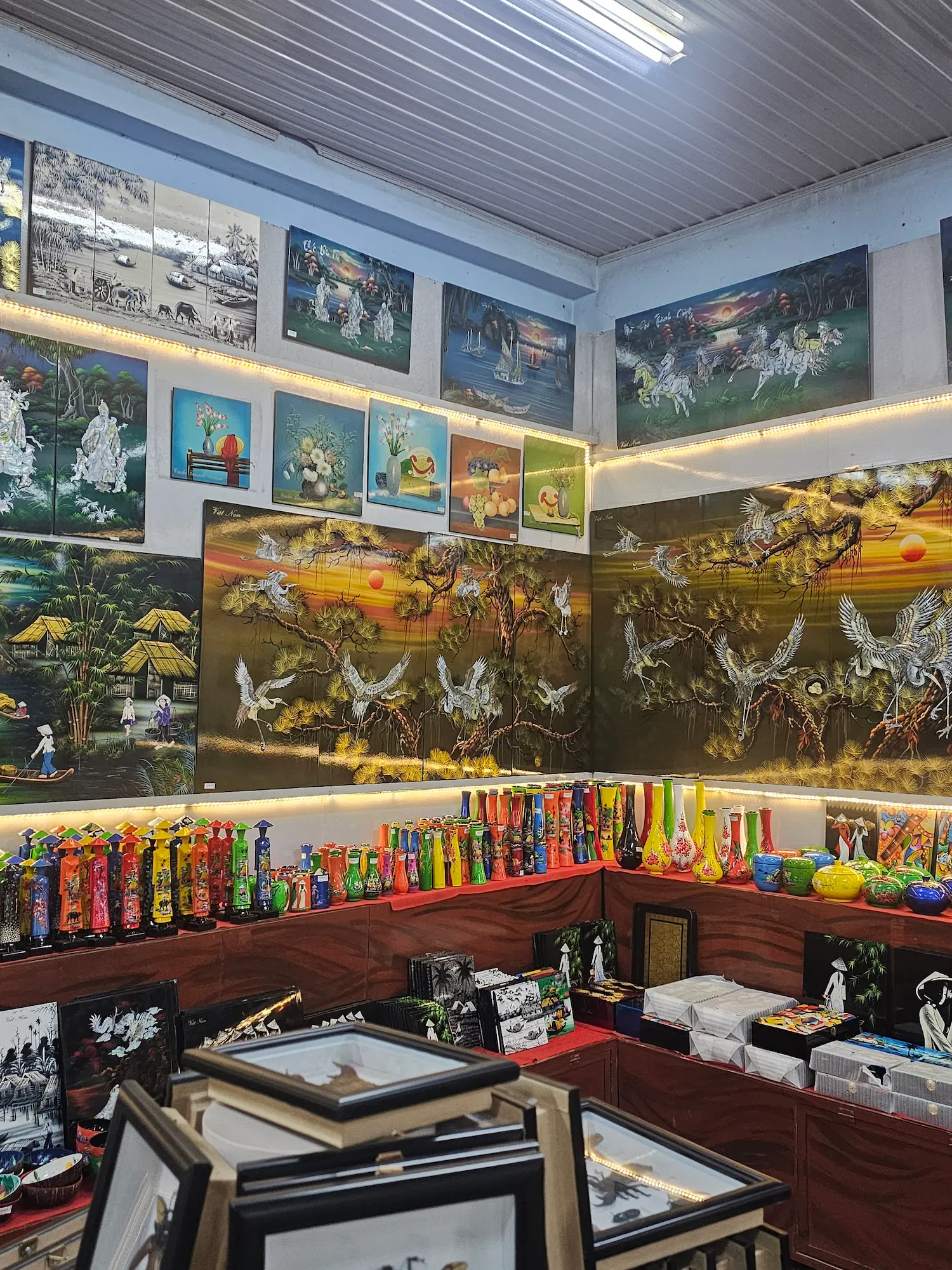
Another Vietnamese law worth knowing before buying: legislation prohibits the export of antiques. And here we must be honest about the nuance: it is a rule whose application is irregular and whose definition is not always clear.
What you should know is that if someone offers you an antique piece at a market, it either isn't one —most likely—, or it can be confiscated when you leave.
"True antique" and "tourist market" rarely go together.

The two-child law existed for 37 years. And it has just been repealed
We close with the most historic of Vietnam's laws. In 1988, with more than four children per woman on average, Vietnam limited families to one or two. For most it was more social pressure than penalty, but for Party members it did have consequences: a third child could cost you a promotion or your job.
At June 2025 the National Assembly repealed it, for the opposite reason to the one that created it.
Two related rules remain in force: doctors cannot reveal the baby's sex before birth, and sex-selective abortion is prohibited.
A country that is aging faster than expected.
And now the awkward part
All of the above are the laws of Vietnam on paper. This is what you see when you go out on the street.
Being Vietnamese is not the same as not being one
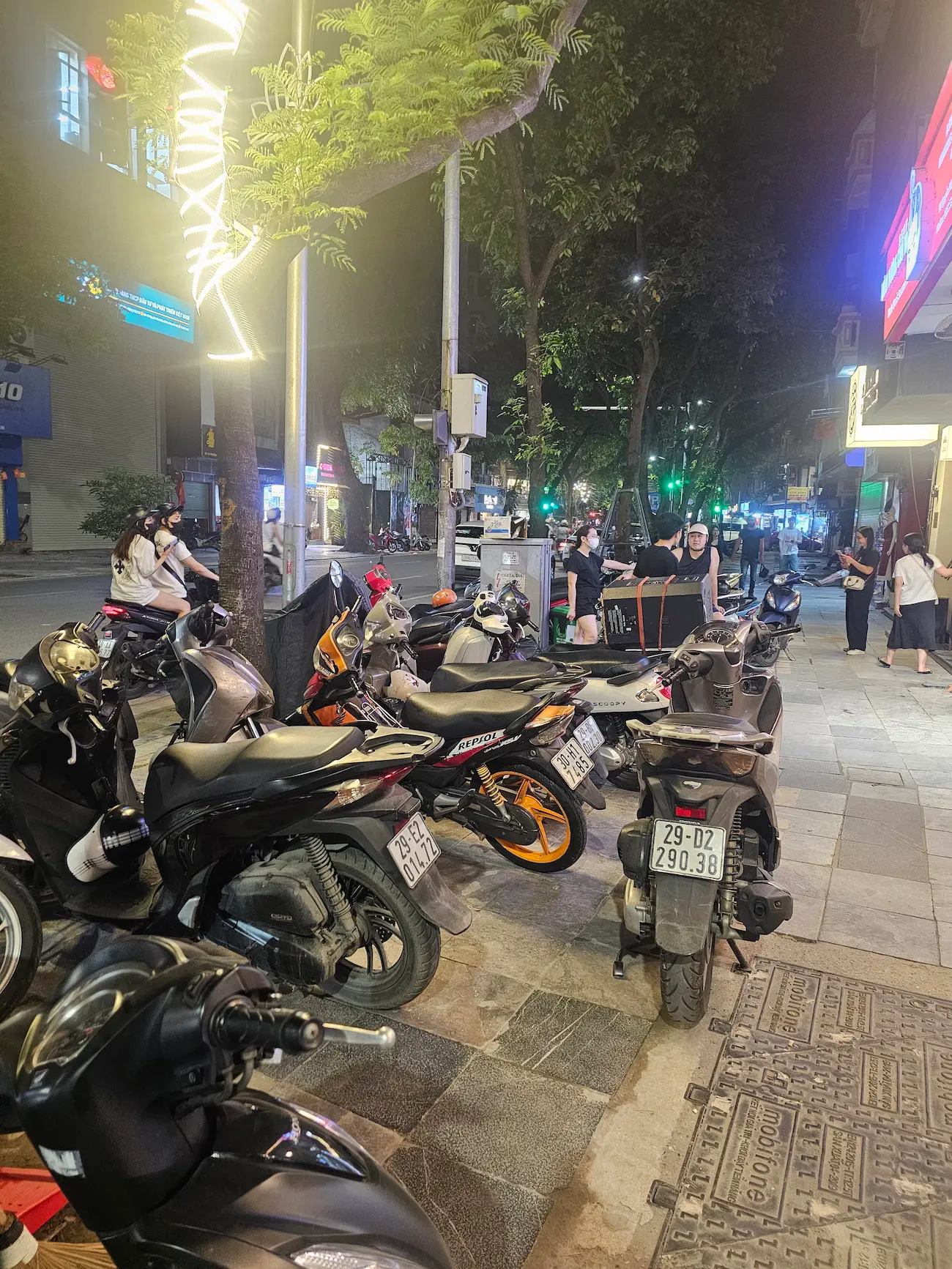
The first thing that surprises you on arrival is the number of motorbikes. More motorbikes than cars, and not by a little. And on top of them, everything: children, babies in arms, four people on a moped, people talking on the phone while riding.
I've ridden pillion with Vietnamese people without helmets myself, neither of us wearing them. It's not an unusual day: it's just the normal scenery. There, a motorbike isn't a leisure vehicle; it's the family car, the business van, and the school bus all rolled into one.
The honest question is not "is it prohibited?", but "to whom does it apply?".
What misleads you
You see that anything-goes attitude and think that on a motorbike you can pass completely unnoticed by the local authorities. And it is exactly the opposite: with a foreigner riding a rented motorbike there is far less margin than with a local.
What strikes you upon arrival—the army everywhere, the strictness of the borders, the control over foreigners, the extensive records kept of the Vietnamese themselves—is not just window dressing. This country exists alongside the chaotic traffic. They are two sides of the same coin.
And when it comes to alcohol, there's no room for leniency. The checks are real, systematic, and take place at night, and it doesn't matter where you're from.
I'm not going to tell you not to ride a motorbike in Vietnam. I did it. But it's one thing to accept a short ride with someone who's been riding that bike for thirty years, and another to rent one yourself and go out on the main road without knowing if you're insured.
Controlled chaos
And here's what surprised me the most, which has nothing to do with traffic.
In a country of over one hundred million people, where everything seems chaotic, I never felt insecure. People leave their motorbikes anywhere. Their bicycles. Their cell phones on the table. A Vietnamese person can't imagine anyone taking them.
It's chaos, yes. But it's controlled chaos.
Just because I didn't feel unsafe doesn't mean we shouldn't be careful: bag-snatching from a motorbike does happen, especially in Ho Chi Minh City, and it is worth being alert with your phone in your hand on the street. I say it because I would rather you read it here than discover it there.
And one thing you don't play around with
Vietnamese hospitality is among the best I've ever experienced. Kind, friendly people who welcome you without you even asking.
That hospitality has its limits, and it's important to know them: The country, the flag, and the culture come before everything else. Any gesture interpreted as a lack of national respect instantly changes the conversation. It's not sensitivity; it's a deeply ingrained patriotic unity, and it gives the impression that all Vietnamese people are pulling in the same direction.
The conclusion is simple. Vietnam's laws are applied unevenly, but respect is not: if you respect them, it's hard to find a more friendly people.
 ToniCo-founder · SunZen Travel
Vietnam, without learning the laws
Seventeen days, from November 3 to 19, 2026. 6 to 13 people, with one of us in the group. The laws of Vietnam that matter, sorted out before leaving.

More from SunZen
Beyond the curious laws of Vietnam: the Inner Atlas and the trips we organize.
- Decree 168/2024/ND-CP on administrative sanctions in road traffic, in force since 1 January 2025. Expiration of Decree 100/2019/ND-CP on 15 May 2026.
- Law 44/2019/QH14 on the prevention and control of damages from alcohol and beer abuse.
- Resolution 173/2024/QH15 of the National Assembly (30/11/2024) on the prohibition of electronic cigarettes and heated tobacco. Implementing decree effective from 31/12/2025.
- Decree 288/2025/ND-CP on unmanned aircraft, in force since 5/11/2025. Sanctions: Decree 282/2025/ND-CP, since 15/12/2025.
- Vienna Convention of 1968, signed by Vietnam on 20.08.2014 and developed by Circular 29/2015/TT-BGTVT.
- Change Control Ordinance of 13/12/2005 and Decree 160/2006/ND-CP. Sanctions: Decree 88/2019/ND-CP, art. 23. Authorized points: Decree 52/2024, from 09/02/2026.
- Amendments to the Population Ordinance approved in June 2025. Fertility data from the General Statistics Office of Vietnam and the Ministry of Health.