Asia'smost fascinatingbirds
Among the birds of Asia there is a ghost that no one has seen since 1980, a resurrection that is happening right now, and one that crashes headfirst into another in mid-flight.
Some countries are best told through a single animal. Among the birds of Asia, there are stories that no mammal can match: in Thailand, Vietnam, Bali, and Sri Lanka, that animal is neither the elephant nor the tiger.
It's a birdEach one has its own story, and together they tell a bigger story: how close Asia has come to losing part of its voice, and how hard it is to get it back.
The ghost with its own stamp and coin
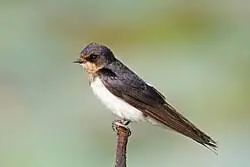
In 1968, ornithologists discovered it in a single wintering ground in Thailand. No one had described it before. Thailand was so proud to have a bird that existed nowhere else in the world that it issued a postage stamp and a commemorative coin.
Nobody has seen it since 1980.
There have been searches in Thailand and neighboring Cambodia. None have found anything. The IUCN Red List lists it as “possibly extinct” —caught in that middle ground where a species stops appearing in the records but nobody dares close the case. It is one of only two birds endemic to Thailand.
The stamp was printed first.
Today, paper has outlived the animal.
The resurrection that is happening right now
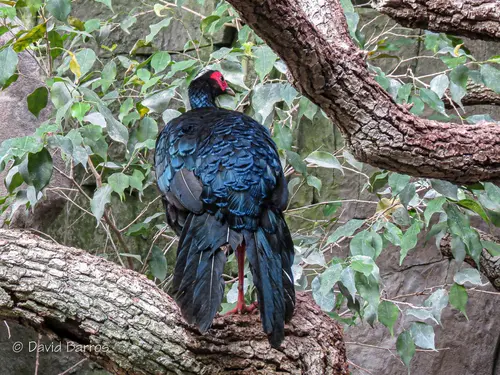
Vietnam's national bird. Described in 1896, it disappeared from records for decades, reappeared in the 1990s—and disappeared again. The last reliable sighting in the wild was in 2000, and the last specimens seen were not in the jungle: they were in a market.
There are around a thousand specimens left in the world. All in captivity.
And the story doesn't stop there. A few weeks ago, a female born at a conservation center in Malaga completed a journey of thousands of kilometers: first to Germany, for sanitary isolation and genetic testing; and from there to Vietnam, to join an international reintroduction program.
They're not going to release her into the jungle. The idea is for her to reproduce within her own ecosystem, and for her offspring to one day take the final step back to the protected forests of central Vietnam.
The real comeback, with a name and a face
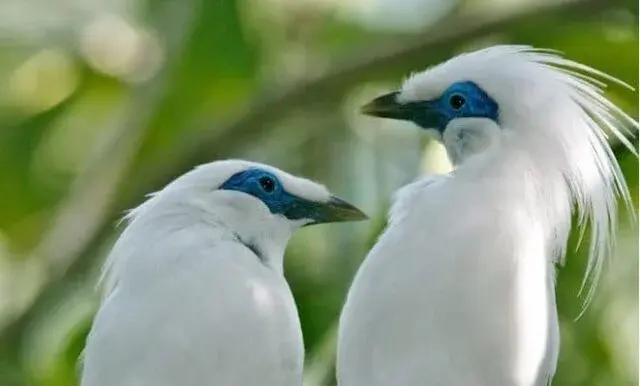
Almost entirely white, with a crest that rises like a curtain and electric blue skin around its eyes. It is the national bird of Bali and the only vertebrate species endemic to the entire island. In 2005 there were fewer than ten specimens left in the wild on the entire planet.
Six villages within West Bali National Park began raising starlings under technical supervision, with the local community truly involved and not just as spectators. Bali even created its own customary law—the awig-awig— which prohibits hunting it under penalty of a real fine.
A study published in the scientific journal Oryx in 2025 confirms that the recovery is still under way.
Asia's bird paradise
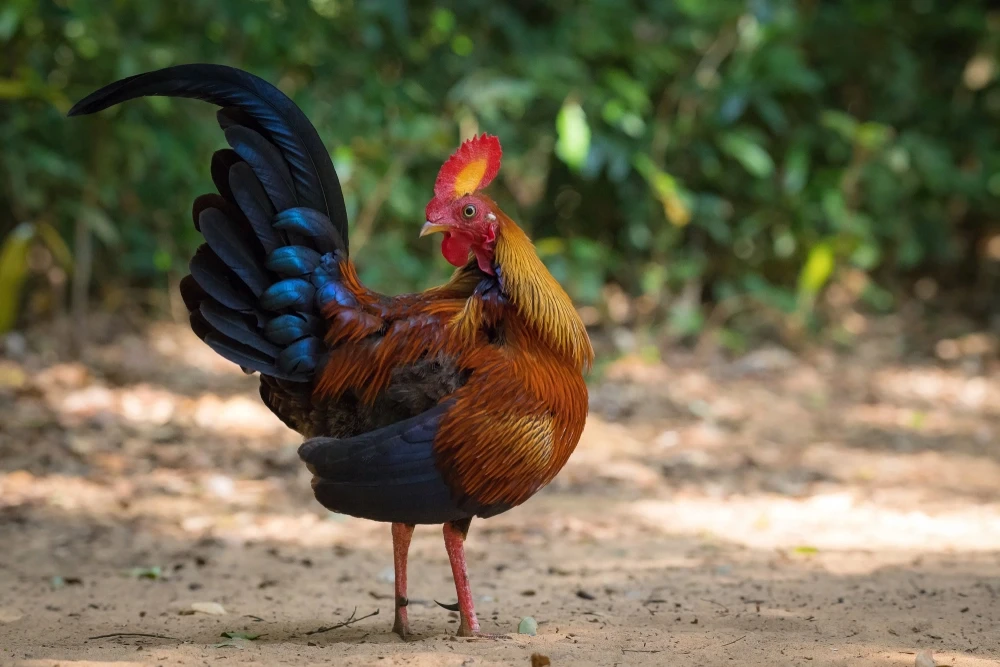
The Ceylon junglefowl is the national bird of Sri Lanka and needs no rescue story, because it has never been on the brink of anything. It is not the same junglefowl as in the rest of Asia: it is a species of its own, which only exists here, and its song was part of this jungle long before the first human being arrived on the island.
Sri Lanka has 34 bird species found nowhere else in the world. International ornithologists call it a birdwatching paradise, with a concentration of endemic species per square kilometer that few places on the planet can match.
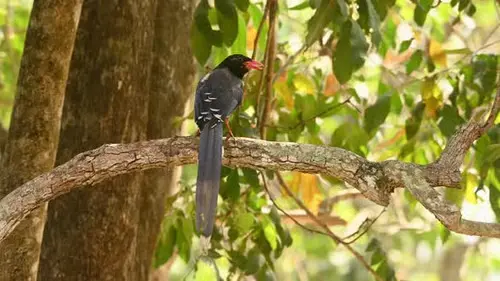
Among them, the blue magpie, electric blue with a red beak. And the Sri Lankan gray hornbill, unique to the island and one of the great gardeners of the forest: without it, many seeds would never germinate far from the tree that produced them.
The helmeted hornbill: the bird that crashes in mid-flight
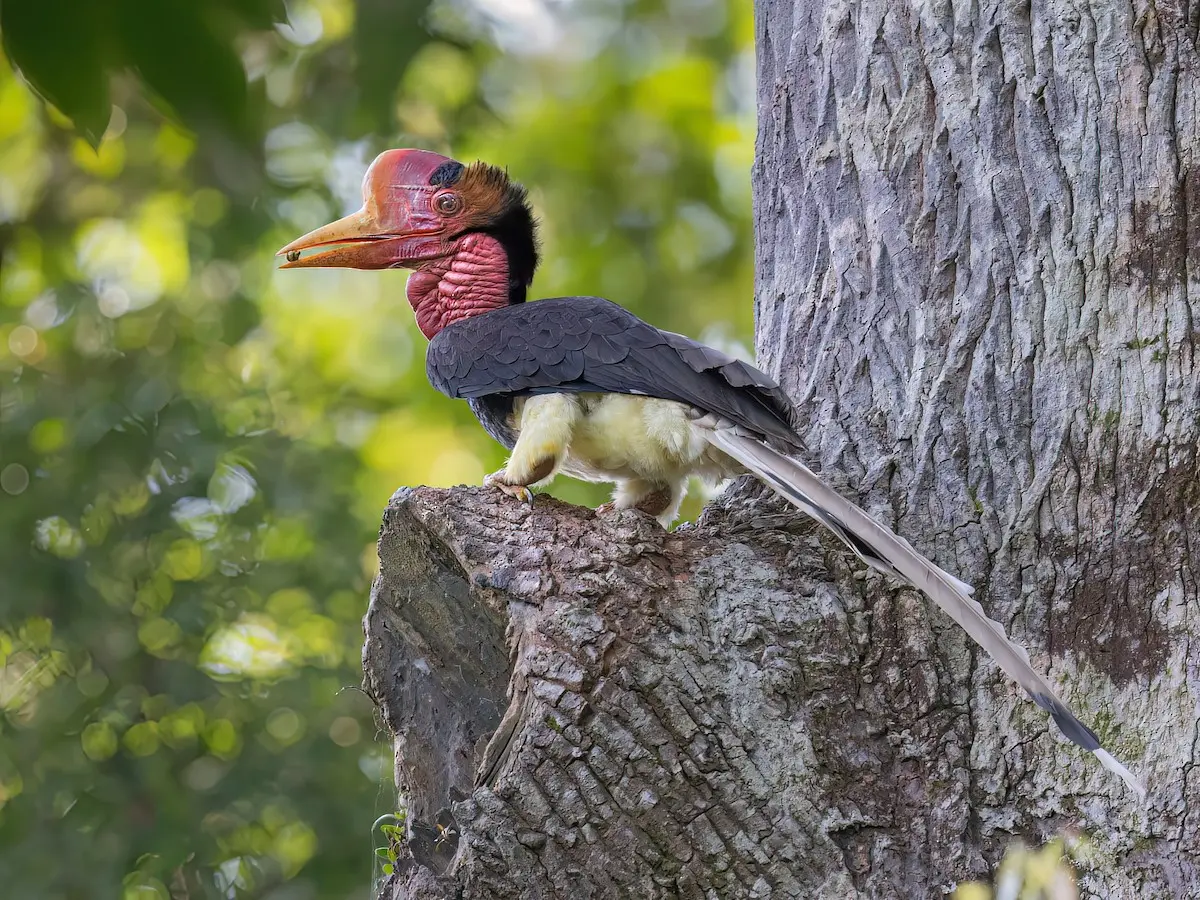
The males collide their casques with those of other males in mid-flight, at high speed. Scientists call it aerial jousting —aerial jousts— and the impact can be heard more than a hundred meters away.
While the casque of almost every hornbill is hollow, this one carries at the front a layer of keratin eight times thicker than that of a normal beak.
Inside it has a network of trabeculae of a thickness similar to that of the femur of an Asian elephant. Published in Annals of the New York Academy of Sciences.
Researchers who analyzed it using X-ray microtomography noted that it may inspire the design of impact-resistant materials. An Asian bird teaching how to make helmets.
The keratin layer is known as “hornbill ivory” and it is carved as an ornament. The illegal trade in this material is today the main threat to the species.

Hornbills do not live in the forest. They plant it.
It's not a pretty metaphor, it's a technical description. They swallow the small seeds, which pass through their digestive system intact, and regurgitate the large ones after working the pulp. Traveling enormous distances, they disperse the seeds far from the parent tree without destroying them —unlike many mammals, which chew them, or other birds, which grind them in the gizzard.
And they nest like no other bird on the planet: the female shuts herself inside a tree cavity and the male seals it from the outside, leaving only a narrow slit through which food passes during incubation. Without hornbills, the entire composition of the forest changes.
Birds of Asia that live outside our maps
The sarus crane
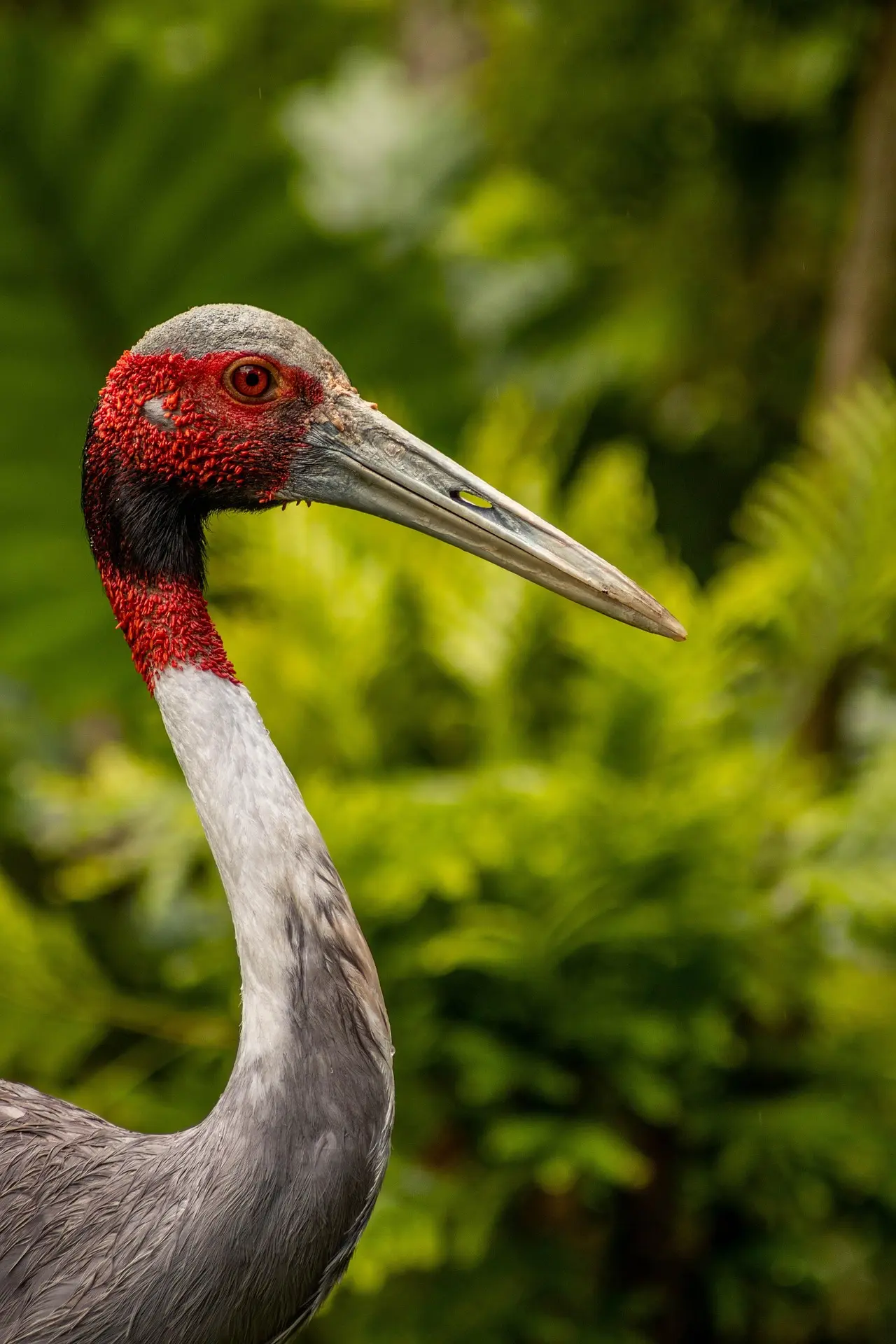
The tallest flying bird in the world: 1.80 meters. It forms pairs that remain together for life and performs a synchronized courtship dance. In India, Nepal, and Cambodia, it is considered a symbol of fidelity.
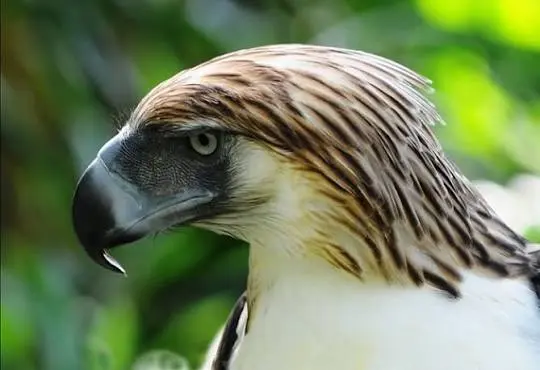
The Philippine eagle
With a wingspan of over two meters and a crest that bristles like a lion's mane, it was called the "monkey-eating eagle" for decades, until it was proven that its diet is much more varied. The scientific name retains the error. Each pair needs a vast territory of untouched jungle to raise a single chick.
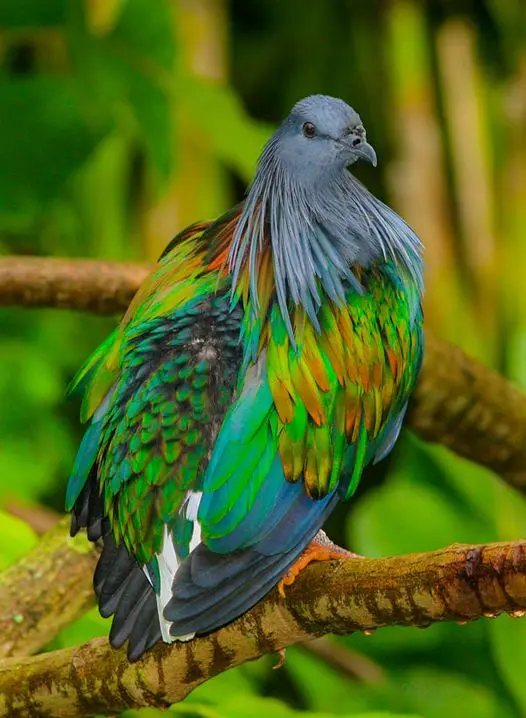
The Nicobar pigeon
It seems the least spectacular on the list until its parentage is revealed: DNA studies indicate that it is the closest living relative of the dodo. The most famous extinct bird has a cousin that still flies.
All these birds share the same condition
Asia's rarest birds only appear when the forest is silent.
The pitta hops across the ground and comes into view for three seconds. The helmeted hornbill can be heard from a hundred meters away, but is only seen if no one makes a sound. Edwards's pheasant, if it ever returns to the forests of central Vietnam, will be the most elusive bird on the continent.
That's not an aesthetic preference. It's a physical condition. Thirteen people silently crossing a jungle can see a pitta. Fifty will never see it—not because they're doing anything wrong, but because fifty people make noise.
Set a date.
We'll take care of the rest.
A maximum of thirteen people, one trip per year per destination, and one of us will be with you the entire trip.
The guide, free
Everything you need to know before setting a date.

About the birds of Asia
What is the rarest bird in Asia?
It depends on how you measure it. Thailand's white-eyed river martin hasn't been seen since 1980 and is listed as possibly extinct. Vietnam's Edwards's pheasant does exist—around a thousand individuals—but all in captivity: there haven't been any reliable sightings in the wild since 2000.
Which country has the most endemic birds of Asia?
Among our destinations, Sri Lanka stands out with 34 species that exist nowhere else in the world—a concentration of endemic species per square kilometer that few places on the planet can match, which is why ornithologists consider it a benchmark destination.
Why do helmeted hornbills butt heads?
It is a behavior called aerial jousting, observed above all in males: they collide their casques in mid-flight and the impact can be heard more than a hundred meters away. Their casque has a keratin layer eight times thicker than a normal beak and an interior of bone comparable in thickness to the femur of an Asian elephant.
Has the Bali starling been saved?
It remains critically endangered, but its recovery is one of the best documented in Asia: from fewer than ten specimens in the wild in 2005 it rose to 303 in June 2020, the highest number since 1974, thanks to a community breeding program in six villages of West Bali National Park.
Do you need to be an expert to go birdwatching in Asia?
No, but silence and small groups are essential. Most of these species only appear when the forest is quiet—it's not a matter of knowledge, but rather how much noise the group you're traveling with makes.
Another wildlife enthusiast told me that the first time he heard a hornbill in the jungle, he saw nothing. Only the sound, coming from above, as if the forest were warning him of something. That's the kind of moment you can't plan for, and it's what makes traveling in silence worthwhile.