In Bali, almost everyonehas the same name
25 Bali customs no one tells you about before you arrive: the names, the villages that said no, and why a week here can feel like three days.
25 customsjust another Tuesday
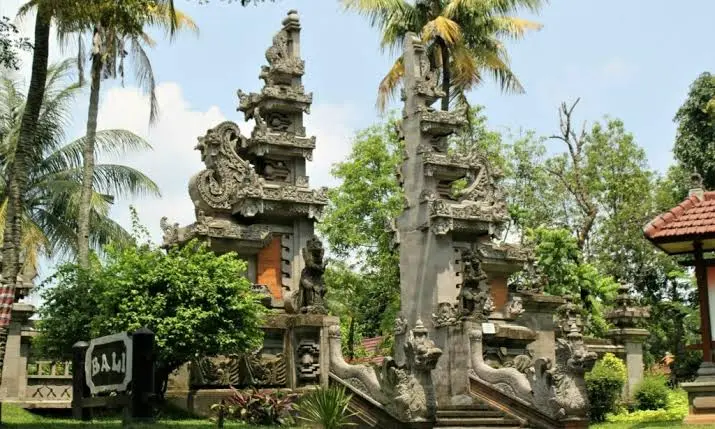
If you spend a week in Bali, you'll meet four Wayans, three Mades, and a couple of Ketuts. It's neither a coincidence nor a lack of imagination: it's a system, and it's been working for centuries.
That’s the first clue that things are organized differently here. Behind it lies an island with several calendars running simultaneously, villages that can only be reached by boat, and fabrics that take five years to weave because they aren’t exactly fabrics.
Here are 25 Balinese customs that are almost never mentioned in guidebooks — the island as seen from within, on any given Tuesday.
Names, or How to know the order of birth from a stranger
Almost everyone's name is Wayan, Made, Nyoman, or Ketut
It's not the name your parents chose with you in mind. It's your place in the family: first child, second, third, fourth.
And it really doesn't matter whether you're a boy or a girl.
When the fifth child arrives, it's back to square one
It's called Wayan Balik — literally, "Wayan again." In a large family, there might be three Wayans living under the same roof.
Asking someone's name is almost like asking when they were born
When someone tells you their name is Made, they're already telling you they have an older brother. That information is implied.
The "I" and "Ni" before the first name are not last names
They mark gender: I for men, Or for women. I Wayan, Ni Made. In fact, in Bali, surnames as we understand them do not exist.
In a single town, there can be five Wayans on the same street
People are identified by nicknames, their occupation, or their father’s name. No one gets confused: everyone knows exactly who is being referred to. It’s a system designed for small towns where everyone knows each other—and in that context, it works better than a last name.
The house is not a building
A traditional Balinese house is not a building with rooms inside; it is a group of pavilions arranged around a courtyard, all surrounded by a wall. The open space is the center, not the hallway.
Three generations usually live together within that space. And there’s something else that almost no Western home has.

Before the Hindus arrived, there were already Balinese here.
The Bali Aga: The Villages who said no
They are the descendants of the island’s earliest settlers, who lived there before the arrival of the Majapahit Kingdom in the 16th century. They preserve customs that predate Balinese Hinduism—and in two of their villages, things happen that don’t occur anywhere else in the world.
One of its villages can only be reached by boat
Trunyan is nestled between Lake Batur and the crater wall of one of the volcanoes that continue to shape the island. There is no road overland. That isolation is precisely what has preserved their customs.
The dead are neither buried nor cremated there
The ritual is called mepasah: The body is laid on the ground, wrapped in cloth and covered by a simple bamboo structure. Outdoors.
And, even though it seems impossible, it barely has any smell
Next to the cemetery grows the Taru Menyan — "fragrant tree"—and that’s where the town’s name comes from. It’s said to be over a thousand years old and that it hasn’t managed to grow anywhere else.
In addition to the tree's fame, there is something much more mundane: that area is located at an elevation of more than 1,000 meters, next to a crater lake, and the temperature hovers around 12–17 degrees. Cold temperatures greatly slow down decomposition.
But not everyone can be given that farewell
Only those who were married, or children who hadn't yet lost their baby teeth. And only if the death was due to natural causes. For everyone else, there are two other cemeteries, each with its own rules. None of this is improvised: it's a system backed by centuries of rules.
In another town, they weave something that exists in only three places on the planet
Tenganan is the only place in Indonesia—and one of only three in the world, along with areas in India and Japan—where the double ikat.
And the technique explains why it's so rare
The threads are dyed one by one before when weaving them: the vertical ones and the horizontal ones as well. The pattern only appears when the two intersect, and it has to fit perfectly, down to the millimeter.
A single piece can take five years to complete
This isn't just sales hype. It's the actual time it takes to dye and weave the threads with that level of precision.
The fabric is called geringsing: "without illness"
From gering (disease) and sing (No). It is not considered an ornament or a souvenir: it is believed to protect the person wearing it.
And it stays with a person throughout their entire life
At a baby's haircut. When filing a teenager's teeth. At a wedding. And, in the end, as a shroud.
The same fabric, in the five moments that really matter. That's when five years of work no longer seem like an exaggeration.
Once a year, there is a leaf war in Tenganan
It's called mekare-kare. The village youths fight with pandanus leaves—which have thorns—in front of the entire village, to the rhythm of the gamelan. It is neither a fight nor a show for tourists: it is an offering to the god Indra, and the blood is part of the ritual. Afterward, everyone helps tend to the wounds, and then they eat.

Time is measured differently
Here, the calendar isn't just a tool for organizing your schedule. It's part of how you decide when to do the important things.
Several calendars coexist at the same time
Gregorian chant—our own—is just one of them. Others include the Pawukon and the Saka, each for different things.
A week can last three days. Or five.
The Pawukon runs weeks of different lengths in parallel, all at the same time. The fact that today is Tuesday is just one of the possible answers.
There are good days to get married—and days when you don't start anything
Many families consult a priest before setting an important date. Choosing the right time is part of the decision, it is not a subsequent step.
Your spiritual birthday may be more important than your biological one
Many family celebrations follow the religious calendar rather than the civil one. You can celebrate your birthday twice—and the one that counts isn't necessarily the one on your ID.
One Tuesday any
In many homes, people sweep before breakfast
Keeping the space where important items are later placed tidy is part of your daily routine, not just part of your Saturday cleaning.
Wearing white doesn't mean you're in mourning
Here, it usually symbolizes purity and respect. You'll see entire villages dressed in white on their way to a temple—and no one will have died.
And no one is surprised if a procession blocks the road
People wait. They park. They move on later. No one honks the horn or glances at their watch with an annoyed look on their face.
Everyday life adapts to ceremonies, not the other way around. It's probably the biggest difference in the way we organize ourselves—and the one that's hardest to understand from the outside.
For you, it's a big deal. For them, it's today.
A visitor sees a ceremony and pulls out their cell phone. A Balinese person sees the same thing and goes about their day, because there’s practically one every week somewhere. If you want to understand what’s behind each one, we explain it in Bali, the Island of the Gods.
Almost everything that surprises us here is, quite simply, just the way things are. And perhaps that's the best reason to come early: not to see more places, but to understand the one you're standing on.

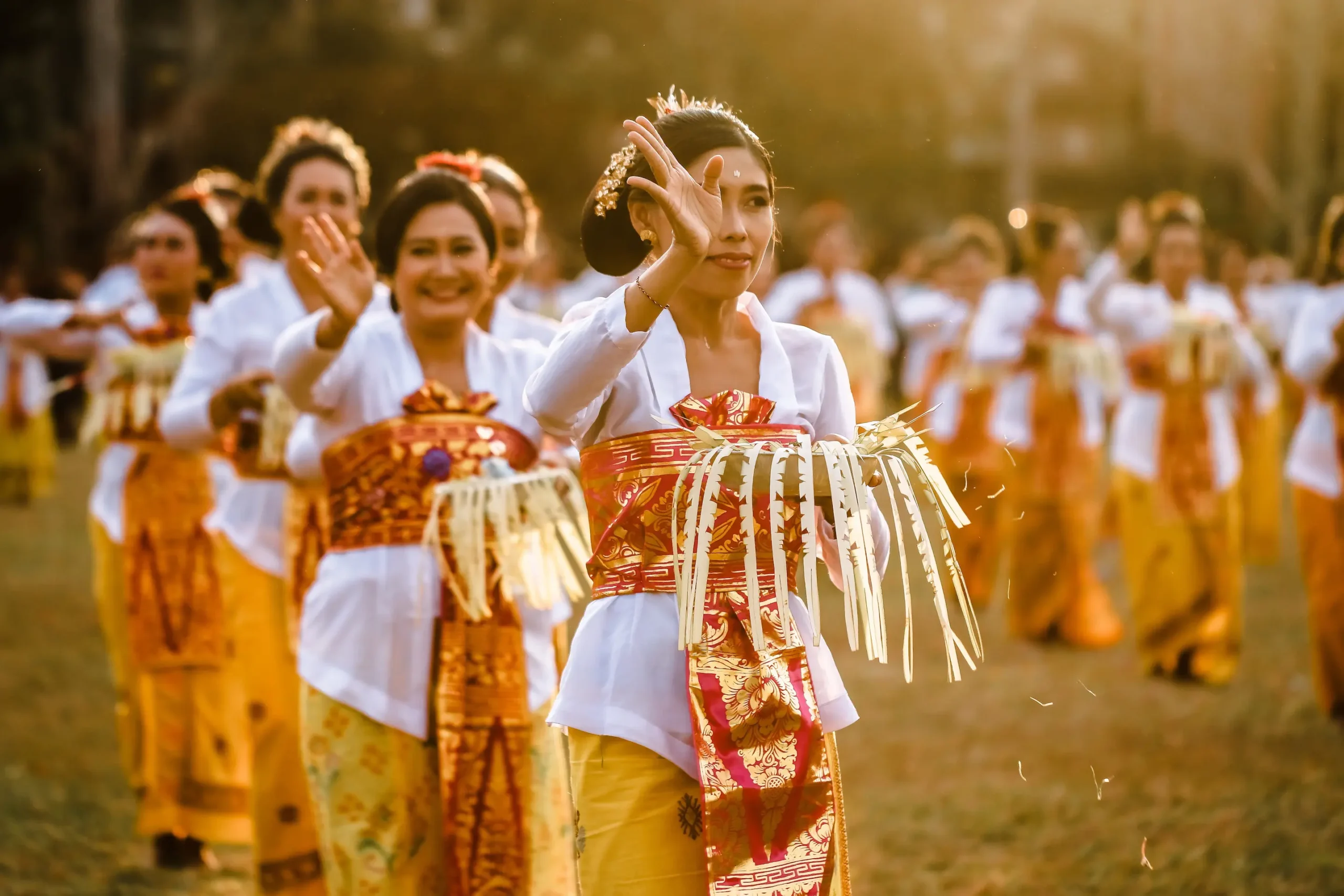
Understanding Bali
takes time.
Groups of up to thirteen people, with one of us leading the way. Everything’s taken care of—all you have to do is watch.
The guide, free
Everything you need to know before making a decision.

More from Bali
The Inner Atlas and the trips we organize.
When you start researching Bali, you discover something interesting: the more you read, the less it seems like a destination and the more it seems like a different way of understanding life. Behind a name, a door, or a piece of fabric, there’s always an explanation that’s been there for centuries.
This article is not intended to be a guide to must-see places, but rather an invitation to get to know the island before you set foot on it. Because traveling begins long before you board a plane.
Learn more about the island's traditions on Bali's official tourism website: visitbali.id