Everything you need to know before traveling to Vietnam: visas, traffic, scams, cuisine, and 109 interesting facts about Vietnam that you won’t find in any guidebook. Before traveling to Vietnam, it’s a good idea to familiarize yourself with the country’s culture, currency, transportation, and basic rules. This is the definitive guide from SunZen Travel.
Inner Atlas · Vietnam Series · SunZen Travel
Before Traveling
a Vietnam
The guide no one gives you. Not just to survive—Vietnam is safe. But to arrive knowing what others only discover after three days.
that do not appear
in any guide
series
north to south
Spaniards can enter for free starting in March 2025. No paperwork. No fees. Just your passport.
daysThere's a logic to the traffic chaos. You'll learn how to cross the street in two days. We promise.
motorcyclesThe best food in Vietnam doesn't come with a menu in multiple languages. It comes with small stools and lots of steam.
đồngThe First Thing Nobody Tells You
Spanish citizens do not need a visa
Starting in March 2025, Spanish citizens can enter Vietnam without a visa for stays of up to 45 days. No prior arrangements are required. There are no fees. All you need is a passport valid for at least six months from the date of entry.
Many people arrive having applied for an e-visa that they didn't need because no one told them otherwise. If your trip lasts less than 45 days and you don't plan to leave and re-enter the country multiple times, you don't need to do anything. Just show up.
If you're staying longer or combining your trip to Vietnam with a visit to Cambodia or Thailand and want to re-enter the country, then you do need an e-visa. You can apply for it online at immigration.gov.vn and allows for up to 90 days with multiple entries.
Please note, starting in January 2025: E-cigarettes are completely banned in Vietnam. This isn't just a restriction on use—it's a total ban. The fine for possession can be as high as 80 euros. Importing them can result in imprisonment. Don't pack them in your suitcase.
The Invisible Code
What Nobody Tells You About Vietnamese Culture
Vietnam has an unwritten cultural code that doesn't appear in any travel guide. Knowing about it before you arrive completely changes the experience.
A "we’ll see," a smile, or silence are all perfectly polite ways of saying "no." Social harmony is more important than clarity. If someone says yes when they clearly don’t know, it’s just to avoid making you feel bad.
Instead of "How are you?", that’s the usual question. It’s a deeply Vietnamese way of showing genuine concern for someone else’s well-being. The formal “xin chào” is almost never used among friends.
In any home. Many stores have slippers for visitors. It’s not optional—it’s basic and universal. The same rule applies throughout the region, with no exceptions.
They are placed in the center of the table, and everyone eats from them. Ordering a dish just for yourself is unusual and may seem strange. Food in Vietnam is always shared.
Avoid giving scarves, watches, or sharp objects as gifts—they’re associated with goodbyes, time running out, and severing ties. And when someone you’ve just met asks your age, it’s not rude: they’re doing it to figure out how to treat you based on the social hierarchy that shapes every relationship.
Names begin with the family name. That's why "Nguyen" appears everywhere—it's the most common family name, and more than 40% of the population has it. Even Ho Chi Minh was named Nguyen at birth.
Chaos That Makes Sense
Traffic — and the Psychological Trick for Surviving It
In Ho Chi Minh City alone, there are about 7.3 million motorcycles for 9 million residents. No one obeys traffic lights, and there are no real crosswalks. And the first time you try to cross the street, your brain tells you it’s impossible.
It isn't. But it operates according to a logic that is completely different from the Western one.
The biggest mistake a tourist can make is to hesitate: stopping in the middle of the street or trying to run. Drivers don't brake—they swerve around you.
The trick: cross at a pace that's steady, slow, and predictable, looking straight ahead and not at the motorcycles. They calculate your path and surround you like water surrounds a rock. If you stop suddenly or accelerate without warning, that's when trouble starts.
Within two days, you'll be navigating the streets of Hanoi as if you'd always done so.
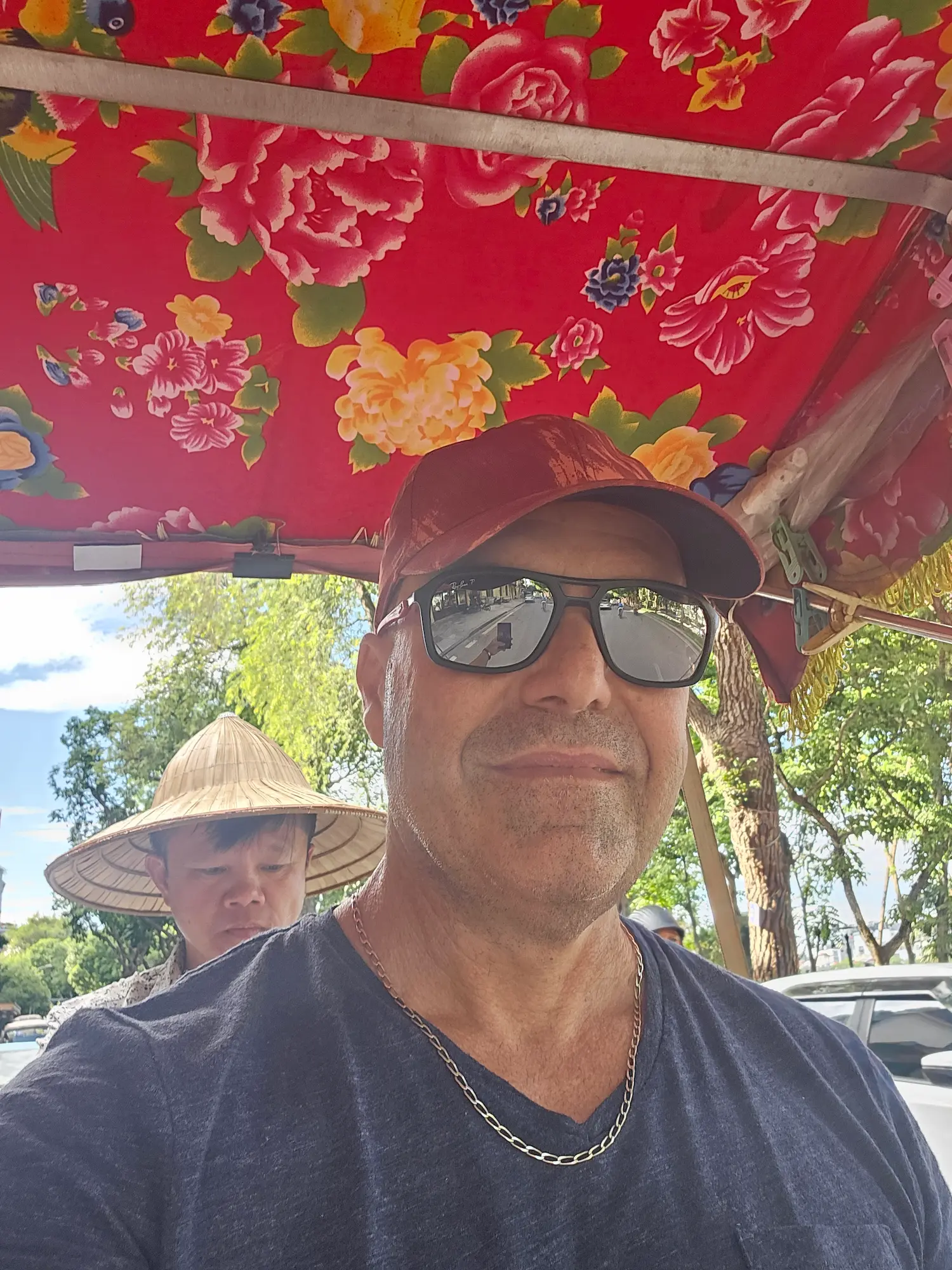
04 · Money and Transportation
What seems easy isn't
The Vietnamese currency is the dong. The exchange rate is around 26,000 dong per euro. You'll pay 80,000 dong for meals and several million for hotels. At first, your brain just freezes.
Rule of thumb: Divide by 26,000 to convert to euros. A bowl of pho for 50,000 dong costs less than two euros.
Bring cash. Vietnam is still a country where many restaurants, market stalls, and local transportation services only accept cash. ATMs operated by Vietcombank or BIDV are the most reliable.
For taxis: use Grab. The fare is set before you get in; the driver cannot change it. If you take a regular taxi, choose only Mai Linh or Vinasun with the meter running.
No paranoia, just information
The Scams That Actually Exist
Vietnam is safe when it comes to violent crime. Petty scams are another story.
A vendor will place a basket of coconuts on your shoulders for a "free" photo. As soon as you take the photo, he’ll demand that you buy them at an exorbitant price and become aggressive. The same goes for the shoe shiners who "accidentally" spit glue.
Tourist areas are full of agencies that copy the logos of well-known companies. If a tour of Ha Long Bay seems too cheap, it probably is. The boat has to make up for it somehow.
With a smile and open hands, politely decline anything that’s offered to you too aggressively on the street. And when taking a motorcycle taxi: negotiate the price before you set off. Always, without exception.
Decisions Based on Complete Information
Motorcycles and Ha Long Bay
Motorcycles: What Nobody Tells You
One of the first temptations is to rent a motorcycle. The scenery in Ha Giang on a motorcycle is some of the most spectacular in Asia. But Spaniards aren't allowed to drive legally in Vietnam.
Vietnam does not recognize Spanish driver's licenses or the Geneva International Driving Permit. If you're in an accident, your insurance won't cover anything. In Ha Giang, there are police checkpoints specifically targeting foreign tourists.
It's a decision that many people make. But you have to make it with all the facts.
Ha Long: Why the Cheap Plan Ends Up Costing More
It's a wonder of the world that's dying from its own success. If you book the cheapest cruise in Hanoi's Old Quarter, you'll end up on a ramshackle boat with water that has more plastic in it than it should.
The alternative is to navigate to the Lan Ha Bay or Bai Tu Long. The karst formations are identical. But there are significantly fewer boats, and the water is much cleaner.
How to Make Sure You Don't Miss Out on the Best
Cuisine
The best food in Vietnam isn't found in restaurants with menus in multiple languages. It's on the street, at stalls with low stools, where the locals eat.
At seven in the morning, with steam rising from the bowl. In the north, it’s cleaner and simpler; in the south, it’s sweeter and more aromatic. The debate over which is the "authentic" one is endless and thoroughly Vietnamese.
The baguette arrived with the colonizers. The Vietnamese transformed it into a crispy bread served with pâtés, meat, pickles, cilantro, and chili peppers. One of the best sandwiches in the world for less than one euro.
Only Brazil produces more coffee. And the Vietnamese didn't know about it until the French arrived. Egg coffee—whipped egg yolk foam on top of black coffee—is impossible to describe until you try it.
Rule for choosing where to eat: Look for the stalls with the most locals and the smallest tables. If there are photos on the wall and the menu is in several languages, the price goes up and the authenticity goes down.
Why There Is No Easy Answer
The Climate: Three Countries in One
Vietnam stretches more than 1,600 kilometers from north to south. There is no "best time to visit Vietnam" in general. The best time depends on the part of the country you want to see. The climate changes every 300 kilometers.
The best months are October, November, March and April. Cool winters, hot and humid summers.
Avoid October through December. The best months are from February to August. A very concentrated peak rainy season.
From November to April is the dry season. Constant tropical heat all year round.
Before leaving
Three Practical Tips
Buy it at the airport when you arrive. Viettel, Vinaphone, and Mobifone offer plans with several gigabytes for less than five euros. Activate it and make sure it works before leaving the terminal.
Vietnam does not have a healthcare agreement with Spain. A visit to the emergency room at a private hospital can cost several hundred euros. Hospitalization can cost several thousand. Insurance is not optional.
Many places outside major cities only accept cash. Always carry some dong with you. Don't keep it all in one place. Vietcombank and BIDV ATMs are the most reliable.
SunZen Travel · Inner Atlas
At SunZen, we travel to Vietnam differently
Small group. Charming hotels. The pristine areas of the bay. Your only job is to enjoy the adventure.
Inner Atlas · Vietnam Series
109 Interesting Facts About Vietnam
They don't appear in any guide. Divided into 6 thematic series.
Inner Atlas
Cultural Clashes: The Invisible Rules
17 Things Nobody Tells You That Completely Change the Way You Experience Vietnam.
No one says "no" outright
A "we’ll see," a smile, or silence can easily be a polite "no." Direct confrontation is avoided at all costs—social harmony is more important than clarity. If someone says yes to you when they clearly don’t know, it’s not dishonesty: it’s just not wanting to make you feel bad.
"Have you eaten yet?" is the real greeting
Instead of "How are you?", the usual question is "Have you eaten yet?"—a deeply Vietnamese way of showing genuine concern for another person’s well-being. The formal “xin chào” is almost never used among friends.
Traffic works without rules… but it works
Crossing the street is a leap of faith. Motorcycles flow like a river: they don't slow down; they just swerve around you. The rule is simple: walk straight ahead, slowly, and without ever stopping.
The family is more important than the individual
Major decisions—work, relationships, moving—are discussed with the family. It’s not control; it’s community. The individual exists within the group.
Names begin with the last name
In Vietnam, the last name comes first, followed by the first name. That's why "Nguyen" appears everywhere: it's the most common last name, and more than 40% of the population has it.
Respect is shown by speaking softly
Speaking softly is a sign of good manners. Raising your voice—even when you're not angry—is considered aggressive and rude in any context.
The concept of "losing face" permeates everything
Making a mistake in public, arguing, or showing anger is avoided at all costs. If someone says “yes” when they clearly don’t know, it’s just to avoid making you feel bad.
The Tet New Year lasts a whole week
Tet is the country's most important holiday. Businesses close, cities empty out, and everything revolves around family and ancestors. If you're traveling during that time, plan everything months in advance.
Your age changes with the New Year, not on your birthday
Traditionally, many Vietnamese believe that everyone turns a year older during Tet, regardless of their actual birthday. An individual’s birthday is less important than the collective year.
It's polite to ask someone's age
It's perfectly normal for someone who has just met you to ask how old you are. They do this to know how to address you based on social and family hierarchy.
Shoes stay outside
Entering a home with your shoes on is considered rude. Many stores provide slippers for visitors. It's not optional—it's basic and universal.
Sharing food is mandatory
Dishes are placed in the center, and everyone eats from them. It's unusual to order a dish just for yourself. Food in Vietnam is always shared.
Gifts have unwritten rules
Avoid giving handkerchiefs, watches, or sharp objects as gifts—they're associated with goodbyes, time running out, and severing ties. These are the kinds of gifts no one wants to receive.
A smile prevents conflicts
Smiling doesn't always mean happiness. Often, it serves to ease awkward situations, hide embarrassment, or avoid confrontation. You have to learn to read it.
Surnames come from dynasties
The surname Nguyen is so common because, historically, people adopted the surname of the ruling dynasty to show their loyalty. Even Ho Chi Minh was named Nguyen at birth.
The language has 6 distinct tones
The same syllable with a different tone can mean six completely different things. A single word can mean "horse," "mother," or "rice," depending on how you pronounce it.
The first visitor of the year brings good luck
Many families pay close attention to who is the first to walk through their front door after the Lunar New Year. Depending on the visitor’s profession, age, or zodiac sign, the coming year will be prosperous or difficult. Some even go so far as to hire the right person to be their first guest.
"Direct confrontation is avoided at all costs.
The social harmony is more important than clarity."
Inner Atlas
Incredible Stories that seem made up
16 facts that, if you share them when you get back, no one will believe are true.
The world's largest cave is in Vietnam
Son Doong, located in Phong Nha-Ke Bang National Park, has its own interior jungle, river, and clouds that form inside it. It is so large that it could accommodate an entire neighborhood of New York skyscrapers.
A village has been living on the water for centuries
In Ha Long Bay, the floating village of Cửa Vạn has houses, a school, and a market—all built on boats and platforms. It was founded by fishermen more than 500 years ago because they couldn't afford to live on dry land.
The Da Nang dragon spits real fire and water
A dragon-shaped bridge spans the Han River in Da Nang. Every weekend, it spits fire and water. It is not a temporary installation: it is a permanent piece of urban infrastructure that has been in operation since 2013.
The Mongols tried to invade Vietnam three times and failed all three times
The Mongol Empire, which conquered China and much of Asia, attempted to invade Vietnam in 1258, 1285, and 1287. It was defeated on all three occasions. Vietnam is one of the few territories that withstood the most powerful army of its time.
The train that passes just centimeters from the houses
In Hanoi, Train Street is exactly what it sounds like: a railroad track that literally runs right up against the facades of the buildings. When the whistle blows, the residents move their tables and chairs out of the way. Then they bring them back out again.
The Legend of the Sword and the Sacred Turtle
According to the legend of Hoan Kiem Lake, a giant turtle returned to the king a sacred sword that had been used to drive out the Chinese invaders. In 2016, the last known giant turtle in the lake died. It made national news.
The Củ Chi tunnels form an underground city stretching more than 200 km
During the Vietnam War, the Viet Cong built a network of tunnels stretching more than 200 kilometers beneath the jungle. They had kitchens, hospitals, schools, and dormitories. Today, you can visit them—although the passageways are very narrow.
The golden bridge held up by giant hands
In Ba Na Hills, on the outskirts of Da Nang, a golden bridge appears to be held up by two colossal stone hands. The image went viral around the world. It’s even more impressive in person than in any photo.
Ho Chi Minh did not want to be embalmed
The national hero left a written will: he wanted to be cremated and have his ashes scattered in various parts of the country. The government decided to embalm him and display him in a mausoleum in Hanoi. The mausoleum closes for several months each year to send the body to Russia for maintenance.
Vietnam won wars against three powers in the same century
In the 20th century, Vietnam defeated France militarily, resisted Japan, and drove out the United States—the world’s greatest military power. Younger generations celebrate this without bitterness: they simply won and looked ahead.
The First Nobel Prize in History to Be Rejected
Lê Đức Thọ, a Vietnamese diplomat, was the first Asian to receive the Nobel Peace Prize in 1973. And he was the only person in history to refuse it. He believed that peace had not truly come to Vietnam.
Hanoi is one of the oldest capitals in Asia
The city has more than a thousand years of uninterrupted history as a capital. It was founded in 1010 by King Lý Thái Tổ, who chose the site because he saw a dragon rising from the Red River.
Vietnam was divided into two countries for 21 years
Between 1954 and 1975, North Vietnam and South Vietnam officially existed—two states with completely different political systems, alliances, and economies. Reunification took place on April 30, 1975.
At its narrowest point, the country is only 40 km wide
Vietnam stretches nearly 1,700 km from north to south, but on the central isthmus, only 40 kilometers separate the South China Sea from the border with Laos. This geography has shaped the country’s entire history.
The Vietnamese alphabet has used Latin letters since the 17th century
For centuries, Vietnam used Chinese characters for writing. In the 17th century, a Portuguese Jesuit missionary created the Romanized writing system used today. It is one of the few languages in Asia that uses the Roman alphabet.
The flag was designed by someone whose hands had been cut off
The designer of the Vietnamese flag unveiled his work during an uprising in 1940 against French colonial rule. The uprising failed; he was imprisoned and had his hands cut off. The flag was adopted as an official symbol in 1945.
Inner Atlas
Spirituality and mysticism
17 Interesting Facts About Vietnamese Spiritual Life — Richer, Stranger, and More Everyday Than Any Travel Guide Will Tell You.
Ancestor worship surpasses any organized religion
In every home, there is a family altar with photos, flowers, and incense. People talk to their ancestors as if they were present. It is not superstition—it is the foundation of Vietnamese identity.
Cao Dai: the religion that combines all the others
Founded in Vietnam in 1926, Cao Dai combines elements of Christianity, Buddhism, Taoism, Islam, and Confucianism into a single faith. Its sacred figures include Victor Hugo and Sun Yat-sen. Its temple in Tây Ninh looks like a psychedelic dream of impossible colors.
Mountains have a spirit of their own
In Vietnamese culture, many mountains are considered living beings. Before building on or cutting down trees on their slopes, people formally ask for permission. Failure to do so has consequences that no one wants to face.
The Red Thread of Fate
A widespread popular belief: Every person is connected to their soulmate by an invisible red thread tied to their ankle from birth. The thread stretches and becomes tangled, but it never breaks.
The Festival of the Hungry Ghosts
In the seventh lunar month—usually August—it is believed that spirits from the underworld emerge into the world of the living. Families offer them elaborate meals so that they will not cause trouble.
The number 9 is sacred
It symbolizes longevity and imperial power. Many temples have 9 steps, 9 doors, or 9 columns. This is no coincidence—it is a deliberate design with spiritual significance.
The lunar calendar takes precedence over the Gregorian calendar
Dates for weddings, moving, and business openings are chosen based on astrology and the phases of the moon. The Gregorian calendar is used for work. The lunar calendar is used for everyday life.
Buddha's fruit is not eaten: it's offered
"Buddha's hands" are a type of citrus fruit with very little pulp. Almost no one buys them to eat—they are placed on altars because their shape resembles hands in a Buddhist prayer gesture.
10% of Vietnamese people are Christians
Vietnam is predominantly Buddhist, but approximately 10% of the population practices Christianity—a legacy of the French presence and missionaries from centuries past. It is the third-largest religion in the country.
The Perfume River in Hué is named after the lotus flowers
The Song Huong River exudes the scent of the lotus flowers that grow along its banks. A boat ride at sunset is one of the most serene experiences in Vietnam. Its name is exactly what it promises.
Temples have stone guardians to ward off spirits
Outside many temples, there are statues of armed figures, dragons, and menacing animals. They are not mere decorations: they are spiritual guardians whose purpose is to ward off negative energies.
Elevators may not have a fourth floor
As is the case in other Asian countries, the number 4 may be omitted in some buildings because of its phonetic association with death. Some hotels skip directly from 3 to 5.
Hanoi was founded because a king saw a dragon
King Lý Thái Tổ chose the site for the capital in 1010 because he saw a golden dragon rise from the Red River. The city's original name, Thăng Long, means precisely "ascending dragon.".
The lotus flower is the national flower
Chosen in 2010 as the official symbol, the lotus flower represents purity: it grows in the mud but blooms pure. It is a perfect metaphor for Vietnam's own history.
Vietnam was part of China for a thousand years
Between 111 B.C. and 938 A.D., Vietnam was part of the Chinese Empire. Independence is considered the most important event in the country's history and forms the foundation of its national identity.
In some ethnic groups in Sapa, women are in charge
Some communities, such as the Red Dao, have matriarchal structures in which women manage the family economy and inheritance. They have been functioning in parallel with the rest of the country for centuries.
Giant banyan trees are living beings with a spirit
Some banyan trees that are hundreds of years old are considered sacred places in their own right. People offer them incense and prayers. Cutting one down or damaging it can have consequences that no one wants to face.
Inner Atlas
Gastronomy and everyday life
17 interesting facts about how people in Vietnam eat, live, and go about their daily lives in the most authentic way.
Pho is not a dish: it's an identity
In the north, it’s cleaner and simpler; in the south, it’s sweeter and more aromatic. The debate over which is the "authentic" one is passionate, never-ending, and quintessentially Vietnamese.
Egg coffee is one of the most unique drinks in the world
Cà phê trứng combines strong coffee with whipped egg yolk cream sweetened with sugar. It originated in Hanoi during the milk shortage of World War II. It sounds impossible. It tastes incredible.
Drinks are always served with ice
Beer, tea, coffee, juice. Always with ice—and plenty of it. Ordering something without ice is the oddity that requires an explanation.
Eating on the street is a religion
The best meals cost 1 or 2 euros and are served at tiny stools right at street level. The stalls most popular with locals are invariably the best.
The floating markets open at 4 a.m.
In the Mekong Delta, life begins on the water before dawn. Boats identify their merchandise with a pole at the bow: whatever is hanging from it is what they’re selling. A visual system that dates back centuries.
Nuoc mam is everywhere
Fermented fish sauce is the cornerstone of Vietnamese cuisine. It has a strong smell before you taste it. Once you've tasted it, food without it seems incomplete.
Motorcycles carry all kinds of things
Refrigerators, live pigs, televisions, furniture, families of five. The load-carrying capacity and balance of Vietnamese motorcyclists are unmatched anywhere else in the world. Many families treat their motorcycles as if they were another member of the family.
Karaoke is the nation's therapy
In towns and cities, someone sings every night. It’s not just casual entertainment—it’s a collective emotional release. Karaoke bars are serious places where people go to let it all out.
Vietnam is the world's second-largest coffee producer
Brazil is the only country in the world that produces more coffee than Vietnam. And the Vietnamese didn't know about coffee until the French arrived in the 19th century. In less than 150 years, they became a global coffee powerhouse.
The banh mi is a French legacy that has become something unique
The baguette arrived with the colonizers. The Vietnamese transformed it into the banh mi: crispy bread with pâté, meat, pickles, cilantro, and chili peppers. One of the world’s most beloved sandwiches, for less than one euro.
The parks fill up before dawn
Thousands of people practice tai chi, dance in groups, or do calisthenics at five or six in the morning in parks and squares. It is one of the most beautiful and unexpected daily rituals.
Sidewalks are living rooms, too
People cook, park, chat, and even take naps on the sidewalks. Public life in Vietnam takes place on the streets with a naturalness that has no Western equivalent.
Cafés may be tucked away on upper floors
Some of Hanoi's best coffee shops are tucked away on the second or third floors of old buildings with hardly any exterior signage. Finding them is part of the experience.
Electric wires form webs over the streets
In the old neighborhoods of Hanoi and Ho Chi Minh City, hundreds of electrical and internet cables hang over the streets in tangled knots. No one knows exactly who owns each cable. And they work.
There are buildings that are only three meters wide
Colonial taxes were calculated based on the width of the facade, not the total floor area. The result is the famous "tube houses"—narrow on the outside, deep and labyrinthine on the inside.
The markets never seem to sleep
Many markets in Vietnam operate practically 24 hours a day, with vendors working in shifts. There's always someone buying or selling something, no matter what time it is.
The world's most expensive coffee is produced by civets
Cà phê chồn is made from beans that have passed through the civet's digestive system. The animal digests the pulp and naturally ferments the bean. The result is one of the most expensive, rare, and polarizing coffees in the world.
"The best food in Vietnam doesn't come with a menu in multiple languages. It has small stools and a lot of steam."
Inner Atlas
Extreme Nature and geography
21 facts about the country with 30 national parks, 3,000 km of coastline, and the Asian unicorn in its mountains.
The Mekong Creates a Whole World
The delta is so vast that it seems like a country within a country. More than 20 million people make their living, directly or indirectly, from its waters, its fish, and its flooded rice fields.
Vietnam has 30 national parks
Rainforests, mountains, mangroves, karst caves, and coral reefs. It’s hard to believe that such diversity is concentrated in a relatively small area.
The Saola: The Asian Unicorn
Discovered in 1992 in the mountains along the border with Laos. One of the rarest mammals on the planet. Scientists call it the Asian unicorn because it has hardly ever been seen in the wild since its discovery.
The golden-headed langur is found only in Vietnam
One of the world's most endangered primate species. Fewer than 70 individuals remain in the wild, all in Vietnam. Endemic and critically endangered.
The climate changes every 300 kilometers
A cold north with cool winters, a hot and dry central region, and a humid tropical south. Three completely different climate zones within the same country.
Typhoons are part of the calendar
Every year between August and November, several typhoons hit the central coast. The people there face them with a remarkable sense of normalcy: they rebuild, adapt, and carry on.
The coral in Con Dao is among the best in Asia
The Con Dao Islands, located at the southernmost tip of the country and virtually untouched by mass tourism, are home to more than 1,300 marine species. Their reefs are among the best-preserved on the entire Asian continent.
Rice shapes the landscape in all its forms
Terraces in Sapa that change color with the seasons, green plains in the delta, golden fields in the central region before harvest. Vietnam is rice—and it is the world’s second-largest exporter.
Vietnam is home to 16% of the world's species
It ranks sixteenth in the world in terms of biodiversity, with more than 16,000 plant species and more than 10,000 animal species, including unique species such as the saola and the dugong.
Fansipan is the highest peak in Indochina
At 3,147 meters, it is the highest peak in Vietnam, Laos, and Cambodia combined. In winter, snow falls on its peaks. There is a cable car, but the hiking trail takes three full days to complete.
Son Doong Cave has the world's tallest stalagmite
Inside Son Doong, there are stalagmites up to 70 meters tall—the tallest known. The cave has its own cloud system, its own interior rainforest, and its own river.
The Bản Giốc Waterfalls mark the border with China
They are among the most spectacular in Southeast Asia. They cascade directly over the border between Vietnam and China. From the Vietnamese side, you can see Chinese tourists on the other side.
There is a glass bridge suspended over endless valleys
In the northern mountains, there are transparent walkways suspended hundreds of meters above valleys and jungles. Walking on them with the void below is an experience you'll never forget.
Fireflies light up entire rice paddies
At certain times of the year, especially in the countryside between May and August, the rice paddies light up at night with thousands of fireflies flashing in unison. It is one of the country's most unexpected natural spectacles.
Mangroves protect the coast like a living barrier
The mangrove forests along Vietnam's southern coast serve as a natural barrier against typhoons, tsunamis, and coastal erosion. They are complete ecosystems that are home to a unique biodiversity.
Vietnam has more than 3,000 kilometers of coastline
With two different bodies of water—the South China Sea to the east and the Gulf of Thailand to the west—Vietnam has beaches at almost every latitude. Some of the country’s most beautiful beaches are hardly mentioned in any guidebook.
There are emerald-colored lakes hidden in the jungle
Some inland lakes, formed in volcanic craters or karst depressions, have an otherworldly emerald green color. Many are accessible only after hours of hiking through the jungle.
Bamboo can grow almost a meter in a single day
Some species of bamboo found in Vietnam grow at an extraordinary rate—up to 90 centimeters in 24 hours under optimal conditions. It is the fastest-growing plant on the planet.
The dugong lives in Vietnamese waters
The dugong—a marine mammal related to the manatee—lives in the coastal waters of southern Vietnam. It is one of the rarest and most elusive animals in the ocean. It is endangered and is rarely sighted.
Macaques live just a few meters from temples and cities
In some national parks and around certain temples, it's completely normal to come across groups of macaques. They aren't afraid of people. Sometimes they're the ones who approach you first.
Vietnam is home to hundreds of endemic orchid species
The tropical mountains of the north and center of the country are a paradise for wild orchids. Many species are found nowhere else in the world. They bloom at specific times of the year that few travelers are aware of.
Inner Atlas
Laws and Interesting Facts that you can't believe
16 facts about the rules, restrictions, and realities of Vietnam today that no one tells you before you arrive.
It is illegal to criticize national symbols online
The 2018 Cybersecurity Law is very strict: offensive comments on social media about the flag, the national anthem, or state symbols can result in fines or arrest.
Alcohol has official sales hours
From 11 a.m. to 2 p.m. and from 5 p.m. to midnight. Outside of these hours, supermarkets and stores are not allowed to sell you alcoholic beverages. During religious holidays or elections, the ban is complete.
Wearing a motorcycle helmet is mandatory even for a distance of 50 meters
The police issue fines without hesitation and without exception. Traffic may seem chaotic, but the helmet law is enforced with a consistency that surprises many Western tourists.
You cannot use maps that do not recognize official borders
Especially in sensitive areas of the South China Sea. Bringing maps into the country that show those waters as part of another country’s territory can cause serious problems at customs.
Schools have an anthem and synchronized exercises every morning
Every morning, thousands of students sing the national anthem and perform coordinated physical exercises in schoolyards and squares. It has been part of the school routine for decades.
Tap water is not for drinking — under no circumstances
This isn't just a warning for tourists. Absolutely no Vietnamese person drinks tap water under any circumstances. Bottled or filtered water is the only option. Always, throughout the country.
The legal age for marriage varies by ethnicity
Vietnam legally recognizes 54 distinct ethnic groups, each with its own regulations recognized by the state, including specific provisions regarding marriage that differ from the general civil code.
E-cigarettes have been banned since January 2025
Total ban: production, sale, import, transportation, and consumption. This is not a restriction on use—it is illegal throughout the country. The fine for possession can be as high as 80 euros. Importing them can result in imprisonment.
It is illegal for Spaniards to drive a vehicle
Vietnam does not recognize Spanish driver's licenses or the Geneva International Driving Permit. If you're in a car accident, your insurance won't cover anything at all. In Ha Giang, traffic stops are specifically targeted at foreign tourists.
Drones require prior government approval
The regulations are very restrictive. You need prior authorization to fly a drone in Vietnam. Flying over airports, military installations, or large gatherings of people can have serious consequences.
Vietnam is one of the five communist countries in the world
Along with China, Cuba, Laos, and North Korea, Vietnam remains a one-party socialist republic. In practice, its economy is one of the most open and fastest-growing in Asia.
The Nha Trang cable car is one of the longest over the sea
It connects the city of Nha Trang with Hòn Tre Island via a journey of more than 3 kilometers across the water. The views are spectacular in both directions.
The Bái Đính Pagoda is over 70 meters tall
Vietnam's tallest pagoda towers over the karst landscape of Ninh Binh. It is also the largest Buddhist temple complex in Southeast Asia, featuring a 36-metric-ton bell.
There is a statue of Buddha facing the sea from Da Nang
The 67-meter-tall Buddha statue in Da Nang faces the sea to symbolically protect fishermen from storms. It is visible from almost anywhere in the bay.
Rigged taximeters have ambiguous legal status
There are devices that make the meter run faster than is legal. It's practically impossible for a tourist to spot them right away. The only real solution is always Grab.
Sepak takraw defies the laws of physics
Volleyball played with the feet, knees, chest, and head—never with the hands. It’s played in parks, on streets, and on beaches with a level of skill that seems impossible. It’s the traditional sport of Southeast Asia that no tourist expects to see.
Bonus · The Most Surprising Ones
The 5 Most Impressive Facts
Vietnam won wars against three powers in the same century
In the 20th century, Vietnam defeated France militarily, resisted Japan, and drove out the United States. No other small country has a 20th-century military record even remotely comparable.
Ho Chi Minh's mausoleum closes for several months each year for maintenance in Russia
The embalmed body is periodically transported to Moscow for preservation. If you want to visit the mausoleum, check beforehand to see if it's open—it may be closed for up to two months a year.
The Mongols failed three times in their attempts to conquer Vietnam
The Mongol Empire, which conquered China, Persia, and Eastern Europe, attempted to invade Vietnam in 1258, 1285, and 1287. It was defeated on all three occasions. Vietnam is one of the few territories that withstood the most powerful army of its time.
Inside Son Doong, there is an underground waterfall
The world's largest cave not only has a jungle and an underground river—it also has an underground waterfall so large that you can hear it long before you see it. It is one of the most impressive and unexpected sounds a human being can experience.
Human remains dating back 500,000 years have been found in Vietnam
Remains of Homo erectus dating back approximately 500,000 years have been found in caves in the northern and central parts of the country. Vietnam has been home to humans for longer than any guidebook mentions.
Inner Atlas · Vietnam Series
10 Chapters on Vietnam
Each chapter is a complete article. Coming soon.
SunZen Travel · Small-Group Trips
Vietnam with someone who already knows it
We don't sell the destination—we live it. Groups of up to 13 people. Hotels with genuine charm. Parts of Ha Long that aren't on the tourist map.
Your only task is to come with an open mind and a willingness to be surprised.
Contact · SunZen Travel
Let's talk whenever you want
When you write, someone responds.
You can’t understand Vietnam in a week. Or even in two. What makes this country special isn’t usually found in the most photographed spots. It’s at a pho stand at seven in the morning, in a conversation that starts because someone wants to practice English, or in that landscape that appears when you least expect it. It’s also in learning to cross a street amid hundreds of motorcycles, in knowing when to haggle and when it’s not worth it, or in discovering that not all Ha Long Bay cruises offer the same experience. The better you understand how Vietnam works, the more you’ll enjoy the trip. And that’s the difference between visiting the country and truly experiencing it.