The routeof the coffeebirds
The history of coffee in Asia begins with seven beans hidden in a beard, an empire that collapsed because of a fungus, and a coffee that put an end to the opium fields.
Sometime in the 17th century, a man crossed the port of Mocha with seven coffee beans hidden in his beard. If they found out, they'd kill him.
At that time, Yemen held an absolute monopoly on coffee, and it enforced it with a simple rule: only coffee could leave its ports if it was roasted. A roasted bean can be drunk, but it cannot be planted. And so, for decades, the entire world depended on a single country.
The man's name was Baba Budan; he was an Indian Sufi mystic, and he was returning from a pilgrimage to Mecca. Accounts differ as to where he hid them—in his beard, in his staff, or tied to his body under his clothes—but they all agree on the number: seven, because seven is a sacred number in Islam.
He planted them in the hills of Chikmagalur, in southern India, and it worked: the climate in those mountains was similar enough to that of Ethiopia. With that move, the monopoly was broken. And so began the history of coffee in Asia.
Today, those hills are called Bababudangiri. They are named after him.
The word you use without knowing where it comes from
The history of coffee in Asia continued with the Dutch. In 1696, they brought coffee plants—also from Yemen—to an island in their colony in Southeast Asia. The first shipment was lost in a flood. The second, in 1699, thrived.
That island was called Java.
It worked so well that in 1711 the first shipment of green coffee—894 pounds—left from there for Amsterdam. Ten years later, they were exporting sixty metric tons a year. Java was the first place in the world outside of Arabia and Ethiopia where coffee was cultivated on a large scale, and it came to produce a quarter of the world’s coffee.
Dutch merchants sold that coffee from Asia under the island's name, and the name stuck.
There are still people who order “a cup of java” without realizing they’re referring to an island in Indonesia.
The Asian Coffee Empire That Collapsed in twenty years
When you think of Sri Lanka today, you think of tea. The Ceylon Tea is one of the most recognizable brands in the world.
Well, Ceylon tea didn't exist before 1870.
Before that, Sri Lanka was all about coffee. The Dutch introduced it in the 17th century, the British expanded its cultivation unchecked, and by 1870 the island was the world's third-largest coffee producer, second only to Brazil and the Dutch East Indies. Two hundred seventy-five thousand acres of plantations. One-third of all the coffee imported by Europe came from there.
Then a fungus appeared.
In 1869 there appeared in Ceylon the Hemileia vastatrix, coffee rust. It was the first time in history that this fungus was documented in cultivated coffee. The leaves dried up, fell off, and the fruit was left exposed and withered. In two decades, those 275,000 acres had shrunk to 11,392.
The planters who were able to reallocate their capital invested it elsewhere. A Scotsman named James Taylor had been experimenting with tea for years on a plantation in Kandy, and his method became the emergency model for the entire island.
And the leaf rust didn't stop there. From Sri Lanka, it spread to nearly all the coffee-growing regions of the world. In 1879, it reached Java and also devastated the Dutch plantations.
But coffee never completely disappeared. In Sinhalese villages, the small wooden shops are still called kopi kade —literally, “coffee shop”—and the country’s longest-running television series bears that name. In recent years, it has made a comeback: coffee shops in Colombo, new producers, and a generation rediscovering what the island was like before tea.
Ceylon tea is not a tradition that dates back thousands of years.
It's what was left when coffee died.
The coffee that replaced opium
In 1969, King Bhumibol visited the Hmong communities in the northern mountains. He saw what everyone already knew but no one was doing anything about: those families were living off opium because they had no other means of livelihood. They were right in the heart of the Golden Triangle, the largest opium-producing region on the planet.
The idea behind the Royal Project was simple to articulate but extremely difficult to carry out: If you want them to stop growing poppies, give them something else first that brings in more money than poppies. Not a single field was cleared until the alternative crops were already generating sufficient income.
One of those crops was coffee.
The results are verifiable and spectacular. Opium cultivation in Thailand fell 97% between 1985 and 2015, and it has never gone back up. In 2003, the United Nations Office on Drugs and Crime removed Thailand from its list of opium-producing countries and recognized the Doi Tung project as a global model of alternative development.
There's one detail that brings it all full circle. Arabica coffee needs shade to grow well. So the coffee plantations at Doi Chang and Doi Tung weren't planted by clearing forest: they were planted inside it. Where there were bare hillsides and poppy fields in the 1960s, there is now forest once again, with coffee growing beneath it.
A generation ago, the Akha, Lisu, Hmong, and Karen communities that grow this coffee were among the most marginalized groups in the country: many lacked citizenship, land rights, and access to education and healthcare. The project brought them land titles, schools, and hospitals.
When you order a cup of coffee from Chiang Rai, you're drinking the result of one of the most effective anti-drug policies in history.
The King of Robusta and a wartime improvisation
Coffee was introduced to Vietnam in 1857 by a French missionary. It took decades for it to take root, until in 1914 the French chose Buôn Ma Thuột, in the Central Highlands, as the capital of coffee growing: red volcanic soil, suitable elevation, and a stable climate. By 1922, that plateau was covered with plantations.
Then came the war, collectivization, and the collapse. And then, 1986: the reforms of the Đổi Mới opened up agriculture to the market. The government converted entire tracts of land to coffee, moved families from the north to new areas, gave cheap credit. Within a decade, regions that lived on subsistence rice became coffee landscapes.
As a result, Vietnam is now the world's second-largest coffee producer and produces about 40% of the world's total Robusta coffee. There are some 640,000 family farms spread across more than 720,000 hectares.
And that Robusta—which in Europe has been treated for decades as the poor relation of Arabica—has a little-known advantage: it contains significantly more chlorogenic acids, the same antioxidant compounds that research links to many of coffee’s beneficial effects. What makes it more bitter is also what makes it richer in polyphenols.

Coffee with Egg
But the best story about Vietnamese coffee isn't found in the numbers. It takes place in a hotel in Hanoi in 1946.
In the midst of the war with France, milk was in short supply in Hanoi. A waiter at the Metropole Hotel, Nguyen Van Gianghad a problem: customers wanted creamy coffee and there was nothing to make it with.
He tried using egg yolk beaten with sugar and condensed milk. The result was a thick, sweet foam—almost like a dessert—that sat on top of the darker Robusta coffee without breaking up.
Thus was born the cà phê trứng. It was so successful that Giang left the hotel that same year and opened his own place.
Café Giang is still open in Hanoi's Old Quarter. Today, it's run by his son, using the original recipe that the family has never made public.

A wartime shortage that became Vietnam's most famous coffee.
And the recipe is still a family secret.

My experience with the coffee from Vietnam
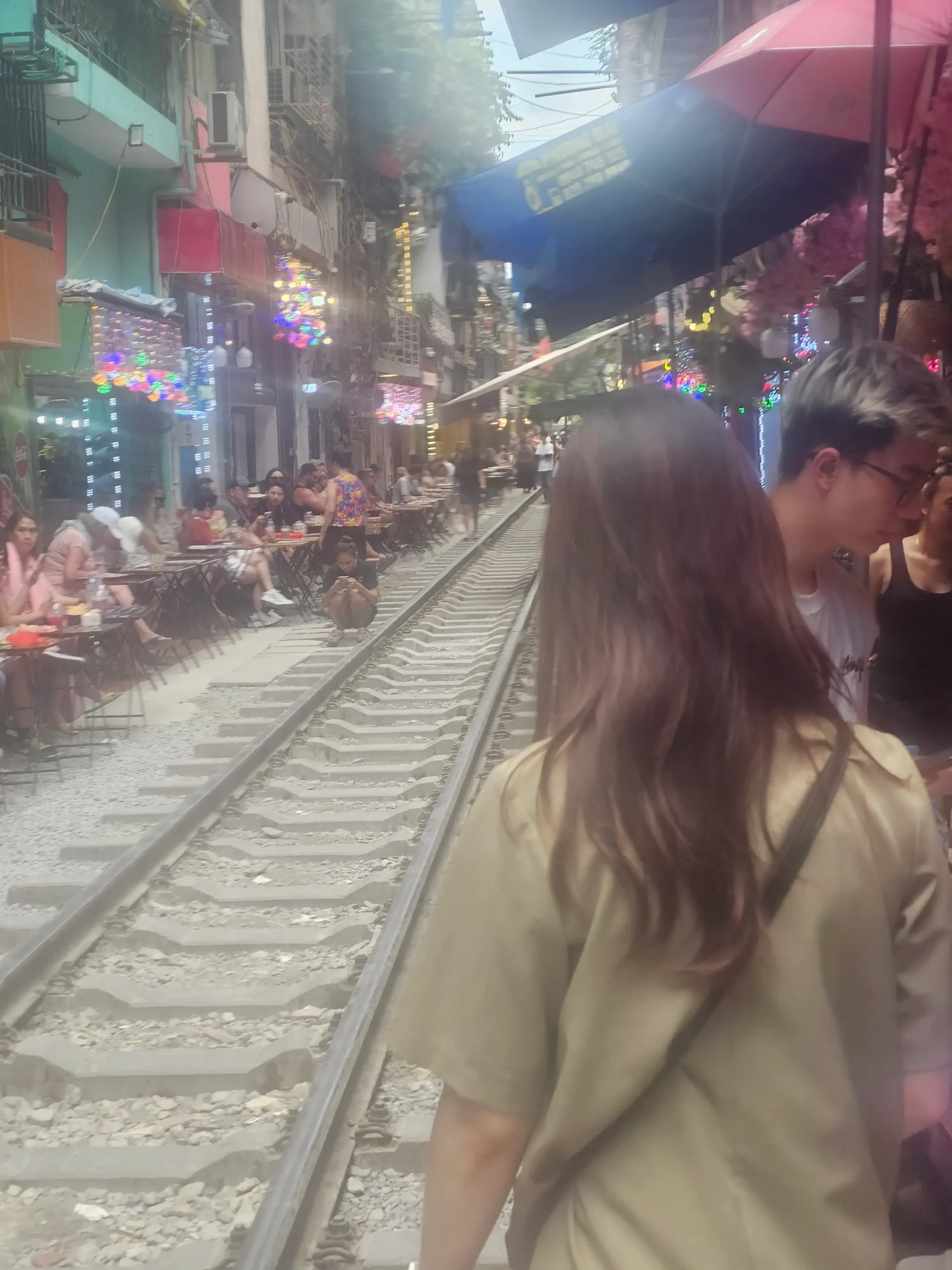
Before traveling to Vietnam, I’d already heard about Hanoi’s famous coffee. People told me it was a unique experience—a coffee with a history and a personality all its own. But there was one detail that made me skeptical: Coffee with an egg?
I admit I was pretty skeptical. The idea didn't quite win me over, and I thought it would be more of a tourist novelty than a drink that could really surprise me.
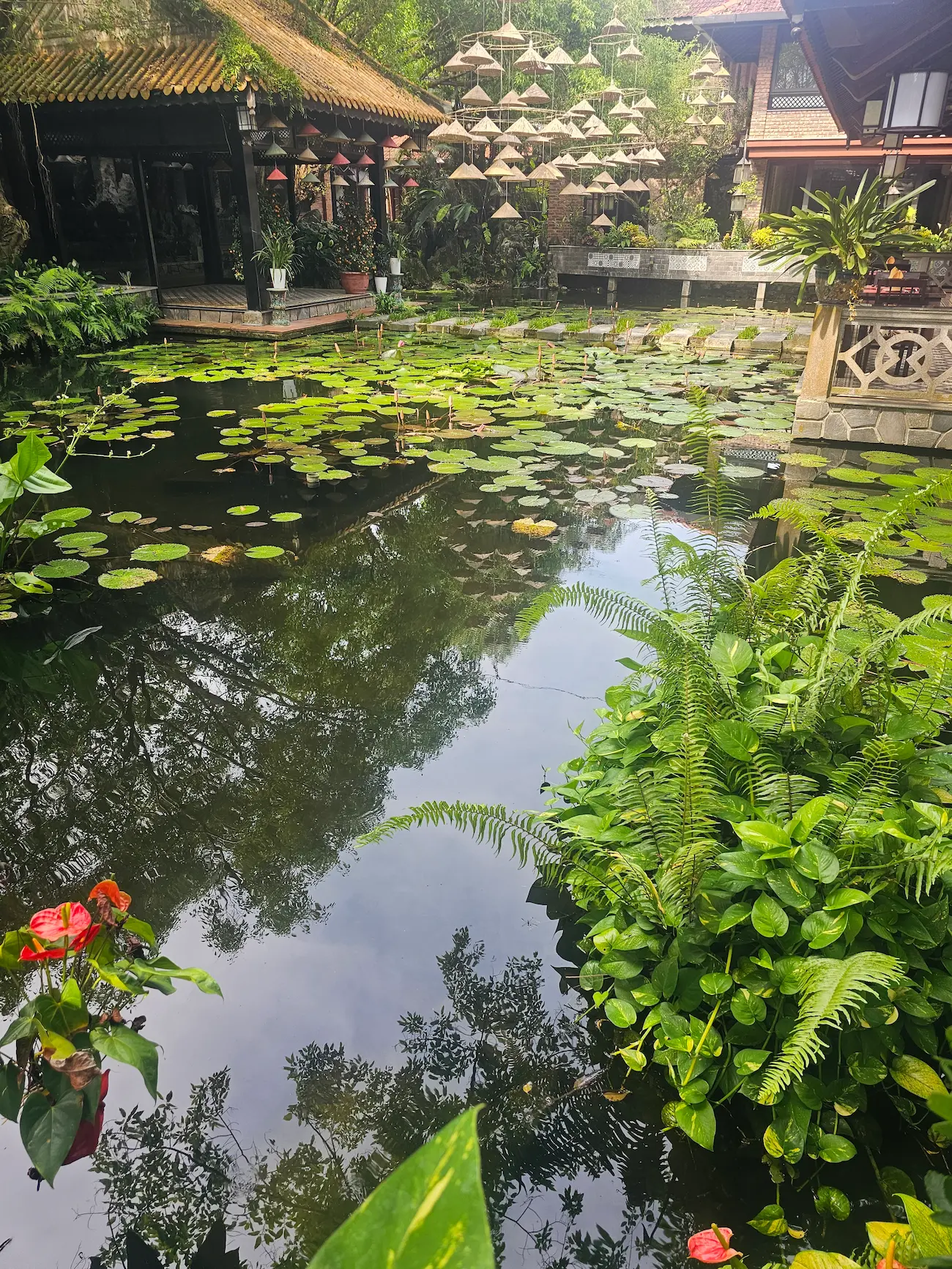
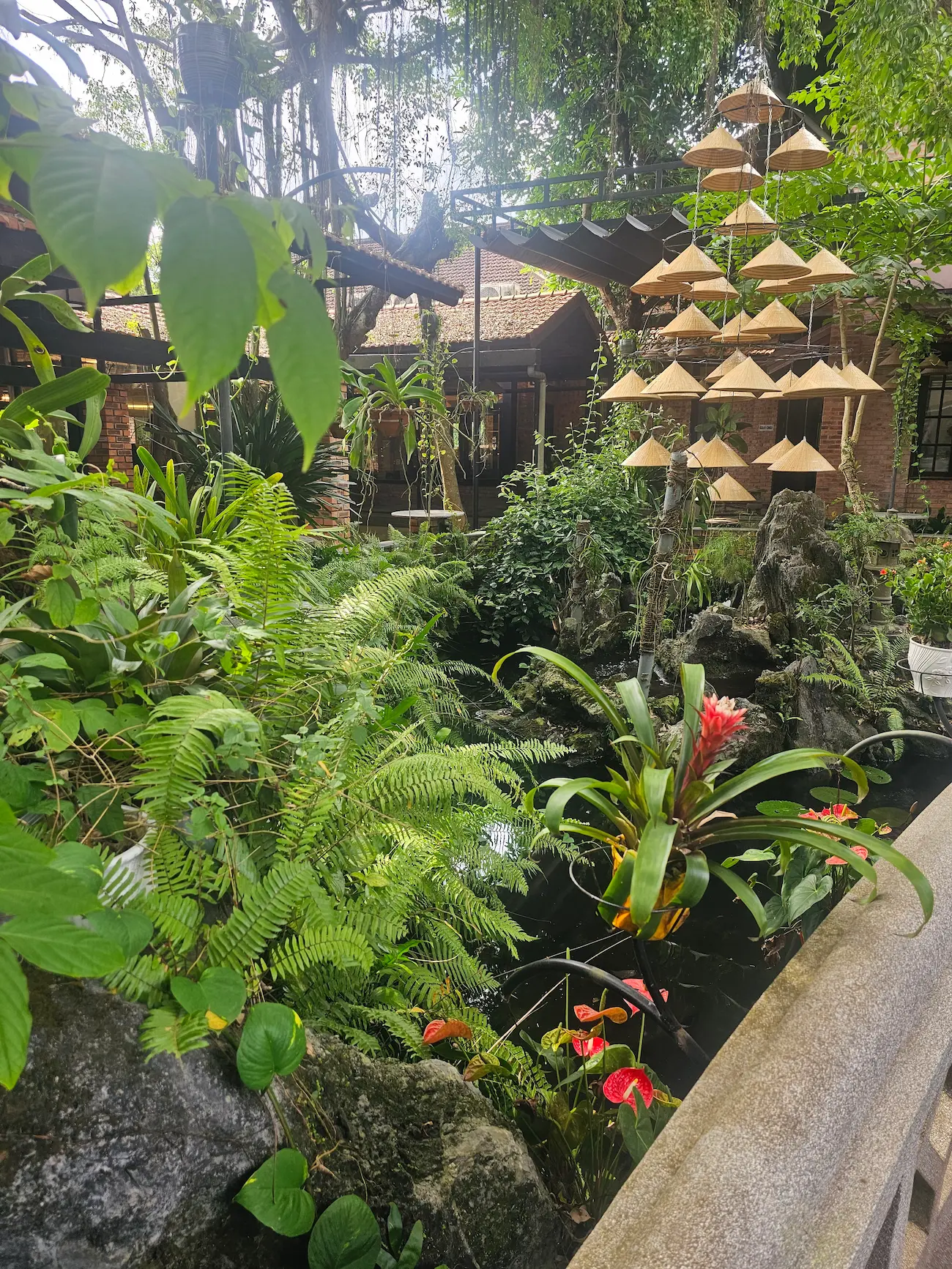
I finally decided to try it on a wooden deck surrounded by a small garden. I remember perfectly how it arrived at the table: a thick, velvety yellow cream that covered the coffee as if it were a dessert. Just by looking at it, I could tell right away that it was unlike anything I’d ever tasted before.
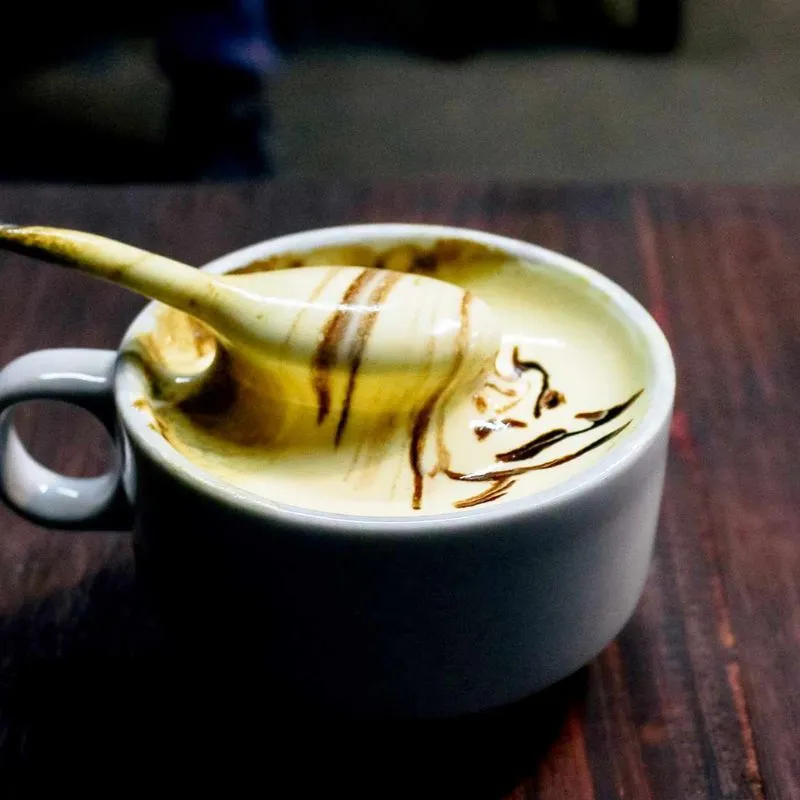
The first sip was a surprise.
It doesn't aim for the delicacy of an Italian espresso or the fruity acidity of many specialty coffees. It is intense, deep, and enveloping. Its aroma evokes cocoa, toasted caramel, and nuts, while on the palate it reveals a dense, almost silky texture, with bitterness balanced by the sweetness of condensed milk. It’s a coffee that fills the palate and lingers long after the last sip.
It’s not easy to put exactly what I felt into words. I went from looking at that cup with some skepticism to being completely fascinated by it. Ever since I got back, I haven’t stopped researching Vietnamese coffee—not just egg coffee, but the country’s entire coffee culture. And today, when I think about going back to Vietnam, part of the reason is to have that coffee again.
The first cup was earlier
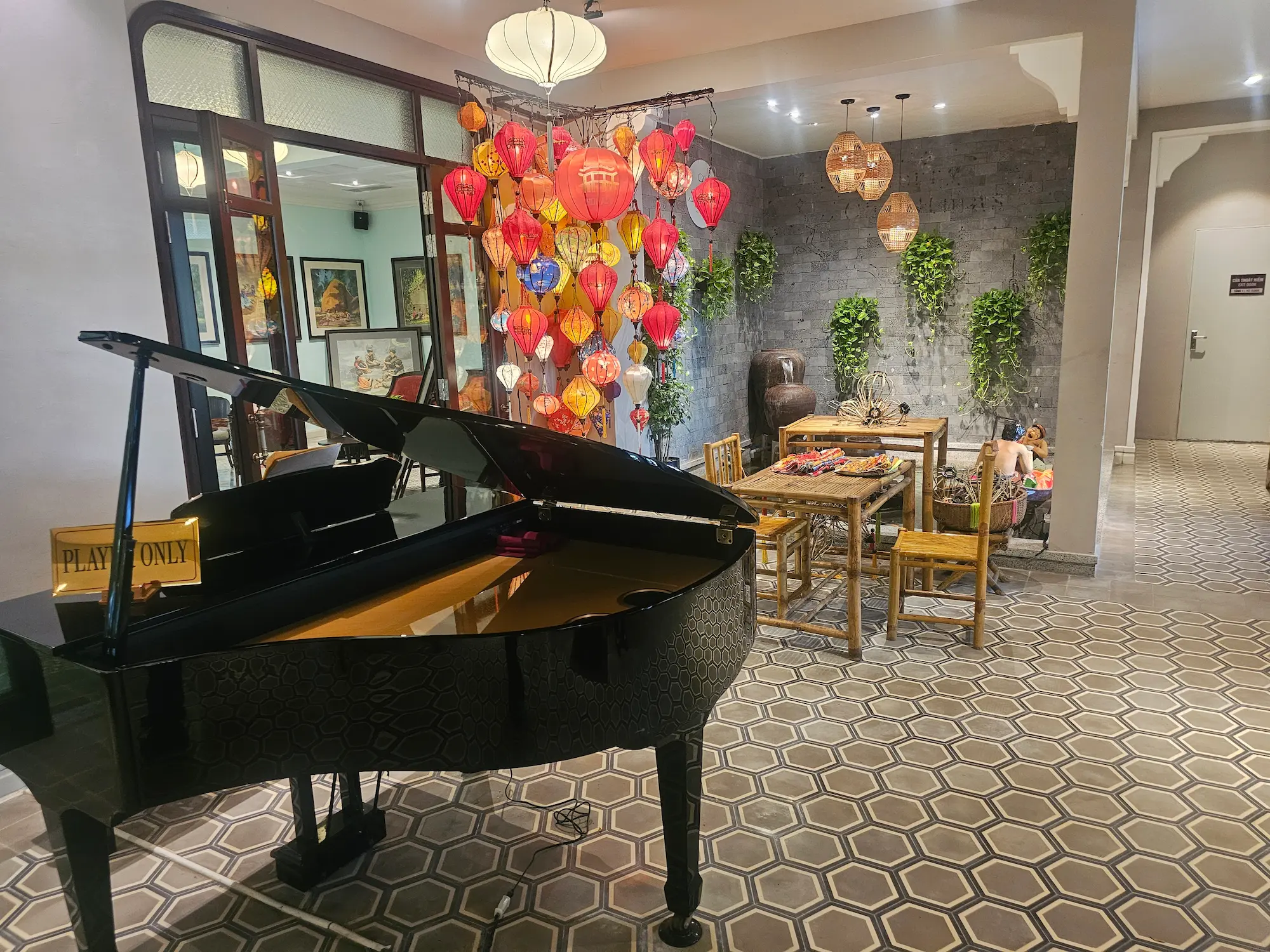
My story with Vietnamese coffee had actually begun even earlier, at the hotel where I stayed when I arrived.
I hadn't even planned on drinking coffee during the trip. I tried it out of curiosity. I took my first sip and thought the flavor was completely different from any coffee I’d ever had before. I had to take another sip. And then another. Before I knew it, I’d finished the cup and was still trying to figure out why it had made such an impression on me. That first cup turned into three.
From the very first moment, it releases an intense, enveloping aroma, with notes of bitter cocoa, dark chocolate, toasted nuts, and a slight hint of spice. It has body, character, and an unusual intensity. Its texture is dense, almost velvety, and leaves a lingering sensation.
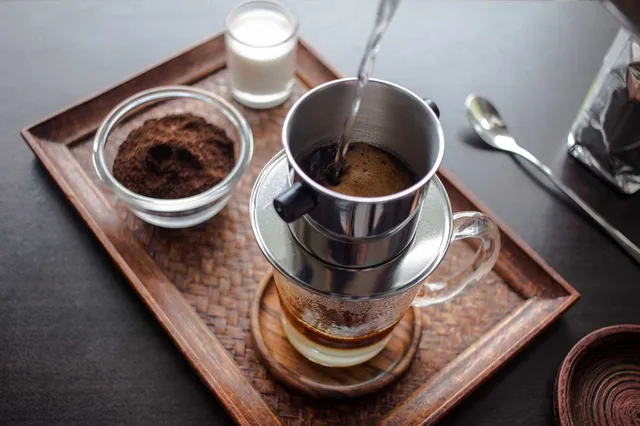
When prepared with the phin, the experience is completely different. The coffee drips drop by drop, forcing you to wait. It's not an uncomfortable wait—it's part of the ritual. If you mix it with condensed milk, the contrast between the bitterness and the creamy sweetness creates a surprising balance. And when served over ice, the famous cà phê sữa đá becomes a perfect drink for the tropical climate.
Not all the coffees were good
I don't consider myself a coffee expert. I can tell when an espresso is high-quality, but I wouldn't be able to tell the difference between a Colombian coffee and an African one in a blind taste test.
And that’s exactly why I’m saying this: I had some absolutely extraordinary coffees at hotels, specialty coffee shops, and some outdoor cafes. But there were also times—especially at small stands or very touristy spots—when I didn't like the coffee at all. I left some in the cup after two sips.
That difference really caught my attention. Here, it’s rare to find truly bad coffee: you might like it more or less, but it usually maintains an acceptable standard. In Vietnam, you can go from drinking one of the best cups of coffee of your life to another that you can barely finish.
Perhaps that, too, is part of the richness of their coffee culture. There isn't just one kind of Vietnamese coffee; rather, there are many ways to grow, brew, and serve it.
Before I left, I thought I’d hardly drink any coffee. I ended up having several cups every day because I was always eager to try a new one. And looking back, I’d rank the vast majority of the cups I tried there among the best I’ve ever had.
This is just my personal opinion, based solely on my own experience. But Vietnam introduced me to a different way of understanding coffee: more intense, more varied, and more closely tied to its culture.
To me, it has the best coffee in the world.

The legal loophole most expensive in the world
During the Dutch colonial era, Indonesian farmers grew coffee that they were not allowed to drink. The rule was explicit: the coffee was for export, and keeping the beans for themselves was prohibited.
But someone noticed something. The palm civet, a small nocturnal mammal, would eat the ripe coffee cherries and excrete the whole beans, undigested. There was no rule anywhere prohibiting picking up beans from the ground.
From that legal loophole arose the kopi luwak. And when the Dutch planters themselves tried it, they discovered that it was better than theirs—because wild civets eat only the ripest, sweetest cherries, and their digestion reduces the bitterness of the bean.
A product born out of scarcity ended up, centuries later, becoming the most expensive coffee on the planet: between $45 and $600 per pound.
What You Need to Know Before Ordering It in Bali
This is where the story takes a turn, and it's worth telling the whole thing.
Tourist demand has created a business that bears no resemblance to its origins. Researchers from the University of Oxford and World Animal Protection documented the conditions of nearly fifty civets captured in the wild and kept in cages at sixteen tourist farms in Bali. A subsequent study evaluated twenty-nine additional farms: None of the civets met the basic animal welfare standards, not even those required by Indonesian law itself.
And there's an irony that tops it all off, as noted by National Geographic: that coffee, besides, it's worse. All credit goes to the kopi luwak lay in the fact that the wild civet chose the best cherries. A caged civet eats whatever it is given.
Local guides often describe it as “wild-harvested” coffee. The producers themselves have admitted to researchers that gathering a sufficient quantity from truly wild sources would be practically impossible.
The history of kopi luwak is fascinating. What they sell to tourists in Bali today, however, is far less so.
If you can't keep the bean, boil the leaf
That colonial rule—"grow coffee but don't drink it"—led to two different solutions on two different islands.
In Bali and Java, the civet. In West Sumatra, something simpler.
And so was born the kawa daun, an infusion made from smoke-dried coffee leaves that is still drunk there, traditionally served in a coconut shell. For centuries, it was considered the drink of those who could not afford real coffee.
In 2012, a team from the Royal Botanic Gardens, Kew, and the French research institute IRD analyzed the leaves of twenty-three coffee species and published the results in Annals of Botany. Seven of them had accumulated mangiferin, a compound originally isolated from mangoes that is believed to have anti-inflammatory and neuroprotective properties. Arabica leaves contained the highest levels of this compound.
The botanist Aaron Davis, who led the research from Kew, summed it up this way in the British press: “What was surprising was the amount of antioxidants in coffee leaves. They far exceed those in green tea and regular black tea.”
And he added the most puzzling detail: “A great deal of research has been devoted to studying the health benefits of tea, but coffee leaves have been completely overlooked.”
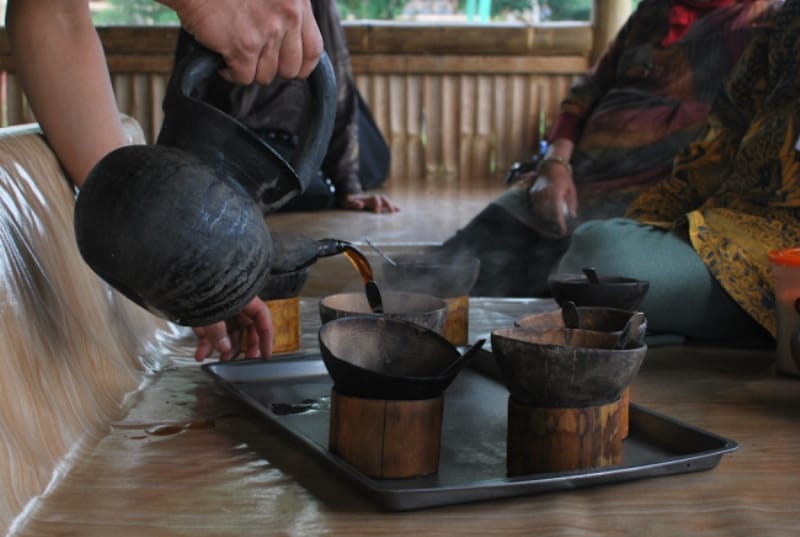
For centuries, the part of the plant that was discarded turned out to contain more antioxidants than the part that was exported.
And a cup of coffee that comes with a lit charcoal briquette inside
There is another Indonesian invention that came about just as spontaneously. Yogyakarta, in the late 1960s: at a street stall next to the train station, customers—many of whom were railroad workers from East Java—asked for a coffee typical of their region that the owner didn’t know how to make.
That man, known as Lik Man, solved the problem in his own way: He dropped a piece of red-hot coal into the coffee cup. The name comes from the sound the coal makes when it touches the liquid: joss.
It sounds like a dangerous joke, but it works. The charcoal acts like activated charcoal: it reduces the acidity and leaves a smoother, smokier finish. It’s still sold in the angkringan —the street stalls in Yogyakarta—for just a few coins, and Lik Man's business is now in its third generation.
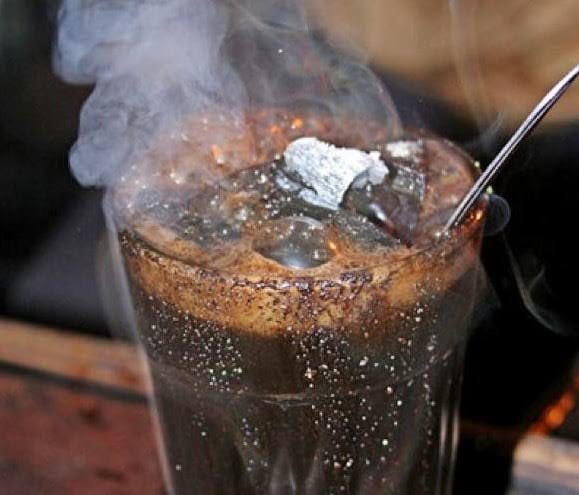
The species that almost nobody has tasted
All the coffee you've ever drunk—whether it comes from Asia or not—is almost certainly one of two varieties: Arabica or Robusta. Between them, they dominate the global market.
There is a third one, and it is grown mainly here. It is called Coffea liberica and in the Philippines they call it barako —from baboy ramo, wild boar, because of its nature—. Its trees are not shrubs: they grow up to eighteen meters tall, more like a forest tree. Its berries are enormous. And their flavor is unlike anything else: fruity, with notes that locals compare to jackfruit and Europeans to grapefruit, and an unmistakable anise aroma.
Represents less than 2% of the world's coffee production.
And here the coffee leaf rust reappears, a disease that shaped the entire history of coffee in Asia. In the 1880s, when the fungus had already devastated Ceylon and Java, the Philippines became, by default, one of the world’s largest producers. It was short-lived: in 1889, the blight reached the islands as well and brought the industry to its knees. Most farmers switched to other crops, and only a few barako seedlings survived.

A single microscopic organism redrew the map of Asian coffee: Ceylon, Java, and later the Philippines.
And there’s a final twist. Aaron Davis—the very same botanist at Kew who studied the coffee plant’s leaves—has been searching for years for species capable of withstanding the heat, because Arabica is extremely sensitive to rising temperatures, and the outlook for the future of coffee is not good.
One of the species he works with is, in fact, Liberica: it grows well in hot, low-lying areas where Arabica cannot survive.
The variety that almost no one has tasted—the one that survived the pest infestation in a few Philippine plantations—could be one of the varieties that continues to produce coffee when climate change makes the others unviable.
Coffee That Is Roasted with margarine
There is one final chapter in the history of coffee in Asia, and it begins in British colonial kitchens.
In the late 19th century, many Chinese immigrants from Hainan and Fuzhou worked as cooks in European households in Singapore and Malaysia. There, they learned to prepare coffee the Western way. When they later opened their own shops, they ran into a problem: the Arabica beans used by the British were expensive, and the only beans available were cheap, harsh Robusta beans.
The solution was as unorthodox as it was effective. They roasted the beans in a wok, with sugar, margarine, and a pinch of salt, until it caramelized. They ground it coarsely and strained it through a cloth sock. And they served it with condensed milk, which, in addition to sweetening the dish, was cheaper and kept better than fresh milk.
And that's how the kopi from Nanyang, and with him the kopitiam —from kopi, coffee in Malay, and tiam, a shop in Hokkien—. By the 1950s, more than 80 percent of Singapore’s coffee shops were owned by Hainanese and Fuzhou families.
People still make requests using a vocabulary consisting solely of single-syllable words: kopi, kopi-O, kopi-C, kopi gao, copy of. And it's still served in thick porcelain cups, with toast made from kaya and soft-boiled eggs.
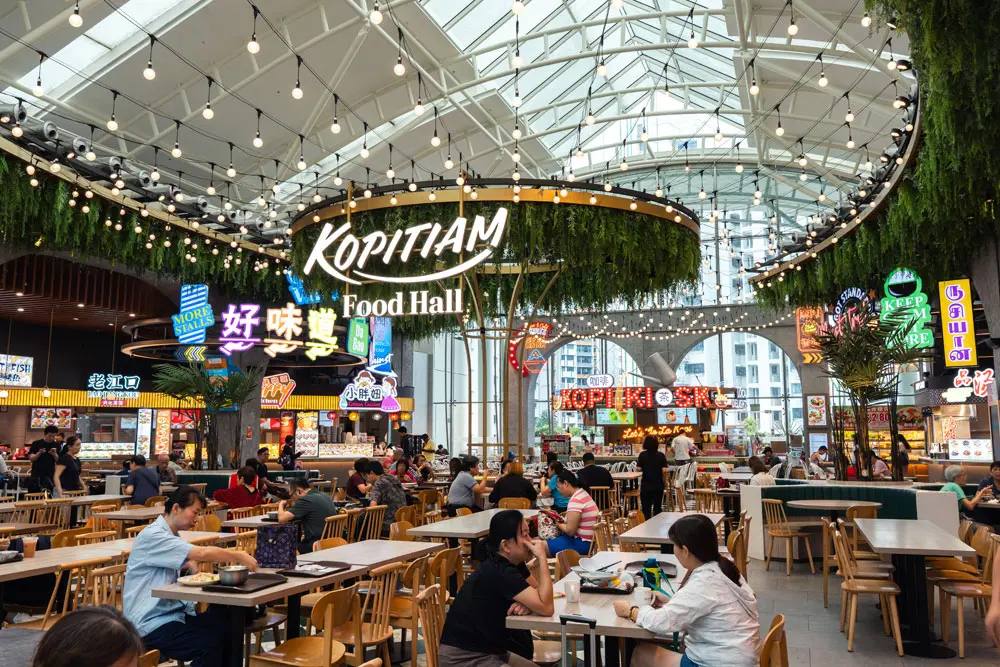
The most distinctive coffee in Southeast Asia is roasted with margarine, sugar, and salt.
Coffee didn't originate here. But that's where it became a global phenomenon.
It originated in Ethiopia and became a popular beverage in Yemen. But it was Asian coffee that made it a global phenomenon: the seven beans from Baba Budan broke the monopoly, Java gave it its name, Ceylon filled the cups of half of Europe until a fungus wiped it off the map, Vietnam turned it into an industry, and Thailand used it to put an end to opium.
And along the way, each place made it its own in a different way. In Sumatra, they developed the wet milling, a wet hulling process that isn't used anywhere else in the world and gives this coffee a thick, earthy, almost woody body. In Vietnam, coffee is served in a phin, a metal filter that sits directly on top of the cup and drips at its own pace: there's no way to speed it up—it forces you to wait.
In Sri Lanka, a kopi kade wooden café is still the place where the town's conversation stops. In northern Thailand, the coffee they serve you grew in the shade of a forest that did not exist fifty years ago.
But it's all inside it.
Set a date.
We'll take care of the rest.
A maximum of thirteen people, one trip per year per destination, and one of us will be with you the entire trip.
The guide, free
Everything you need to know before setting a date.

About the Asian coffee
What is the best coffee in Asia?
When it comes to coffee from Asia, it depends on what you’re looking for. Vietnam produces the world’s most intense and full-bodied Robusta; northern Thailand yields high-altitude Arabica beans grown in the shade, with clean acidity and floral notes; Sumatra offers rich, earthy profiles thanks to its wet-processed method; and the Philippines produces Barako, made from the rare Liberica variety, with an anise-like aroma unlike anything else.
Why does Vietnamese coffee taste so different?
Because of the variety and the brewing method. Vietnam mainly grows Robusta, which is more bitter and full-bodied than the Arabica we're used to in Europe. And it's brewed using a filter. phin that drips slowly, it is served with condensed milk instead of fresh milk, and often with ice.
What is Hanoi egg coffee?
The cà phê trứng: Robusta coffee topped with a cream made from egg yolks whipped with sugar and condensed milk. It was invented in 1946 by Nguyen Van Giang, a waiter at the Metropole Hotel, because milk was in short supply during the war. His café, Café Giang, is still open in the Old Quarter and is now run by his son.
Is it worth trying kopi luwak in Bali?
Its historical origins are fascinating, but what is sold to tourists today usually comes from caged civets. Researchers from Oxford and World Animal Protection found that none of the civets assessed at tourist facilities in Bali met basic welfare standards. And according to National Geographic that coffee is also of worse quality, because the merit lay in the wild civet choosing the best cherries.
Why does Sri Lanka produce tea and not coffee?
Because a pest wiped out its coffee crop. Around 1870, the island was the world's third-largest producer, but coffee rust (Hemileia vastatrix), which was first documented there in 1869 in cultivated coffee, reduced its plantations from 275,000 acres to 11,392 in two decades. The planters switched to tea, and thus Ceylon Tea was born.